Features of the Japandi style bedroom arrangement: pitfalls and nuances
Japandi style is a combination of Japanese minimalism and Scandinavian cosiness. It is ideal for creating a bedroom where harmony, calmness and naturalness reign. However, to get a truly comfortable space, it is important to take into account certain nuances and avoid common mistakes. Let’s take a look at the key features, possible difficulties and designers’ tips for decorating in the Japanese style.
1. Basic principles of Japandi
Japandi is based on two pillars: functionality and aesthetics. The interior in this style should be cosy, without excessive decor, with the right balance between warmth and restraint. The main features:
- Natural materials. Wood, cotton, linen, rattan, ceramics are the basis of Japani. Preference should be given to natural shades and textures.
- Restrained colour scheme. Combination of warm sand, beige, grey, cream shades with deep natural colours, such as olive and terracotta.
- Minimalism without coldness. A minimalist approach does not mean asceticism. It is important to create cosiness with the help of soft textures, textiles and dim lighting.
- Connection with nature. In Japandi, it is worth considering live plants, large windows for natural light, and raw wood details.
2. Pitfalls and difficulties
Interior design in the Japandi style requires a special approach. Here’s what you should pay attention to:
- The danger of a too cold interior. Minimalism can look sterile if you don’t add accent details, such as warm wooden elements, ceramic vases or soft textiles.
Balance. - Balance between Japanese and Scandinavian. If you focus too much on the Japanese style, the interior can turn out to be too strict. On the other hand, if you focus on Scandinavian cosiness, you can lose the elegant simplicity of Japandi.
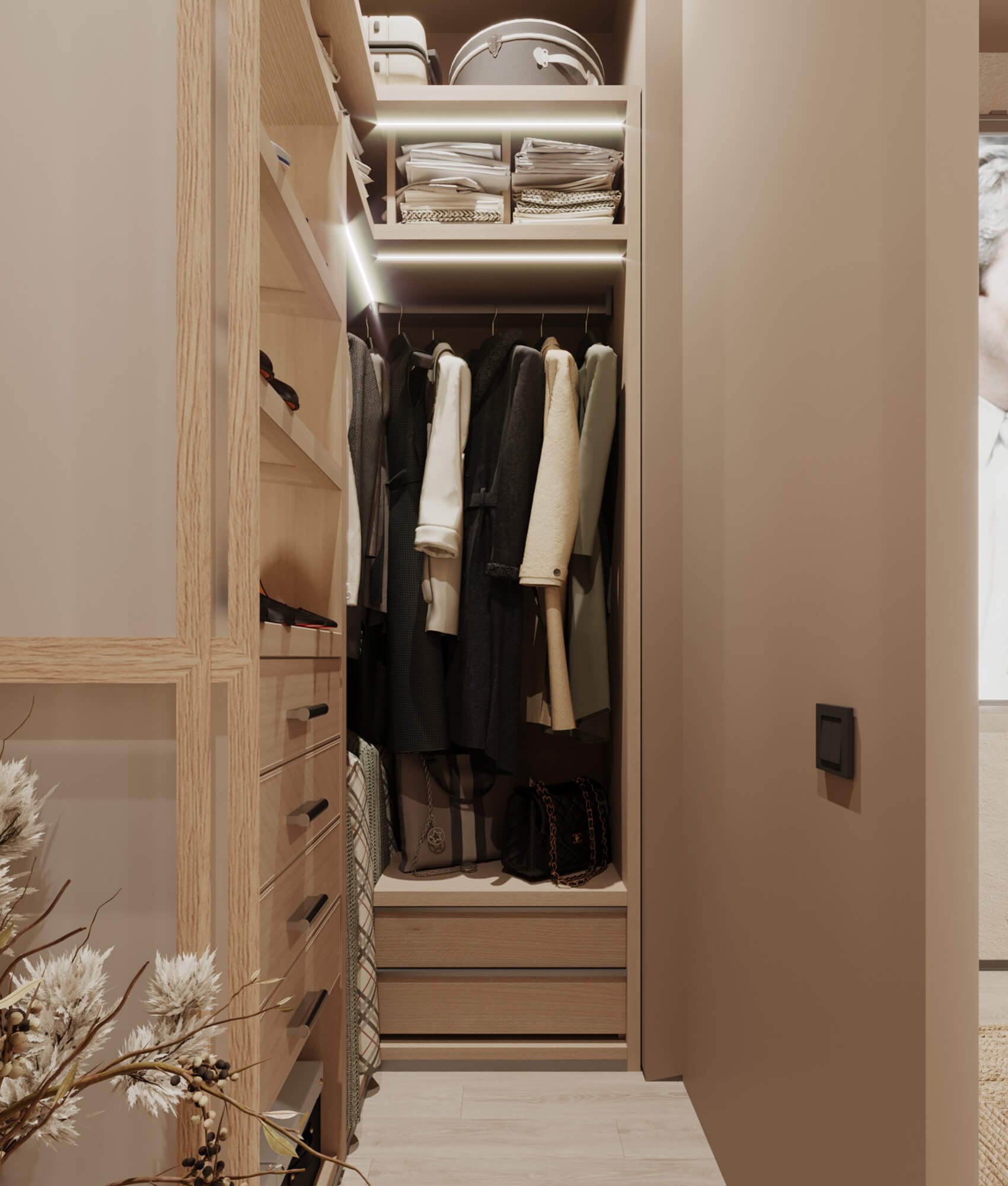
- Sufficient storage space. Open shelves and a minimum of furniture may look harmonious, but in real life they require competent space organisation.
Selection of the right lighting. Japandi does not tolerate bright white light. Use soft diffused lighting, table lamps and floor lamps made of natural materials.
3. Tips from designers
To create an interior in the Japandi style, you should follow these recommendations:
- Choose low wooden furniture with simple shapes – it gives the space a sense of calmness.
Use textiles in neutral shades – linen curtains, cotton bed linen, rugs made of natural materials. - Avoid unnecessary details, but add textures – woven rugs, matte ceramic vases, wooden elements.
- Use the principle of ‘less is more’ in your decor: just a few items that have a deep meaning or special aesthetic are enough.
- Introduce natural light and soft light sources to emphasise the cosiness and harmony of the space.
Japandi is not just a style, but a philosophy of conscious choice. It helps to create an interior that is not only visually pleasing but also comfortable for living. The main thing is to find a balance between functionality and aesthetics, avoiding overload or excessive sterility. By following these principles, you will get the perfect space for relaxation and recovery.
More about the project
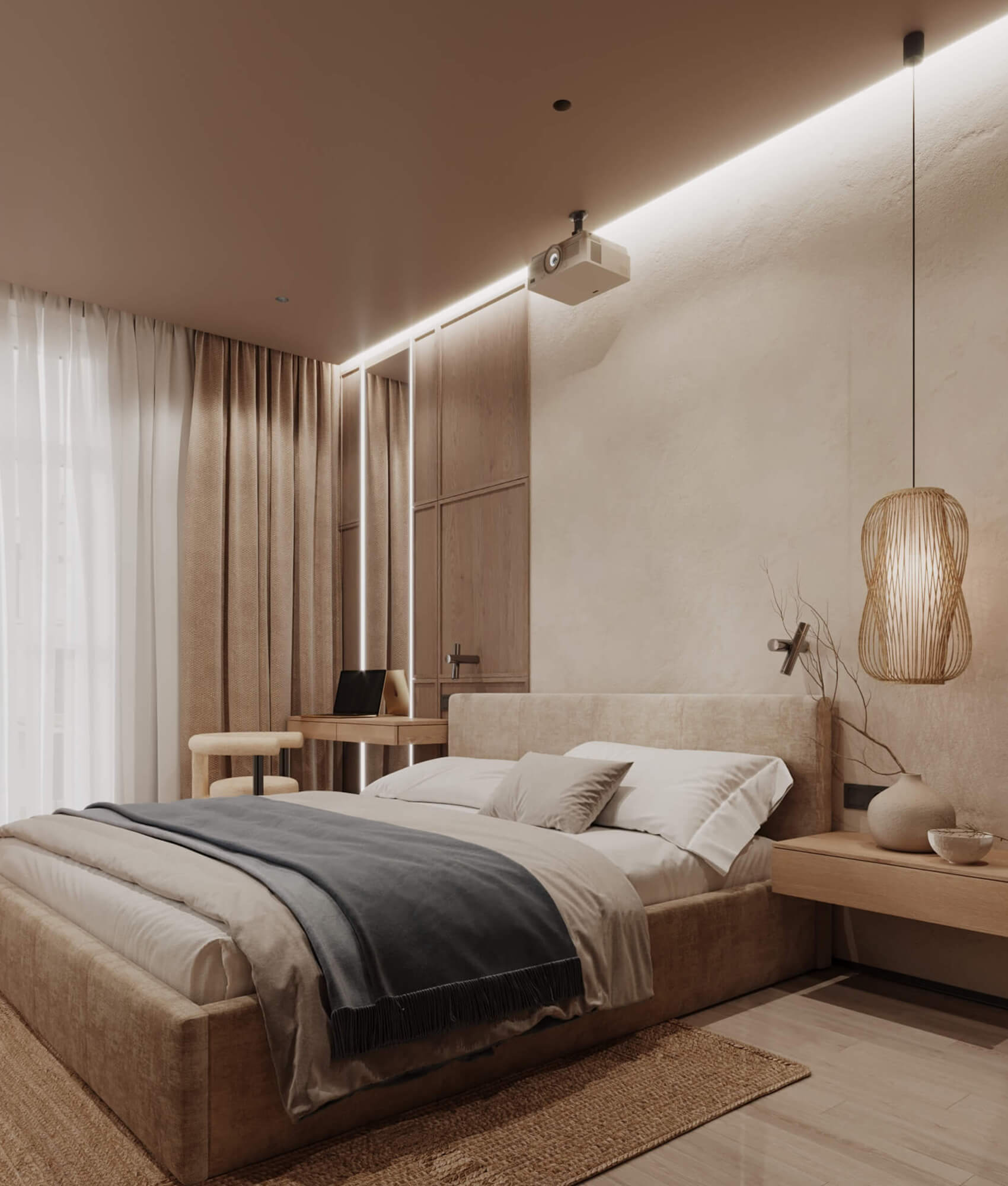
The bedroom is the place where you want to relax after a long day, and Japandi is perfect for that. The highlight of the interior is the contrasting but harmonious combination of colours on the walls and ceiling.
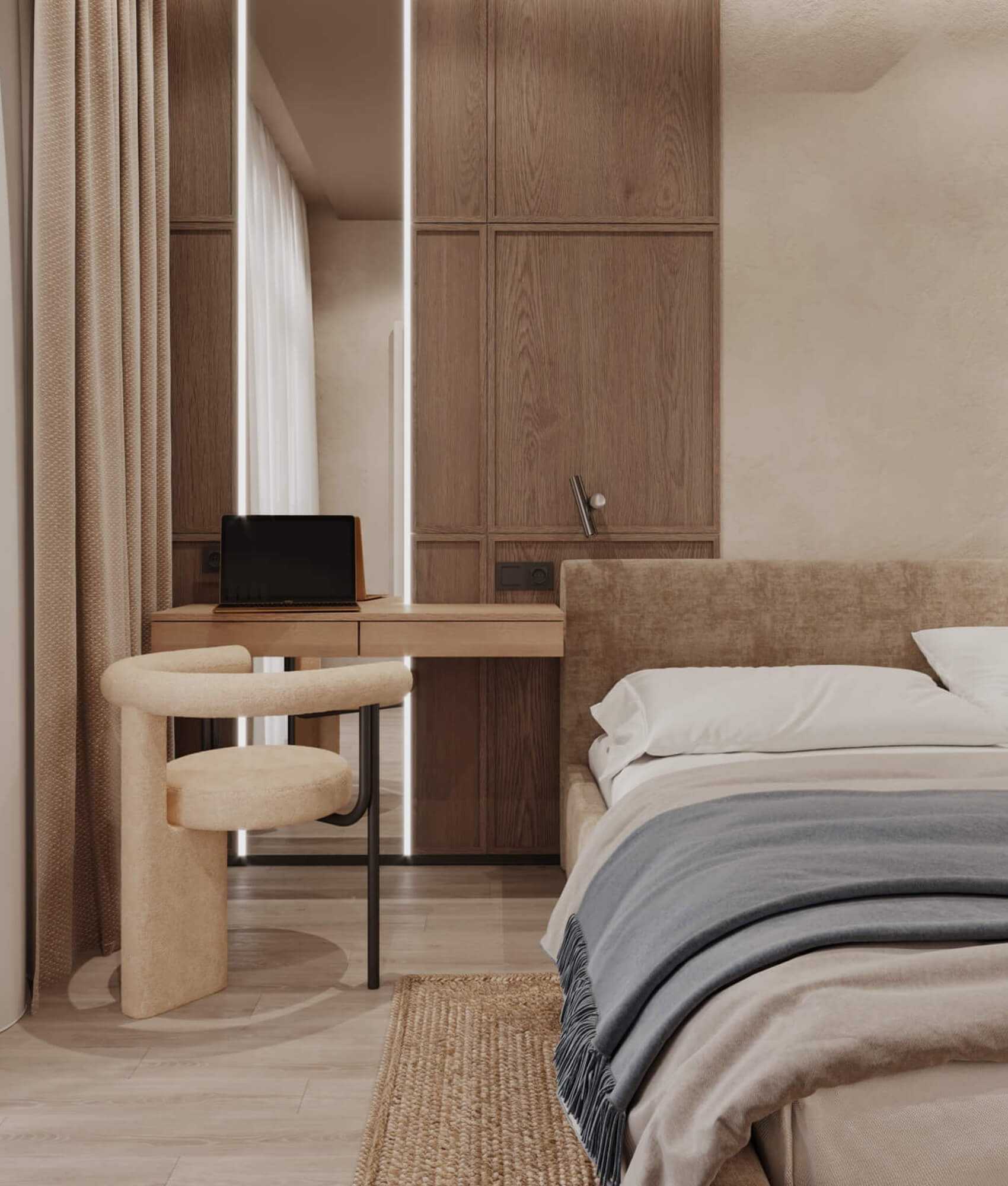
The bed takes centre stage, complemented by textiles in natural shades. The dressing table is not only a place for morning rituals, but also a compact workplace.
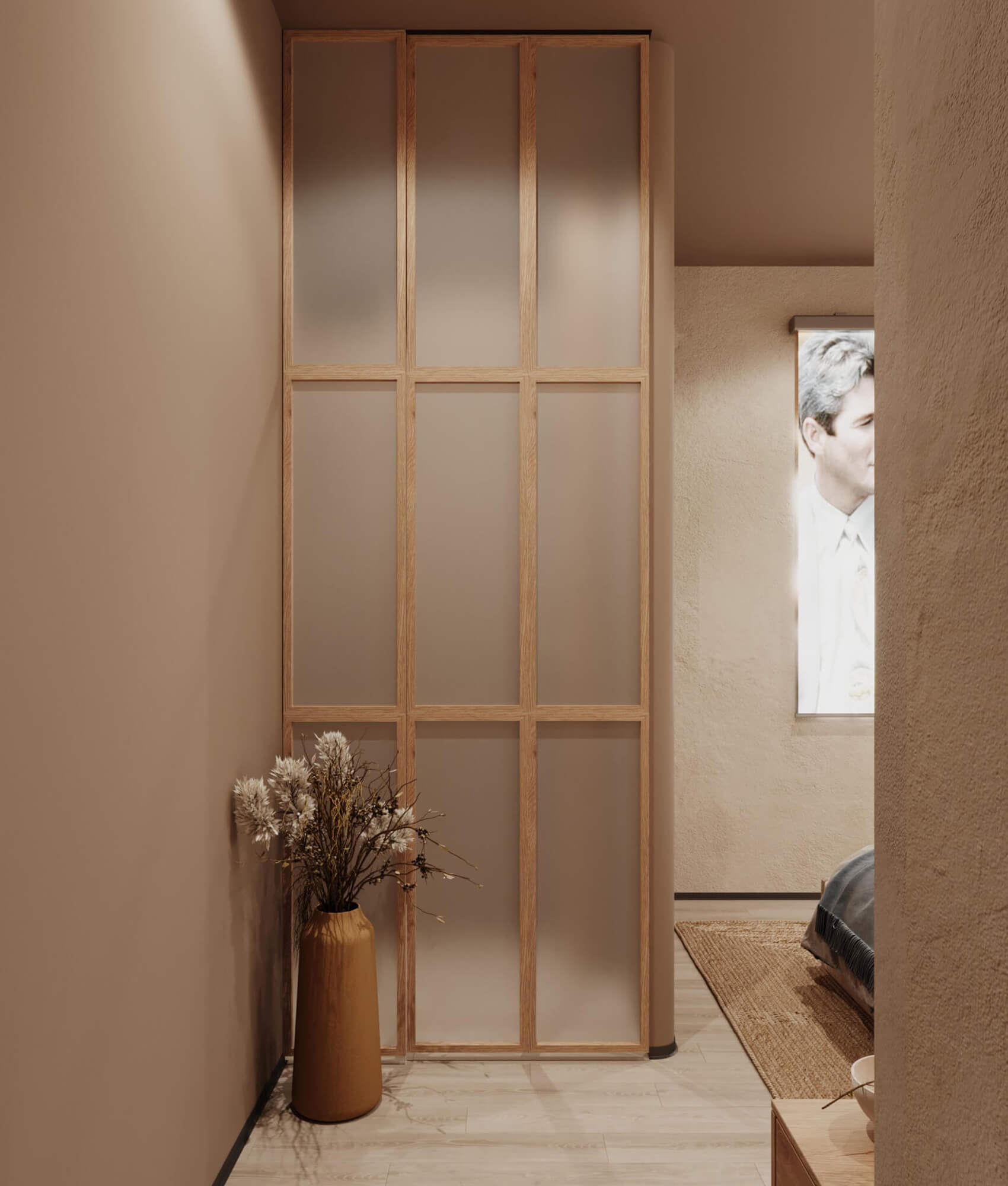
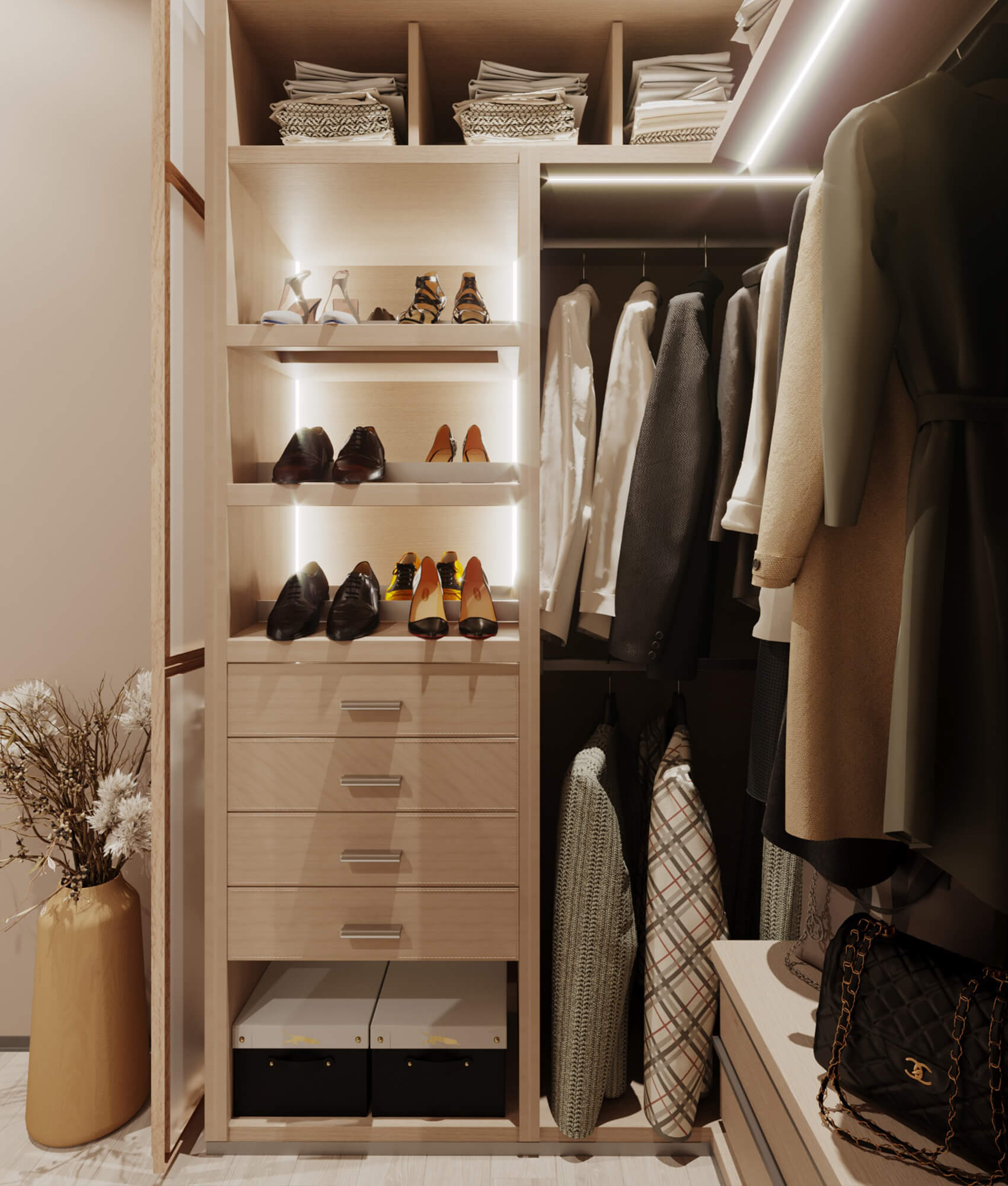
We also provided a large projector: now you can watch your favourite movies right from your bed. And a stylish wardrobe with sliding doors helps you keep things tidy. Japandi is not just a style, but a way of life where aesthetics and functionality go hand in hand.
⠀
Design by @gl.design_studio
Project: Silent, Silent Park residential complex, Lviv
Area: 15.8 sq.m.