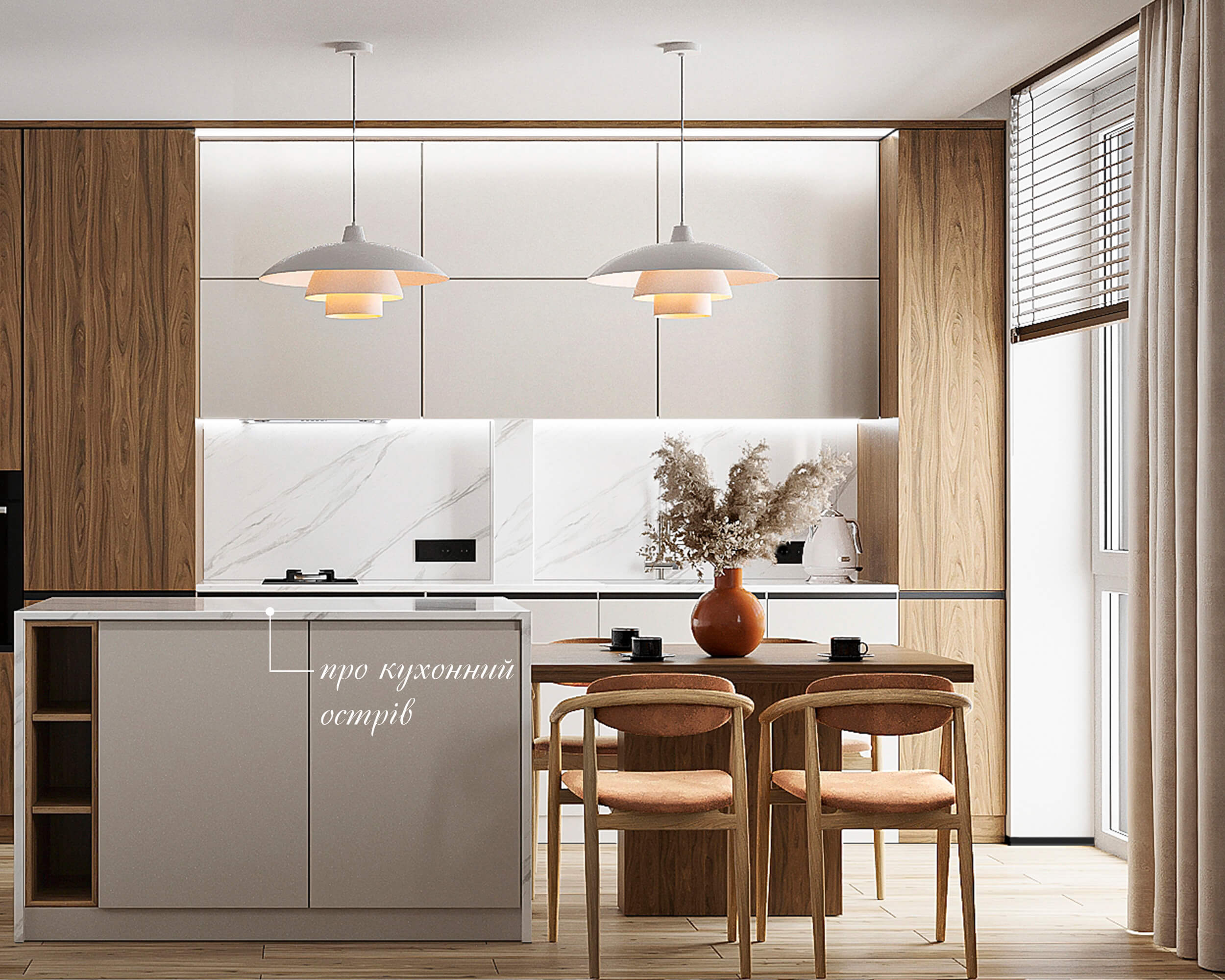
Kitchen islands: types, features and secrets from designers
A kitchen island is a functional and stylish element of a modern kitchen that not only expands the working area but also becomes the central object of the interior. It combines convenience, practicality and aesthetic appeal. However, when developing design projects, designers take into account a number of nuances to make the kitchen island truly comfortable and functional. Let’s take a look at the main types of kitchen islands and the peculiarities of their layout.
Types of kitchen islands
- Work island
This is the most common option that is used exclusively as an additional work surface. It is ideal for cooking and placing kitchen utensils. It is often equipped with drawers and shelves for storing crockery or food. - Island with a built-in hob
This island turns into the main culinary area of the kitchen. When designing it, designers take into account the ventilation system and hood to ensure effective removal of vapours and odours. It is also important to provide enough free space around the stove for safe and convenient cooking. - Island with sink
A convenient option that allows you to combine food washing and cooking in one place. Connecting to water and sewerage requires careful planning, so designers discuss this with customers in advance. It is also important to provide enough space for drying dishes. - Bar island
A great choice for those who like to entertain guests. A high table top and bar stools create the atmosphere of a cosy cafe. Designers recommend using this option in spacious rooms where it is possible to maintain a convenient passage around the island. - Table island
Combines the functions of a dining table and a work surface. This is the best solution for small kitchens where it is important to save space. Designers often choose folding or retractable models that can be transformed according to the needs of the owners
The nuances that designers take into account
- Proper zoning of the space
The island should be placed in such a way as to ensure free passage around it. Designers follow the rule of the work triangle – the stove, sink and refrigerator should be located at an optimal distance from each other. - The choice of materials
The worktop of the island should be resistant to moisture, scratches and high temperatures. The most popular materials are quartz, granite, marble and high-quality artificial stone. Designers also take into account the style of the interior when choosing the texture and colour of the worktop. - Lighting.
An island needs high-quality lighting, especially if it is used as a work area. Suspended lamps or built-in lighting above the island provide a comfortable atmosphere and emphasise the style of the interior. - Functionality and convenience
The height of the worktop should be adjusted to the height of the user to ensure comfort while cooking. The standard height of a worktop is 85-90 cm, and for a bar island – 110-120 cm. It is also important to provide storage space for kitchen utensils in the lower cabinets of the island. - Integration of appliances
If appliances are built into the island (stove, sink, dishwasher), it is necessary to think about the supply of communications in advance. Designers coordinate this with builders to avoid redevelopment at the installation stage.
When is a kitchen island not the best solution?
A kitchen island is a modern and stylish solution that adds functionality and aesthetics to the kitchen space. However, it is not suitable for every kitchen and does not always meet expectations. First of all, an island requires a lot of space. If the kitchen is small, it can make the space cramped and inconvenient to move around. The minimum distance between the island and other furniture should be at least 90 cm, otherwise it will be difficult to open cabinets and use appliances.
You should also consider the planning of communications.If you plan to build a stove or sink into the island, you need to provide for electricity, water and ventilation in advance. This may require major repairs or be technically impossible in the finished room.
If the island does not have a clear purpose, it can become just a decorative element that takes up a lot of space.Therefore, it is important to think in advance about how it will be used: for cooking, as a dining area or storage space.
A kitchen island is a multifunctional element that significantly increases the comfort of using the kitchen.However, to make it really convenient and practical, it is important to take into account many nuances: from the correct zoning of the space to the choice of materials and lighting.Experienced designers know how to integrate a kitchen island into the interior so that it becomes not only a useful but also a stylish element.
If you are planning to add a kitchen island to your interior, please contact our design studio – we will help you create an ergonomic and aesthetically pleasing space that meets your needs and wishes.