Wabi-sabi: The philosophy of beauty in imperfection
In the modern world, where technology and the latest materials play a leading role, designers are increasingly turning to their roots, seeking inspiration from traditional philosophies and aesthetic principles. One such trend is wabi-sabi, a Japanese concept that celebrates the beauty of imperfection and naturalness. This philosophy is reflected not only in art, but also in interior design, creating unique spaces that exude peace and harmony.
What is wabi-sabi?
Wabi-sabi (侘寂) is a Japanese term that is difficult to translate unambiguously. Wabi can be interpreted as “modesty” or “simplicity”, while sabi means “the passage of time” or “aging”. Together, these concepts form a philosophy that recognises and appreciates imperfections, the natural patina and aging of things. This aesthetic emphasises transience, impermanence and simplicity, rejecting glamour and ostentation. Wabi-sabi encourages us to accept imperfection and find beauty in natural, unassuming things.
Wabi-sabi principles in interior design
Wabi-sabi in interior design is embodied through a number of key principles:
- Natural materials
Wabi-sabi values naturalness and organicity. Wood with its natural textures, stone, clay, linen and other natural materials create a feeling of closeness to nature. Raw surfaces, roughness and small imperfections emphasise the uniqueness of each element.
2. Simplicity and minimalism
Wabi-sabi interiors are characterised by simplicity and lack of unnecessary details. Minimalism is not only in the number of items, but also in the choice of colours and shapes. Neutral shades prevail: white, grey, beige, as well as soft, natural colours.
3. The passage of time
One of the key aspects of wabi-sabi is the recognition and acceptance of the passage of time. Aging of things, scuffs, patina on metal or wood with visible signs of use – all this gives the space character and depth. Such elements become not only a part of the decor, but also carriers of history and memories.
4. Asynchrony and asymmetry
Wabi-sabi avoids symmetry and perfection. Asynchrony, asymmetry and uneven lines add naturalness and authenticity to the interior. These details emphasise the uniqueness of each element, adding dynamics and life to the space.
Examples of wabi-sabi in the interior
- Living room
A wabi-sabi living room can include antique wooden furniture with visible traces of time, wicker chairs made of natural materials and clay vases with irregular shapes. Linen curtains, a natural bamboo or jute carpet will emphasise the naturalness of the interior.
- Kitchen
The wabi-sabi kitchen is characterised by simplicity and functionality. Wooden shelves, handmade ceramic dishes and rough textures create a cosy and homely atmosphere. Open shelves with minimalist décor keep the feeling of space and lightness.
- Bedroom
A wabi-sabi bedroom should exude calm and harmony. A bed made of natural wood, linen bed linen, simple lamps made of paper or ceramics will create an atmosphere of relaxation and tranquility. It is important to use natural textures and soft, soothing colours.
Wabi sabi as a source of inspiration
Wabi-sabi is not limited to interior design. It is a philosophy that encourages us to appreciate every moment of life, accept imperfections and find beauty in simple things. By integrating the principles of wabi-sabi into our lives and work, we can create not only aesthetically pleasing spaces, but also more harmonious and happy relationships with the world around us.
Ultimately, wabi-sabi reminds us that beauty is everywhere – in every crack, every patina, and every moment. And it is in this beauty of imperfection that we find true harmony and satisfaction.
More about the project
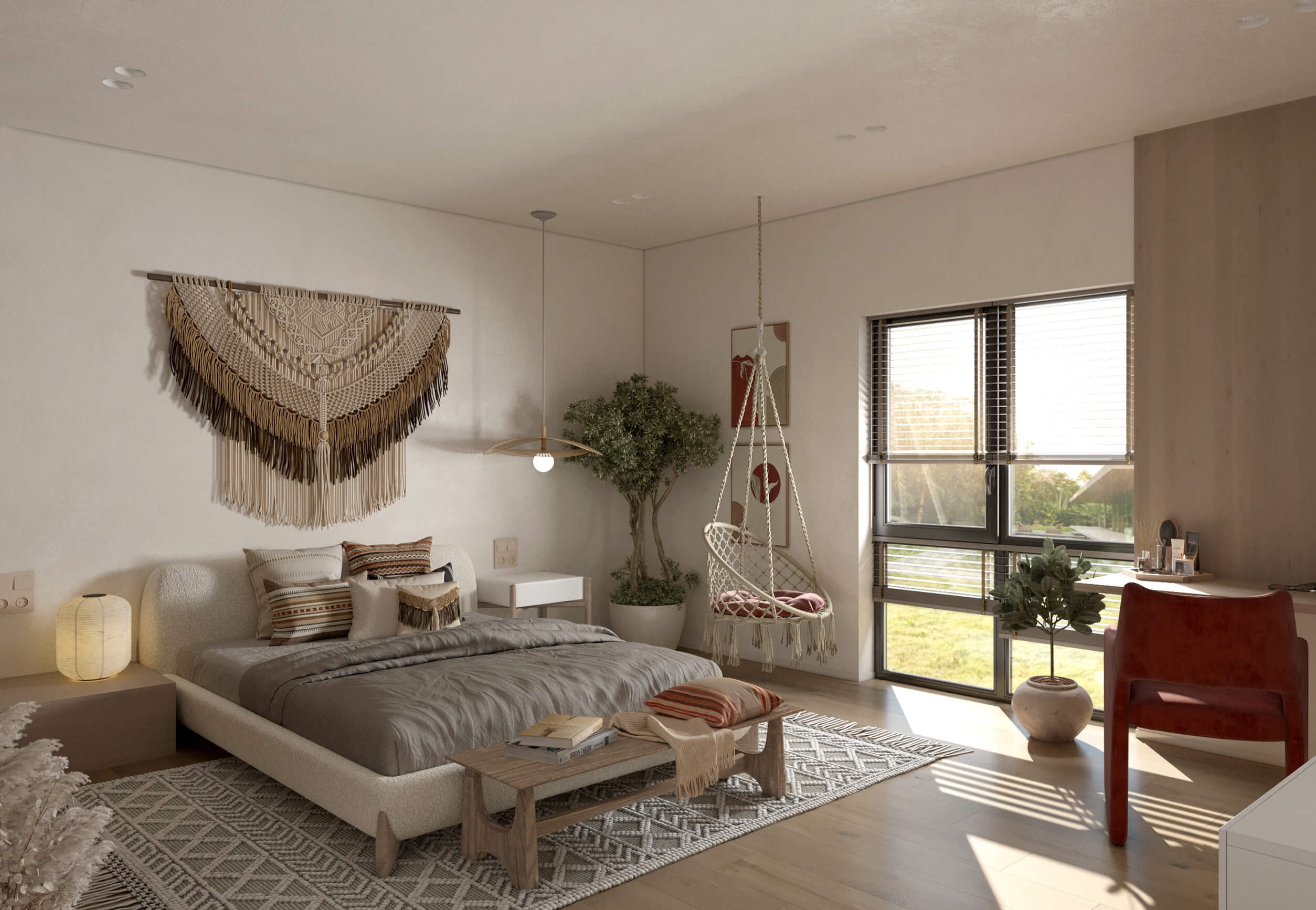
Room design for a teenage girl: a combination of wabi-sabi and boho styles. We offer a unique room design for a teenage girl that combines the aesthetics of wabi-sabi and boho styles. We have created a cosy space that reflects the character and style of the young hostess, using natural materials and a calm colour scheme.
The main design elements:
- Natural materials:
The use of wood and rattan furniture adds natural warmth and cosiness to the room. Each piece of furniture has its own unique texture, which emphasises the uniqueness of the interior.
- Macramé
Macrame decorative elements create interesting accents and add a touch of handmade, which is a characteristic feature of the boho style.
- Calm colour scheme
Pastel shades and natural colours promote relaxation and create a harmonious atmosphere, which is important for a teenager.
- Large work area
A spacious work surface allows the girl to study, create and engage in hobbies, providing enough space for all her belongings.
- Hanging chair by the window
A comfortable rocking chair by a large window with a beautiful view of nature will become a favourite place to relax and get inspired.
This design was created to make the bedroom a place where a girl can not only relax, but also create, develop and feel comfortable at any time.
Interiors should be beautiful, inspiring and motivating. Turn your room into a stylish and functional space with our design studio!
Location: a house in Tel Aviv
Project: Ethereal Villa
Area: 22.8 м2