Glass systems with lighting: how to make storage an architectural element
In modern interiors, storage is no longer just a functional unit. It is increasingly becoming part of the architectural composition of a space. This is especially true for glass systems with built-in lighting, which combine design, light and material into a single structure.
Open or closed library: what is the difference?
An open storage system creates dynamics and lightness. It allows objects to function as decor, shaping the individuality of the space. However, it has an obvious disadvantage – visual noise. Books, documents, and small objects without a clear system can destroy the integrity of the composition.
Solid facades, on the contrary, provide perfect purity of plane. They hide everything unnecessary and enhance the minimalist character of the interior. But at the same time, the wall becomes static, losing depth and plasticity.
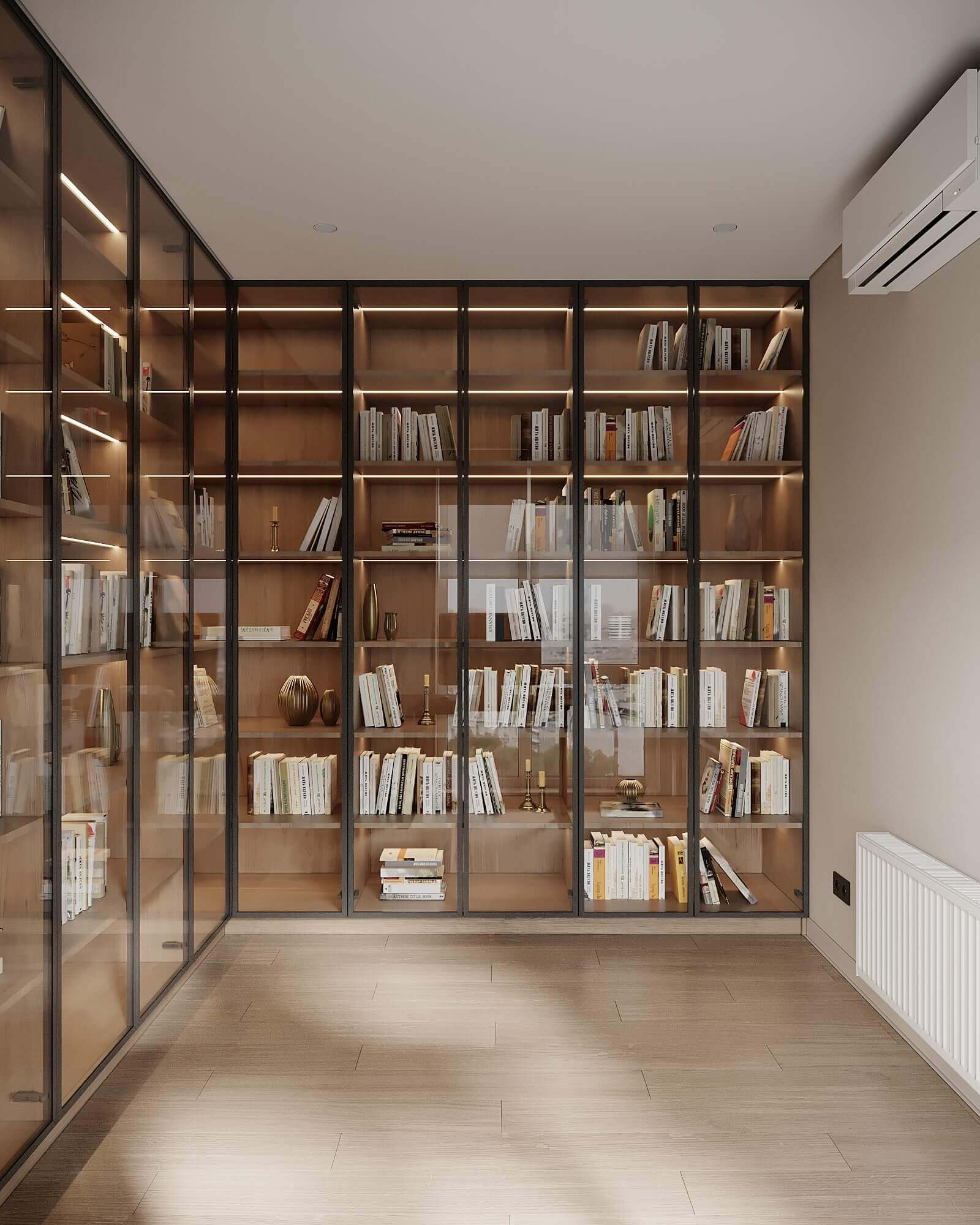
A glass system is a compromise between these two approaches. It maintains control over the composition but does not ‘seal’ the space. Objects remain visible but are perceived in a more structured way thanks to the frame profile and lighting scenario.
Why glass with metal works as architecture
The metal profile creates rhythm. Vertical and horizontal lines form a modular grid that structures the wall. It is no longer just furniture – it is the graphics of the space.
Glass adds lightness. It does not interrupt the perspective, allows light to pass through the shelves and creates a multi-layered effect. This is especially important in small rooms: transparent facades do not visually ‘weigh down’ the space like solid cabinets that extend to the ceiling. This approach moves storage from the category of ‘furniture’ to the category of ‘interior architecture.’
Light temperature: why 2700–3000K
Lighting in such systems performs a spatial rather than a decorative function. The optimal range for shelves is 2700-3000K.
3000K gives a soft warm light that emphasises the texture of the wood and creates intimacy.
4000K is slightly more neutral but still warm, without the cold tone that can make materials look ‘simpler’.
Cold light (5000K and above) in residential interiors often makes the system look technical, even office-like. The warm spectrum, on the contrary, adds depth and volume.
The placement of the LED strip is also important: it is integrated into the upper part of the section or into the profile so that the light source is not visible. We work not with the luminaire, but with the reflected light.
How lighting creates depth
Light creates layers. When each section has a separate light contour, the wall ceases to be flat. The effect of ‘inner space’ behind the glass appears.
The contrast between the dark metal profile and the warm light enhances the graphics. Objects on the shelves become part of the composition, rather than chaotic filling.
In the evening, such a system can work as the main accent lighting scenario, creating an atmosphere without overloading with general light.
Working with reflections on glass
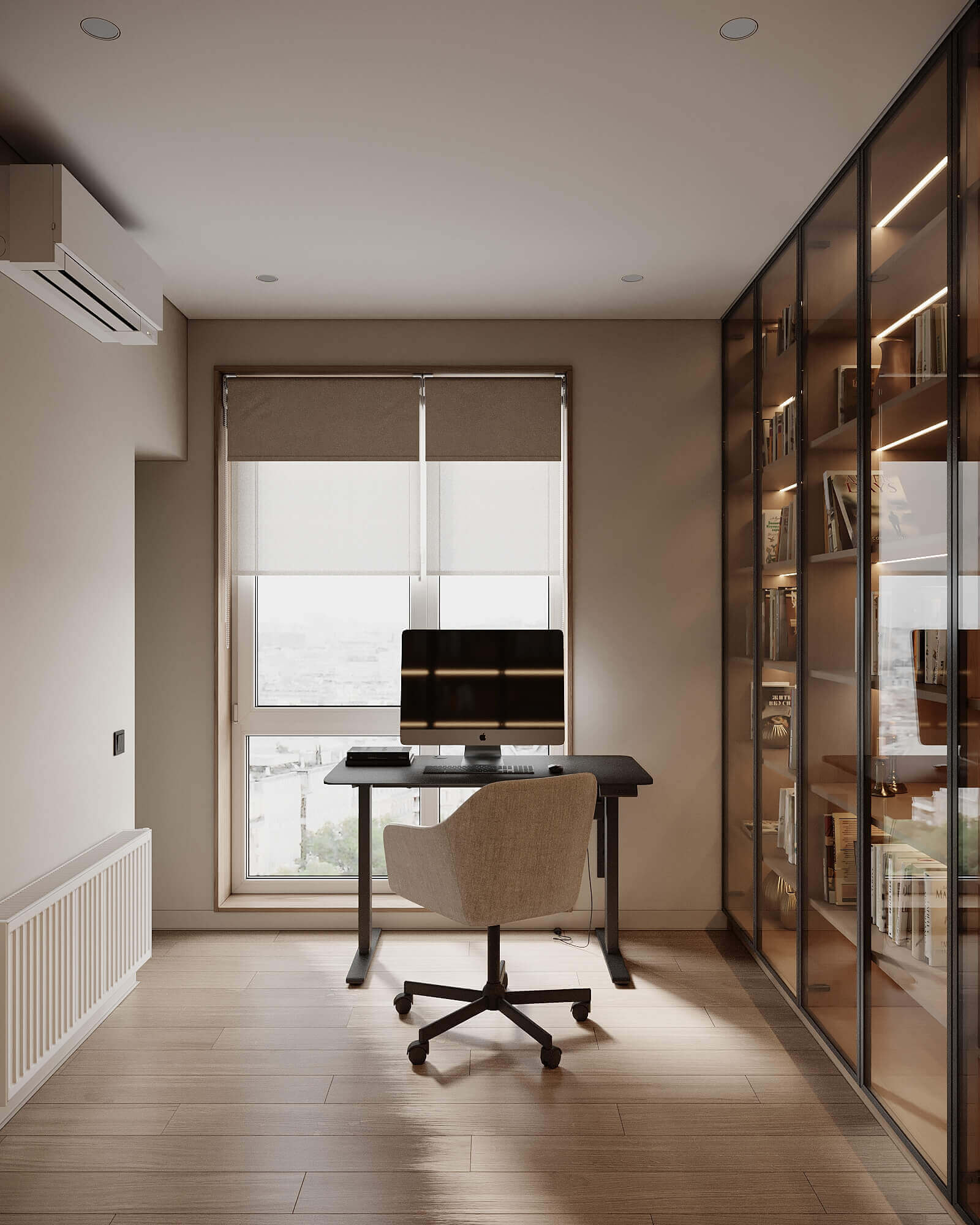
One of the key technical points is glare control. Glass facades can reflect windows, lamps, and even computer monitors.
To avoid this, it is important to:
– use glass with a light tint or anti-glare effect;
– consider the location of light sources in relation to the glass surface;
– avoid direct light rays hitting the façade;
– take into account the angle of daylight.
The mattness of the interior surfaces is also important. Excessively glossy wood or lacquered shelves intensify unwanted reflections.
Illuminated glass systems are not about trends. They are about precise work with materials, light and proportions. When storage is designed as part of the architecture, it ceases to be a backdrop and begins to shape the character of the space.
More about the project
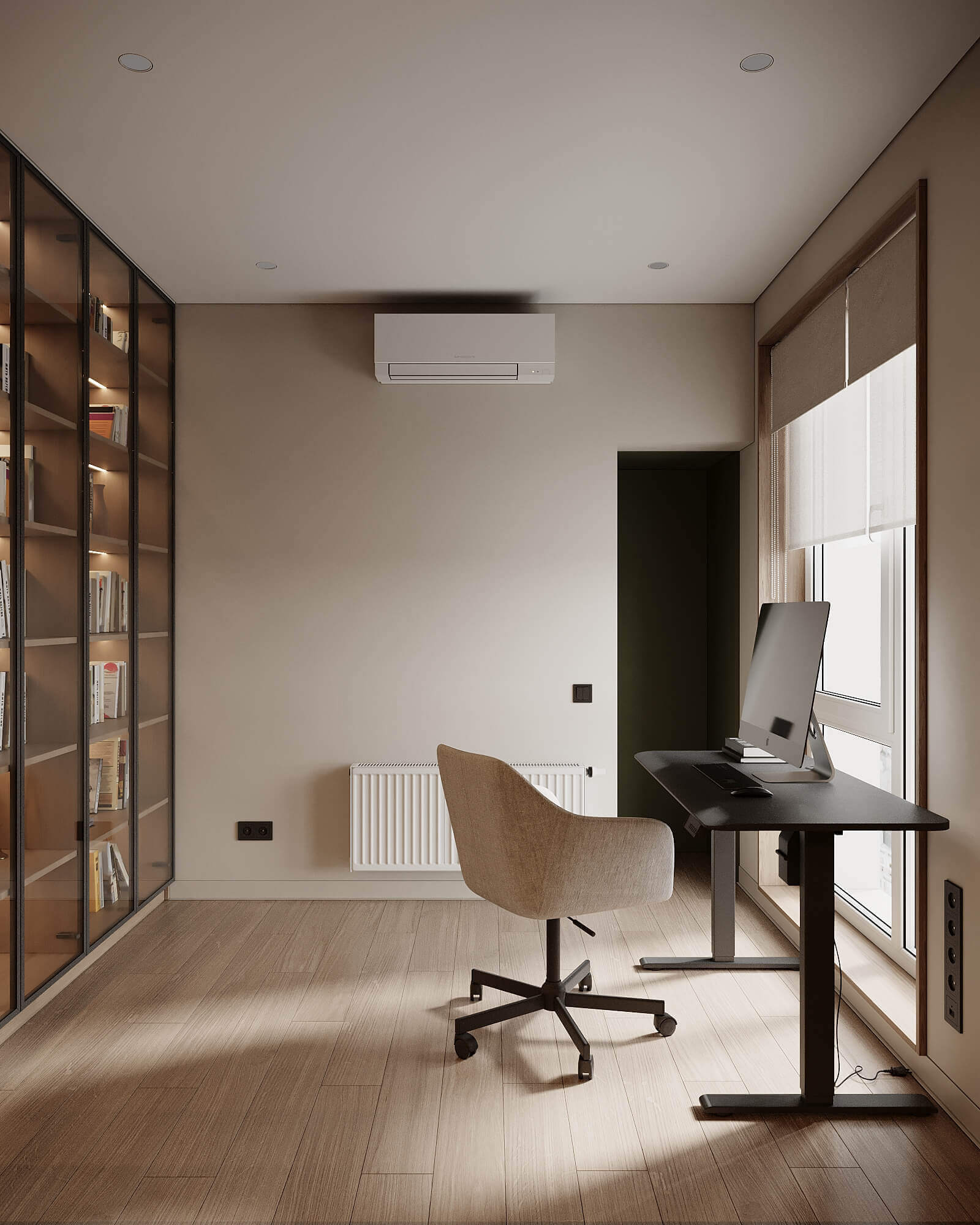
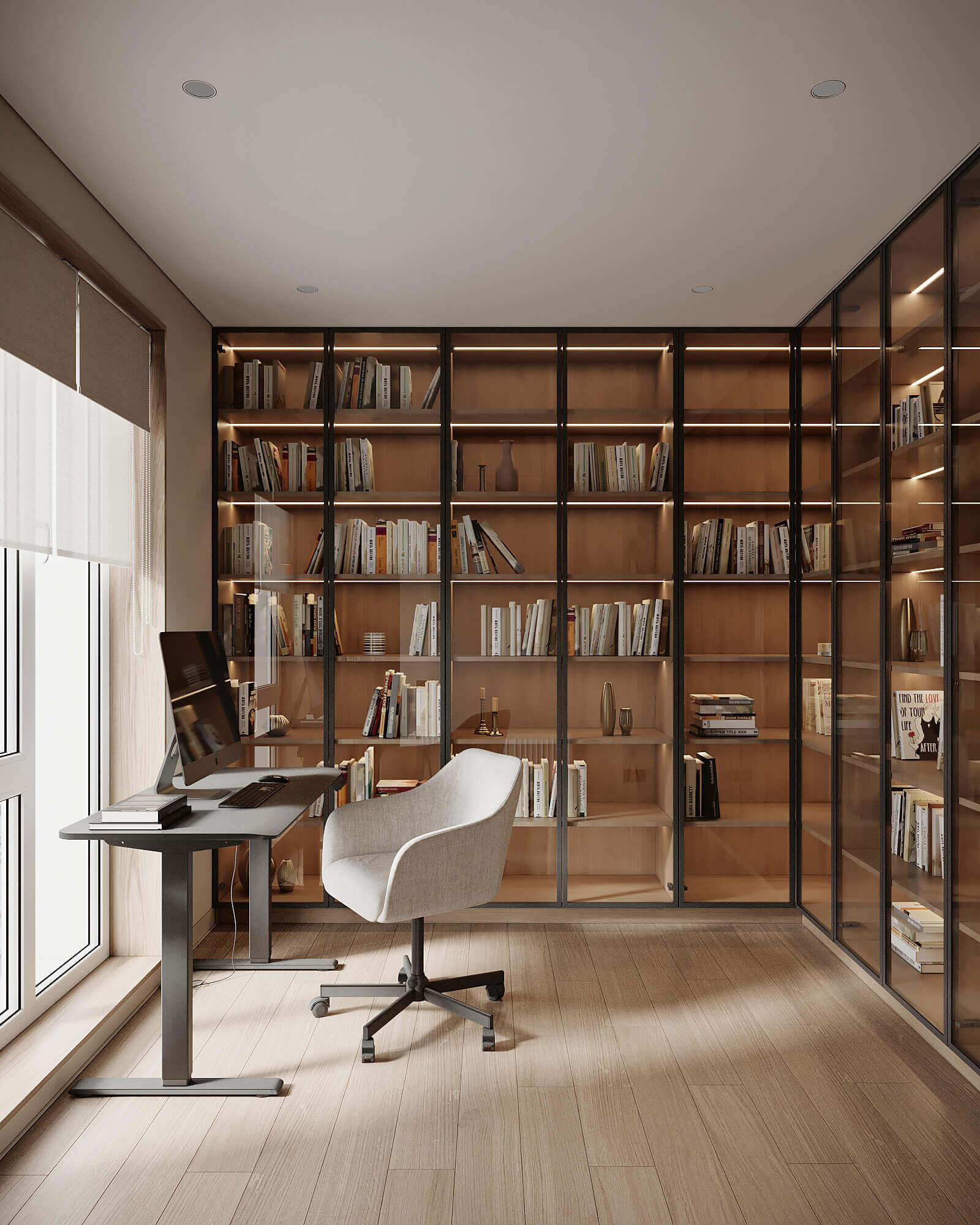
The office is built on clear logic and restrained accents: a built-in library with glass and a metal frame works as an architectural element, adding depth without overload.
The workspace by the window makes the most of natural light.
A neutral palette and natural materials create a backdrop that is conducive to concentration and decision-making.
Design @gl.design_studio
Project: Slowgreen, Lviv
Area: 9 m2