Interior redesign: features, challenges and key principles
In a world where trends are constantly changing and the functional needs of residents are transforming, interior redesign is becoming increasingly important. This is not just a cosmetic update, but a deep process of rethinking the space, combining creativity, analytics and a practical approach. Design studios involved in redesign should have a special set of skills and strategies. Let’s take a look at the key features of interior project redesign, the challenges that designers face, and the ways to achieve a successful result.
Key features of interior project redesign
1. Redesign is more than an update
The main difference between a redesign and the original design is the need to work with an already formed space. This means that the designer faces a number of constraints: design features, previous decisions, the technical condition of the object, and the client’s expectations, which are often based on previous experience of using the space. Successful redesign is the art of transformation without destroying what is valuable, it is the ability to maintain harmony while adapting the space to new needs.
2. Working with the existing context
The first stage of redesign is an in-depth audit of the existing interior. This includes analysing the functionality, ergonomics, style, condition of materials and furniture. Often, it is the analysis that reveals bottlenecks, such as overcrowded areas, outdated solutions or inefficient zoning. Redesign allows you to rethink the functions of the space, for example, combine the kitchen with the living room or create a home office in the bedroom area.
3. Preserving valuable
One of the important tasks of redesign is to identify elements that are worth preserving. It can be natural wood parquetry, antique mouldings, designer furniture or even individual colour accents. By successfully integrating them into a new concept, the designer creates an interior with a history – not sterile, but emotionally rich and deep.
4. Changing the style without major repairs
Often, redesign involves working with a limited budget or in conditions where full renovation is impossible (for example, in a residential space). In such cases, colour, textiles, lighting and decor play an important role. Replacing curtains, new lamps, repainting walls or restoring furniture – these steps can dramatically change the perception of a space without serious costs.
5. Client psychology: working with expectations
Clients who apply for a redesign usually already have experience of living in an interior, which creates certain perceptions and habits. The designer should take this into account: in some cases, they may want to keep the area for morning coffee by the window, in others, they may want to change an inconvenient layout that has not caused any problems before. Successful redesign is not about imposing new solutions, but about dialogue and finding a balance between the new and the familiar.
6. Technical Challenges
Redesigns often involve complexities related to existing utilities, window placement, load-bearing walls, etc. Therefore, the designer must work closely with engineers and builders to ensure that the proposed solutions are not only aesthetically pleasing but also technically feasible.
7. Redesign as an environmental strategy
The environmental aspect is worth mentioning separately. Redesign is an opportunity to give a ‘second life’ to things that already exist. Recycling furniture, reusing materials, avoiding unnecessary dismantling – all of this is in line with the principles of sustainable design and reduces the impact on the environment.
Interior redesign is a complex, multi-level process that requires a clear understanding of both the technical and emotional aspects of the space. For a design studio, this is a chance to show not only aesthetic taste, but also flexibility, empathy and professionalism. The result is not just a renovated room, but a living space that responds to its inhabitants in a new way.
More about the project
The redesign of the Flat Coffee Cat coffee shop in Podillia City shopping mall is a story about cosiness even within the framework.
Designing in a shopping mall has its challenges – you can’t change the floor, walls, or ceiling of the mall, but this didn’t stop us from creating an atmospheric place.
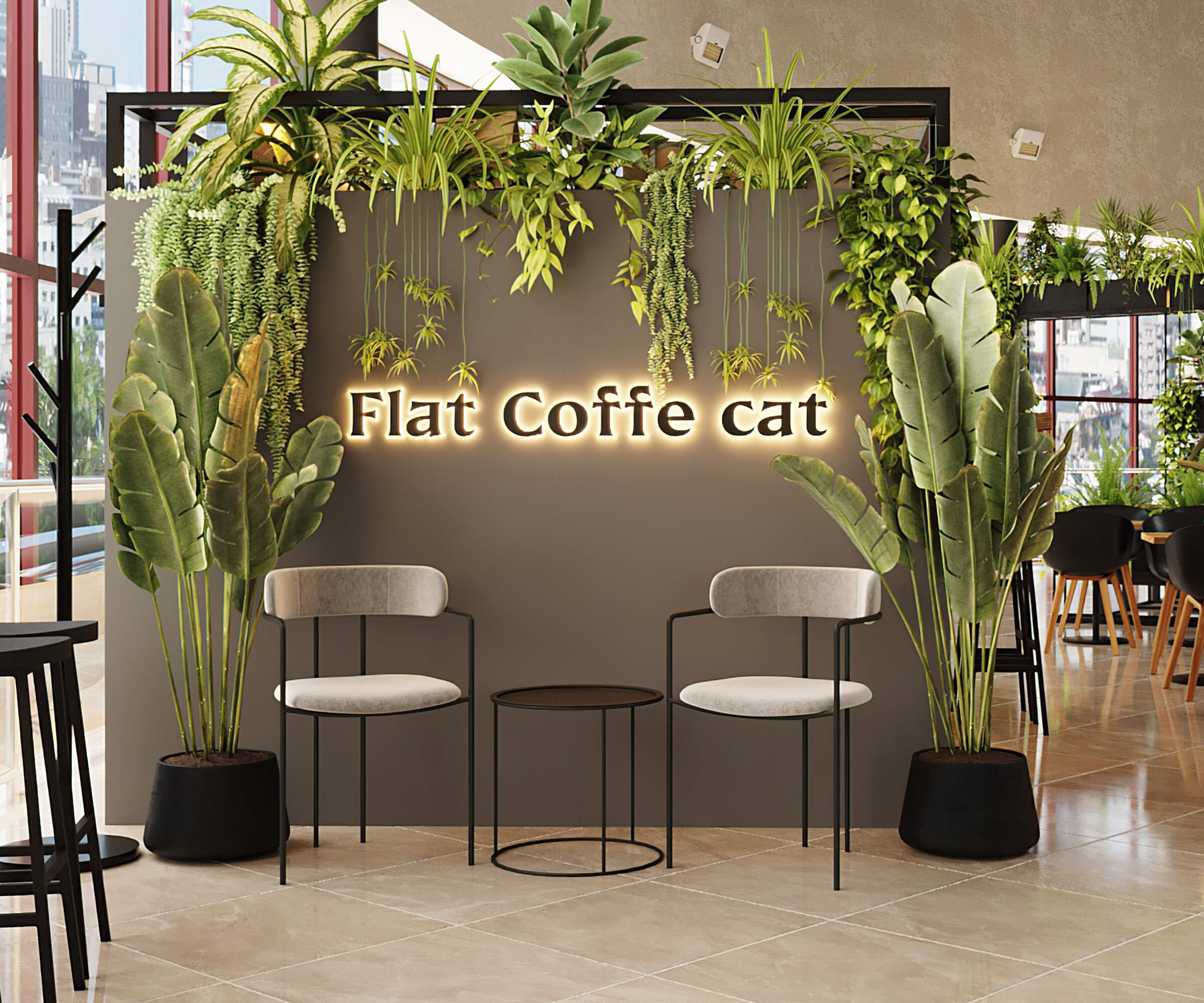
Minimalism in furniture, natural greenery and an atmosphere that breathes freshness. The focal point is a green wall with a neon logo and two stylish armchairs, an ideal area for taking photos and relaxing. Coffee has its own style here.
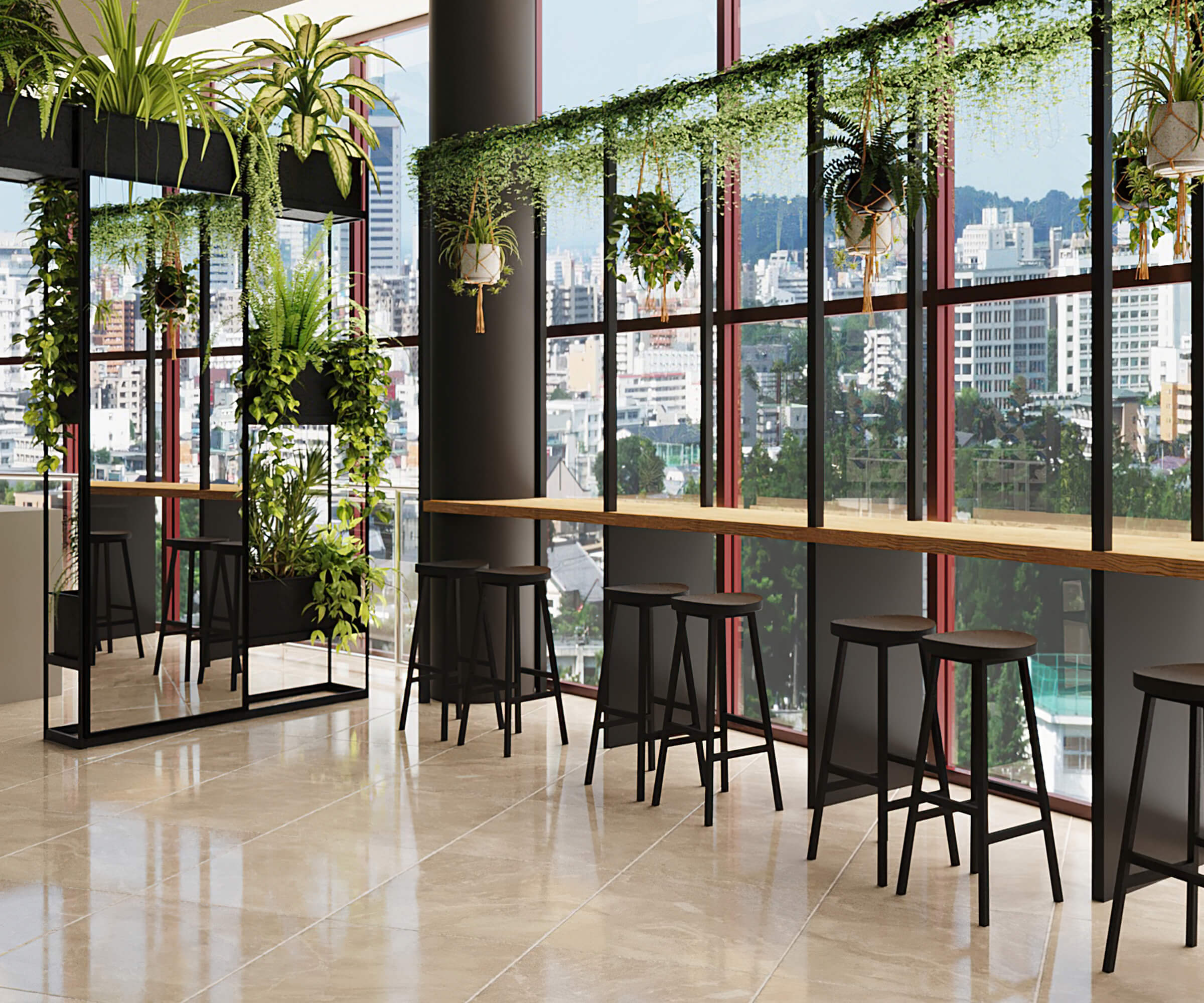
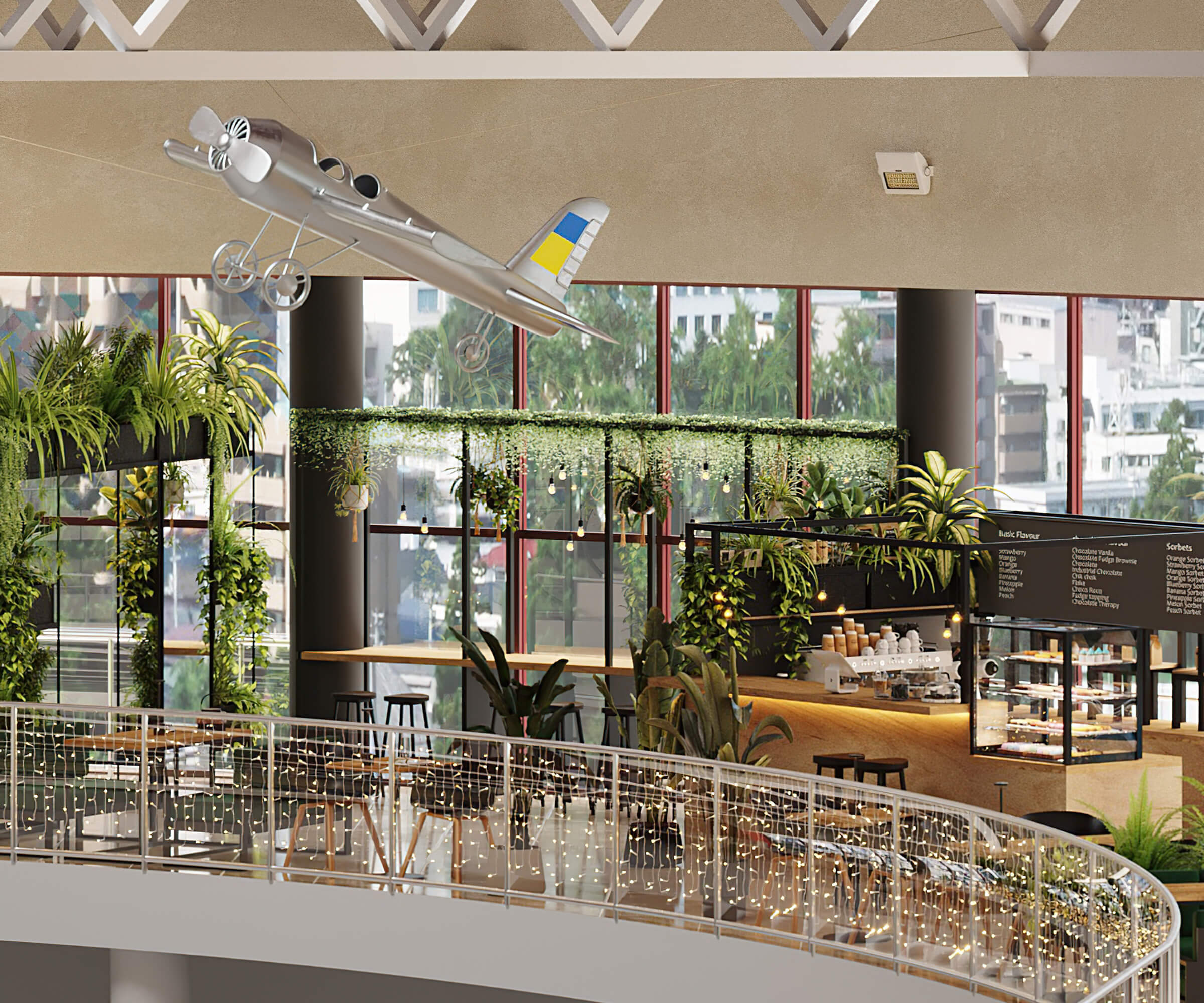
The heart of the space is the bar counter. Light wood, eco-style accents, a contrasting black sign and a dessert display case – everything is harmoniously combined. And the greenery behind the bar adds cosiness and naturalness.
Glass, metal and wood work together to create an atmosphere that makes you want to come back.
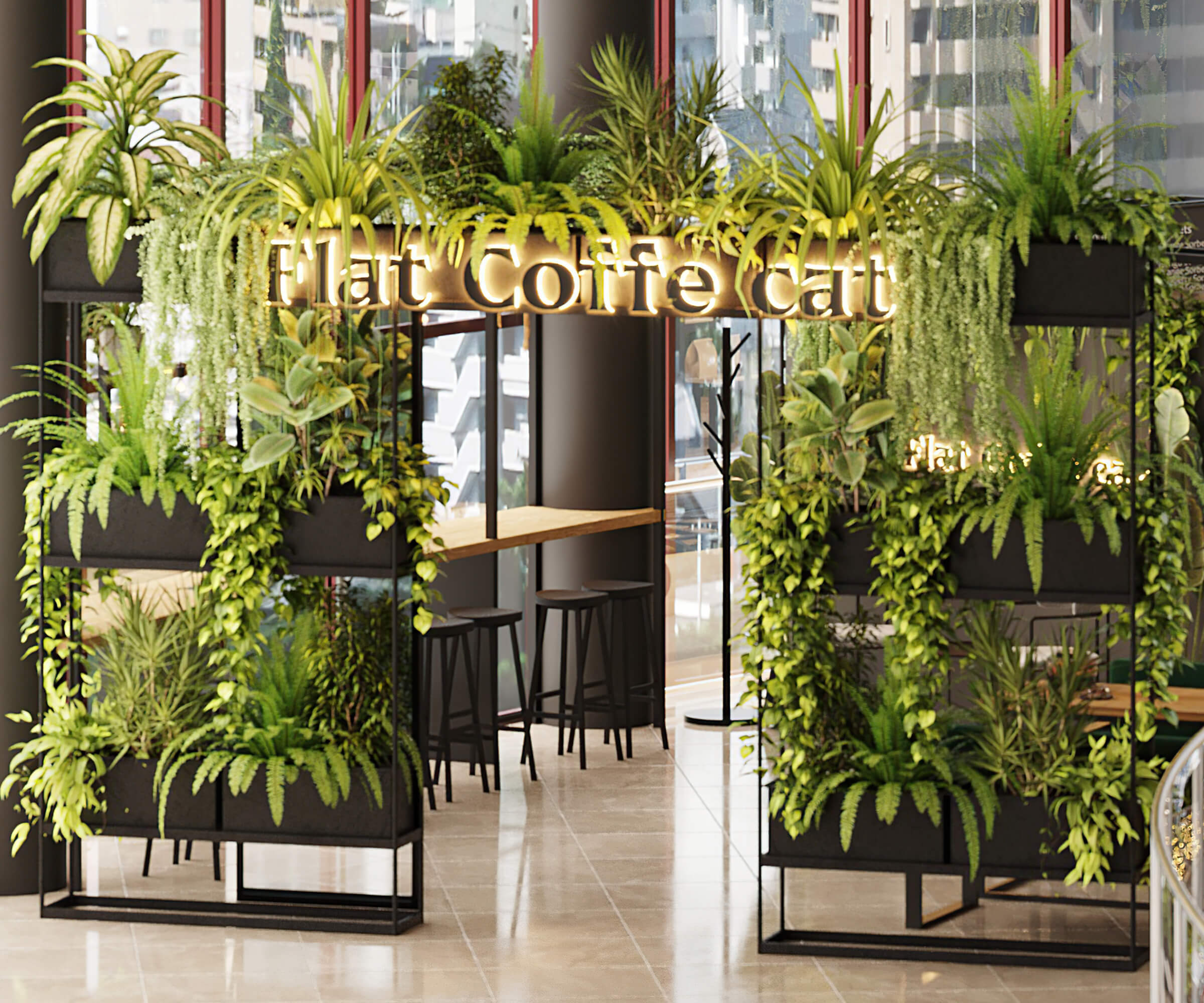
And finally, the entrance, which immediately immerses you in the atmosphere of Flat Coffee Cat. We designed it with an emphasis on greenery: metal racks with potted plants form a light but expressive design, complemented by a neon sign. Inside, the space is smoothly extended by green partitions, wooden tables and upholstered chairs with foliage-coloured upholstery. It looks like a small garden right in the centre of the shopping centre.
Design @gl.design_studio
Project: Flat Coffee Cat, Podillia City shopping mall, Vinnytsia
Area: 75 sq.m.