Hutsul aesthetics in a modern interior: not a decor, but an identity
Modern interior design has long gone beyond stylistic formulas. Today it is looking for deeper meanings, authentic sources and honest stories. In this context, Hutsul aesthetics appears not as a nostalgic reminder of the past, but as a powerful cultural resource. It returns to the spaces not as a superficial ethno-decor, but as a meaningful style capable of forming a new visual language – modern, relevant, and deep.
Hutsul culture is not only about coloured carpets or carved wooden furniture. It’s about symbols, archetypes, materials, and techniques that have been formed over the centuries. Ornaments, ceramics, weaving, wood carving are carriers of meaning, not just decorative elements. They carry encoded meanings: a connection with nature, the rhythms of life, the idea of beauty and harmony. And it is these meanings that can become part of the modern space – without excessive folklore, without being sharovarish, without being stylised as a ‘tourist ethno’.
Integrating Hutsul motifs into a modern interior is not about copying forms. It is about working with depths. For example, wood in the style of Hutsul crafts can retain its authentic texture but be presented in the restrained geometry of modern minimalism. Or ceramics – instead of a bright decor for a shelf – can become part of an architectural solution: in the form of a tile, lamp or decorative panel.
Contemporary Hutsul graphics can work with ornamentation as an abstraction, turning traditional symbols into visual accents in a restrained but deep interior. This allows you to speak to the space in the language of culture, not just a trend. This approach requires fine taste, research and understanding of primary sources – it is no longer about decorating, but about designing with cultural responsibility.
Why is this important?
Because we no longer need to borrow someone else’s identity. Scandinavian minimalism, Japanese wabi-sabi, French eclecticism – all of this is great, but not ours. We have our own language – visual, tactile, emotional. And it is relevant because it is rooted. It is able to speak to the modern world on an equal footing – without simplifications and clichés. Design shapes not only the environment but also cultural memory. We read values through objects, textures, and compositions. Therefore, by integrating Hutsul meanings into interiors, we are not just creating aesthetics – we are broadcasting identity. We form a connection between generations, between tradition and innovation, between the local and the global. Hutsul aesthetics is not the past. It is the living energy of culture that can be modern, relevant and absolutely organic in design projects. You just have to work with the content, not the forms. Because the style passes, but the meanings remain.
More about the project
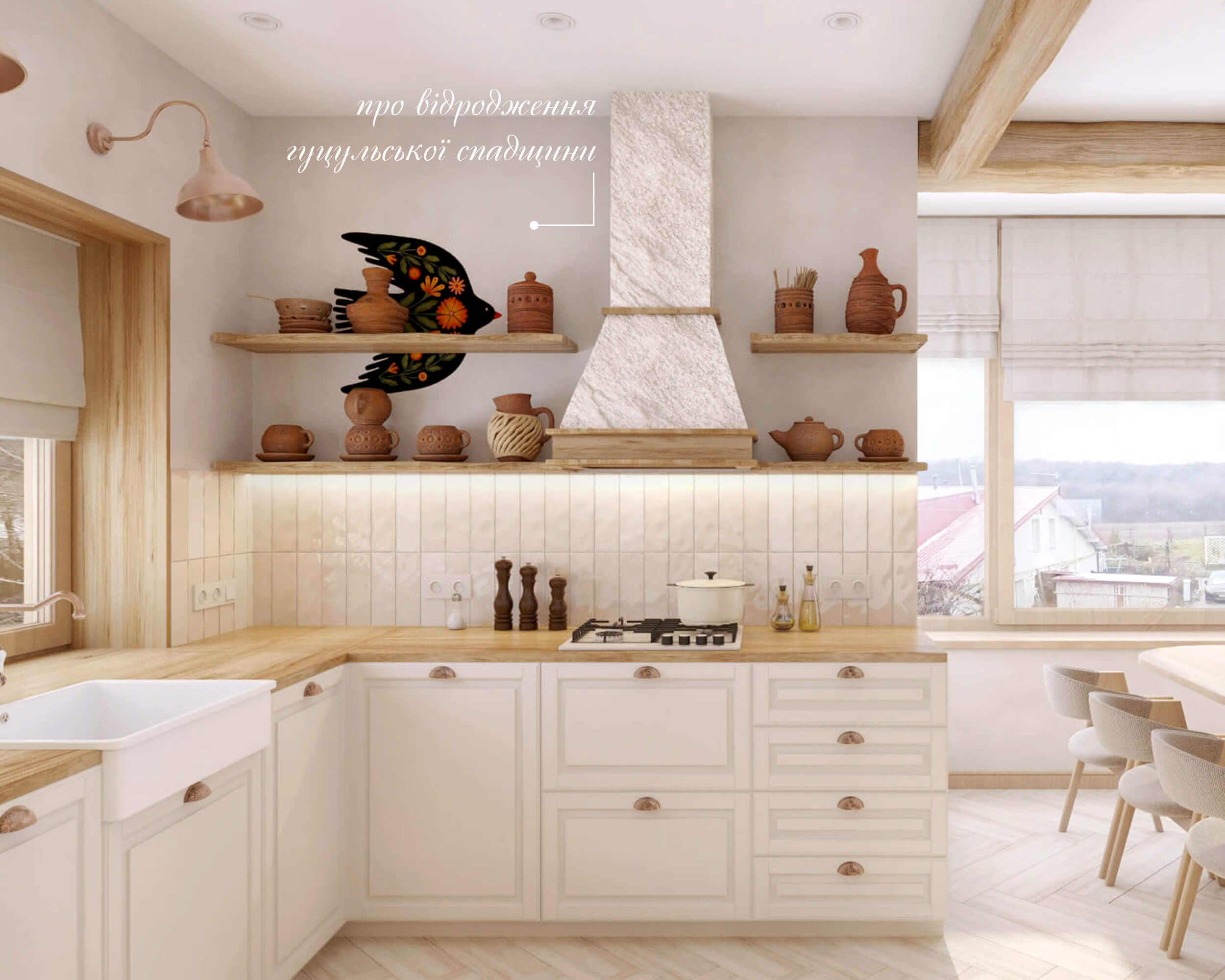
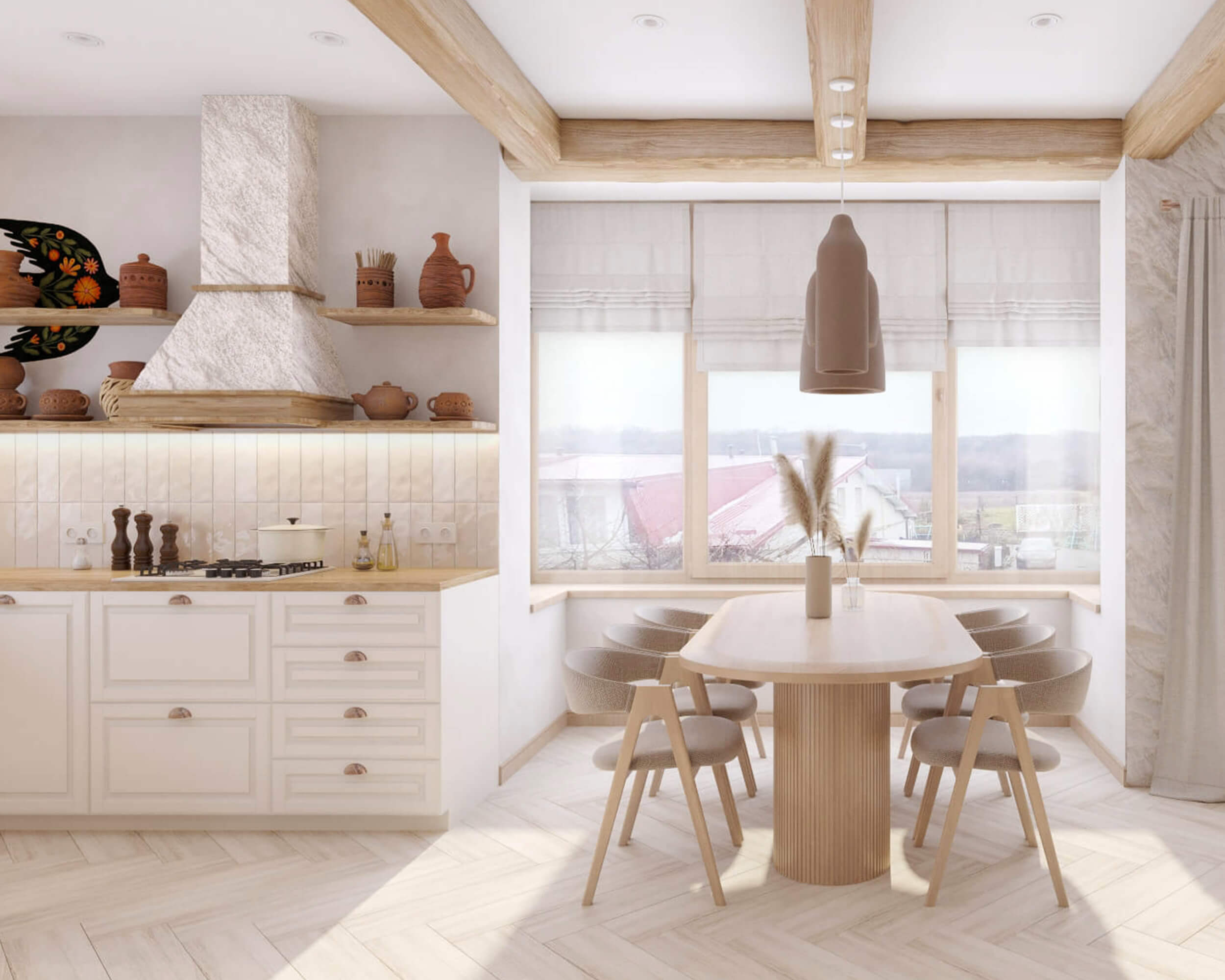
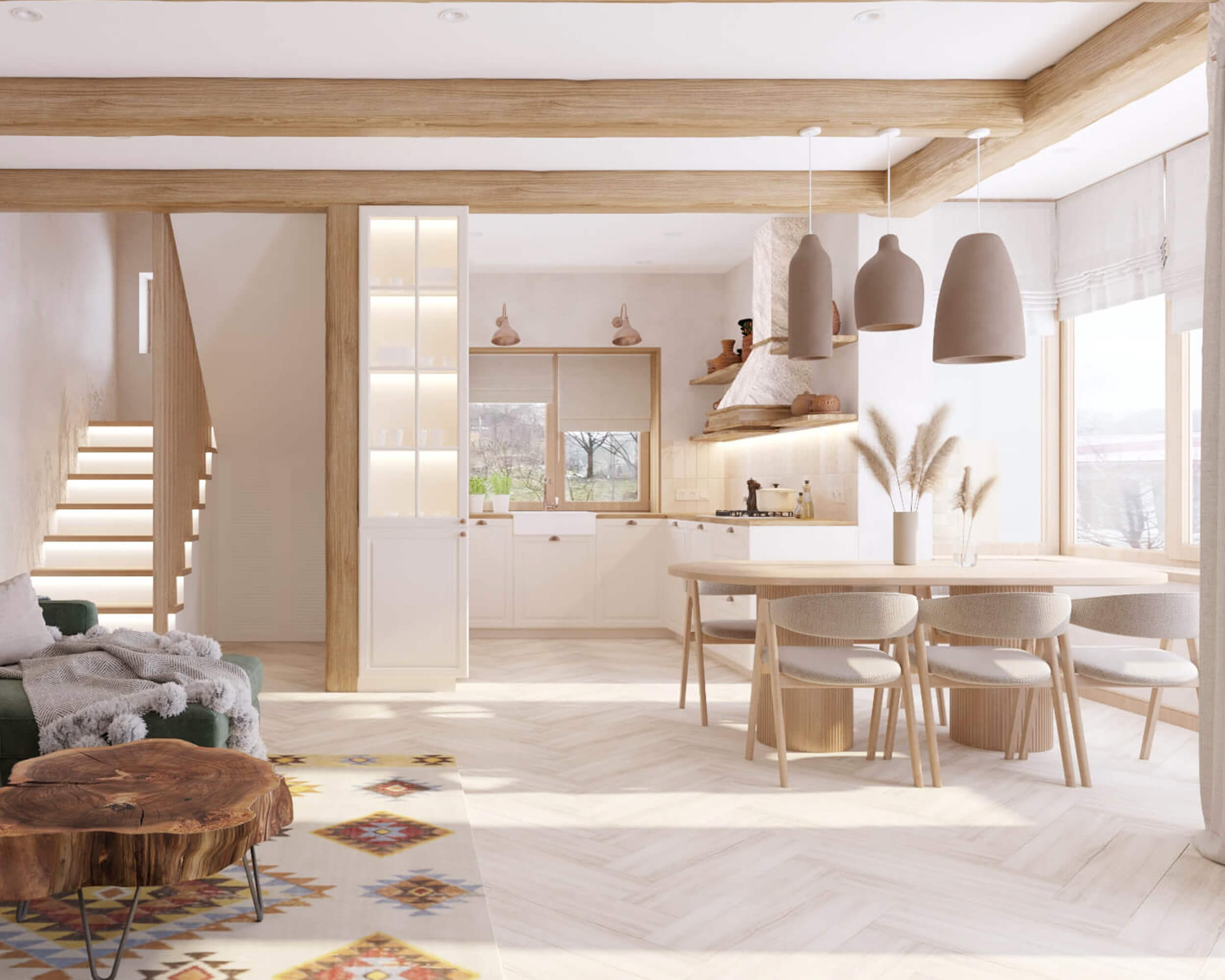
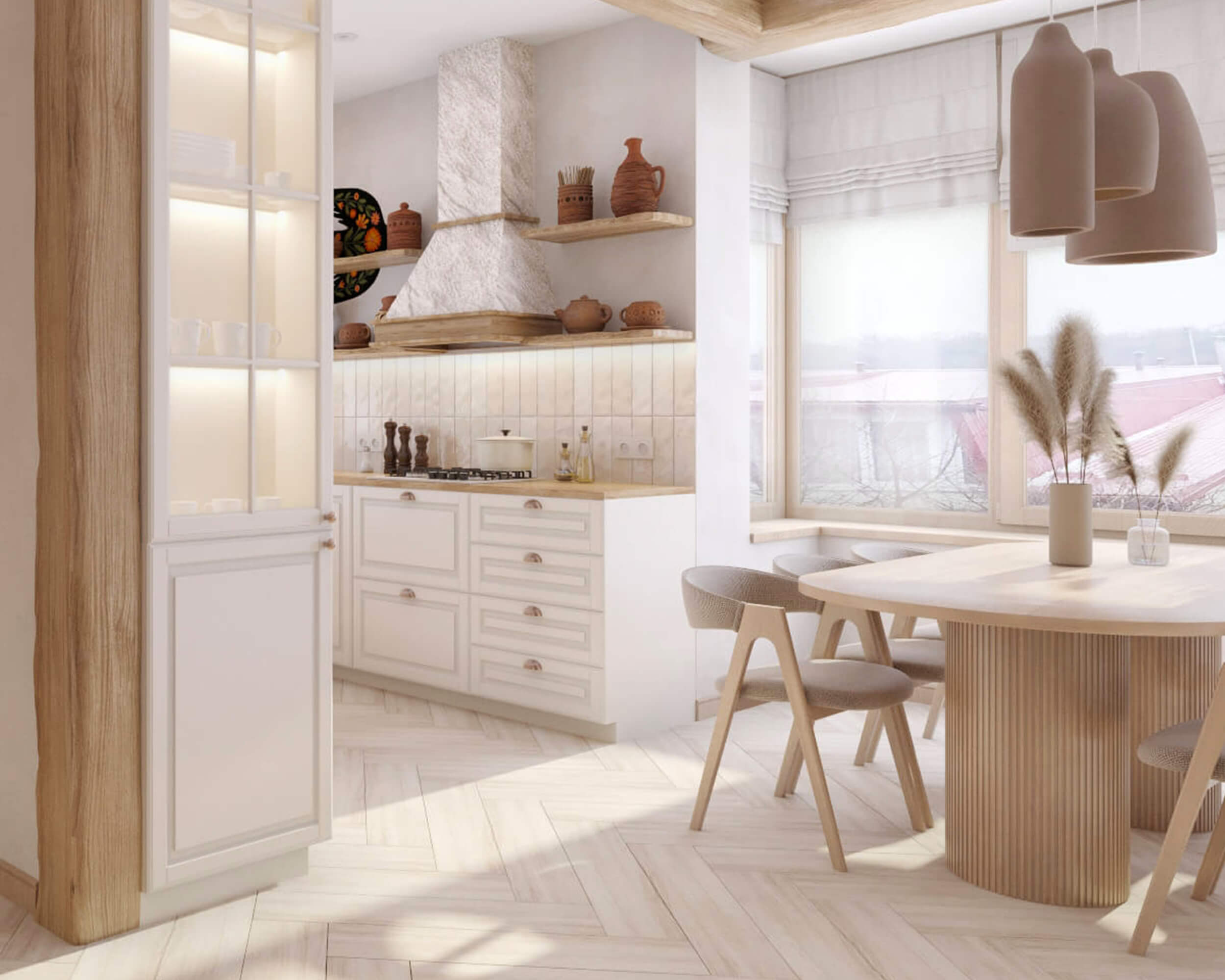
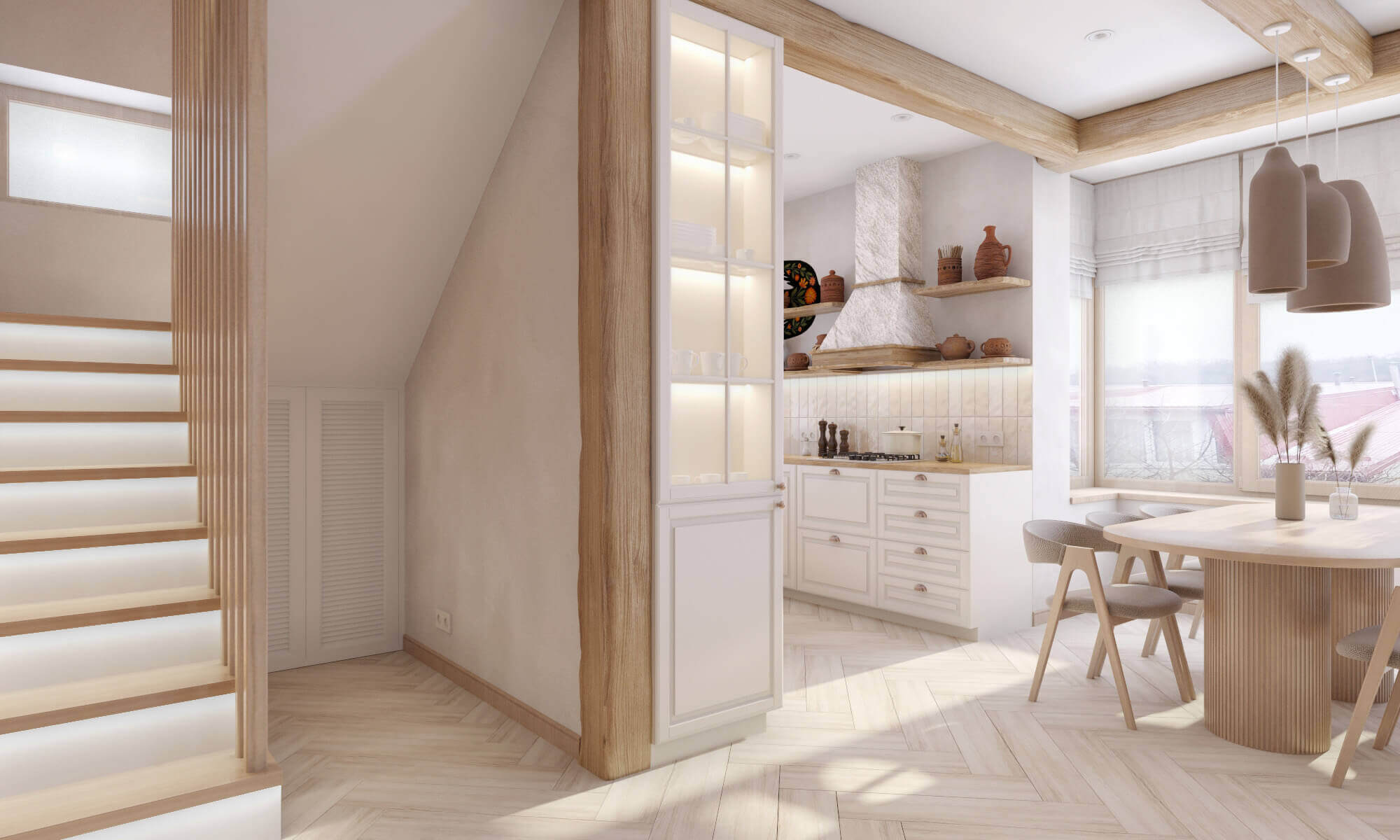
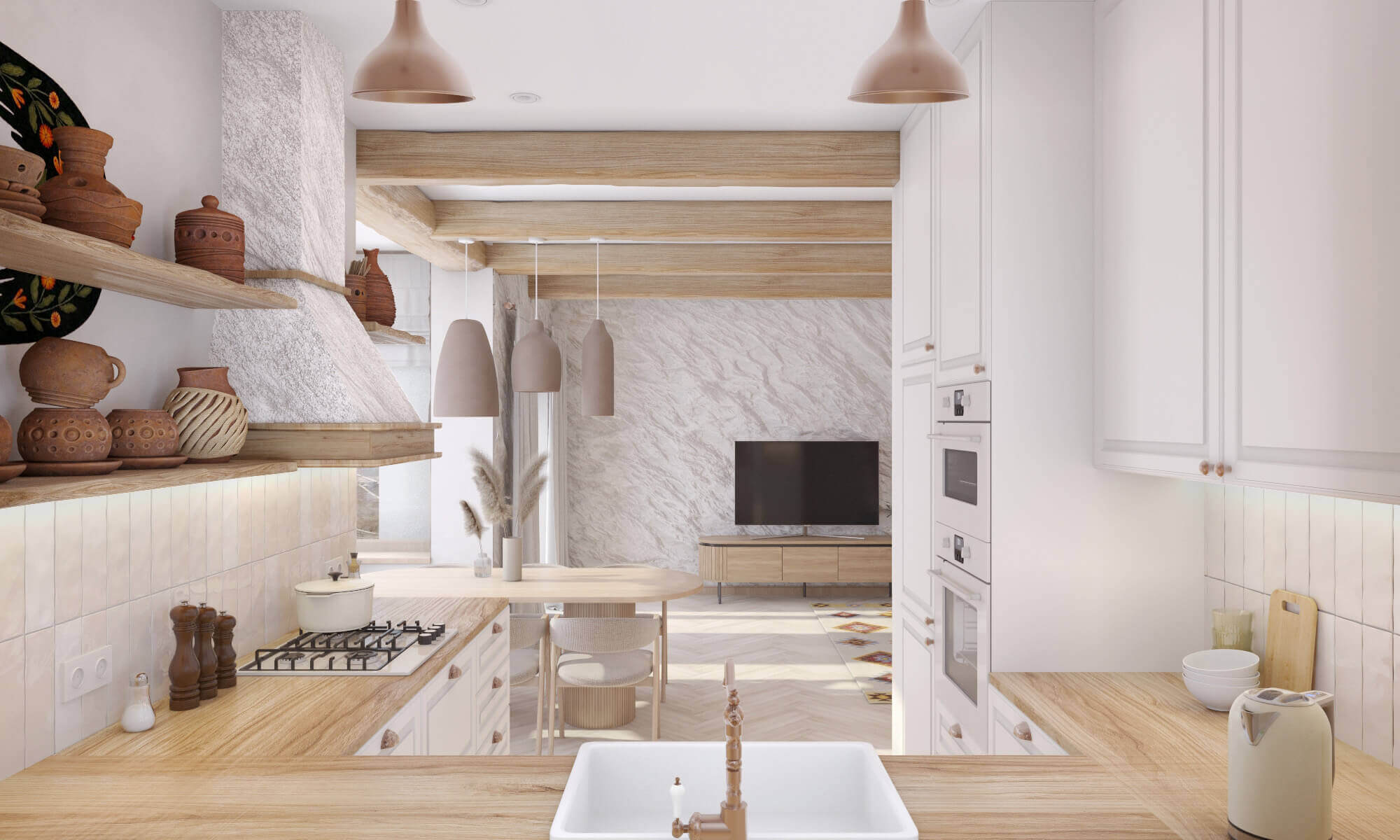
In this project, we combined modern design with a deep respect for Hutsul culture. The customers dreamed of an interior that felt the spirit of the Carpathians, but at the same time, the space remained bright, cosy and relevant.
We integrated the symbols of Ukrainian embroideries into the stencil wall decoration, used an authentic Hutsul carpet with geometric ornaments and focused on the texture of raw wood, which adds warmth and naturalness.
Handmade ceramics, wooden elements, and a bird pattern are also integrated. The milk-coloured kitchen facades, wood and plaster hoods, copper lamps – everything works to create a holistic, deep and authentic space.
The walls are covered with decorative plaster, reminiscent of traditional mazanka. This is not just an interior – it is a modern embodiment of Ukrainian identity.
⠀
Design @gl.design_studio
Project: Tradition Reimagined, Vysloboky village, Lviv region.
Area: 39 sq.m.