Contemporary Ukrainian identity in interior design: what does this mean in 2026?
What does a Ukrainian interior mean today?
Is it enough to add traditional ornamentation, ceramics or embroidered textiles to make a space Ukrainian?
In 2026, the answer is a resounding ‘no’.
Contemporary Ukrainian interior design is gradually moving away from a literal interpretation of traditions and developing its own language. It may be minimalist, understated, high-tech or even entirely contemporary, yet at the same time maintain a distinct connection to culture, place and context.
For us, as an interior design studio, Ukrainian identity is not a set of mandatory decorative elements. It is a way of thinking in which local culture becomes part of the contemporary architecture of a space.
From ethnic style to a new Ukrainian aesthetic
For a long time, traditional Ukrainian décor was used in interiors quite literally: ornaments, embroidery, towels, earthenware, and decorative painting. Such solutions may be appropriate when the concept calls for them, but contemporary flat design allows us to engage with cultural heritage in a much more nuanced way.
Ukrainian motifs can be reinterpreted through colour, form, texture, scale and materials. Rather than copying a traditional element, we should take its essence as our starting point.
It is precisely this approach that allows you to create a contemporary Ukrainian interior that does not look thematic or stylised to resemble the past.
Petrykivka painting in a contemporary interior
One of the most recognisable elements of Ukrainian culture is Petrykivka painting. Its characteristic floral motifs, dynamic compositions and rich colour palette offer great potential for contemporary design.
However, it is by no means necessary to literally transfer the traditional ornament onto a wall.
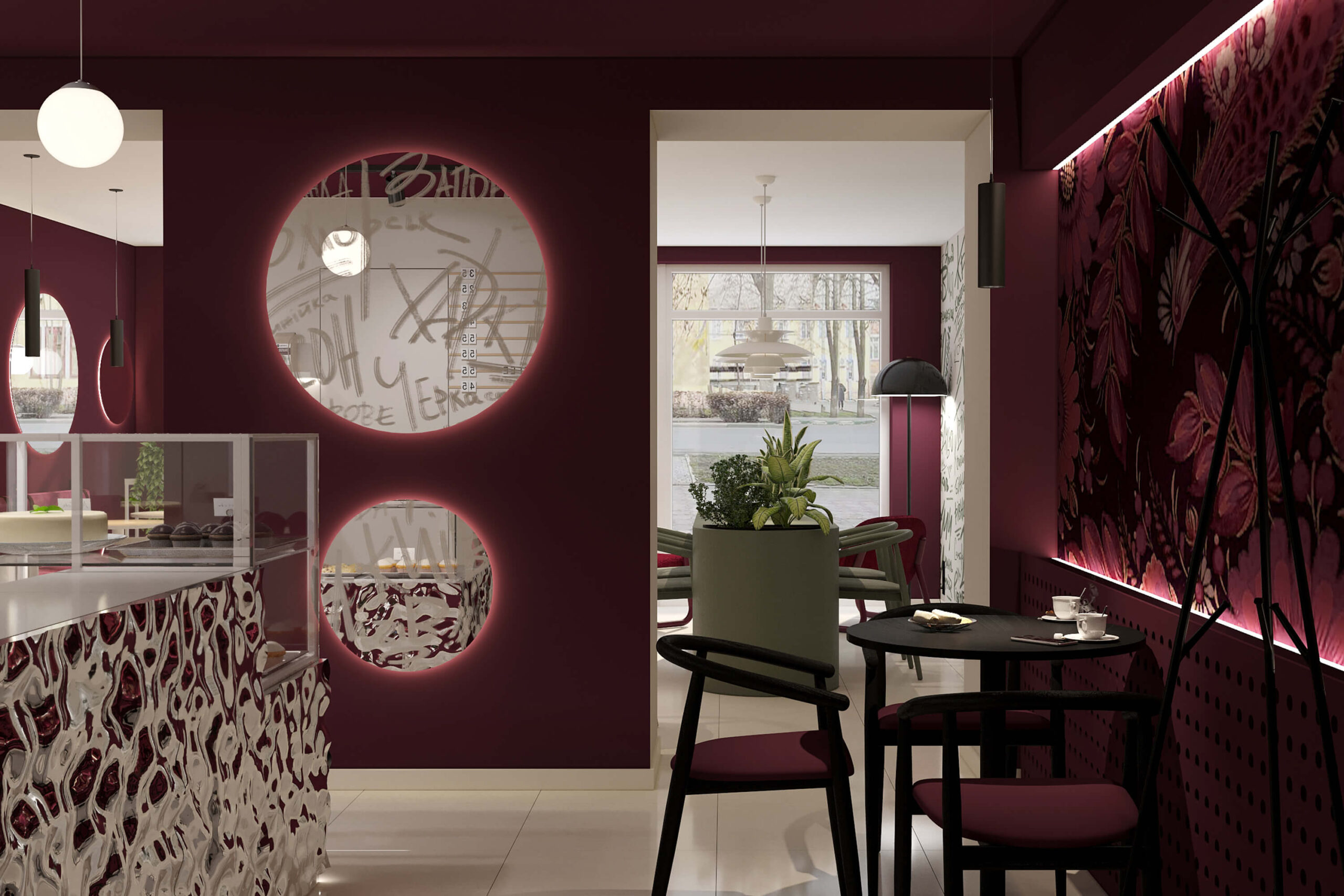
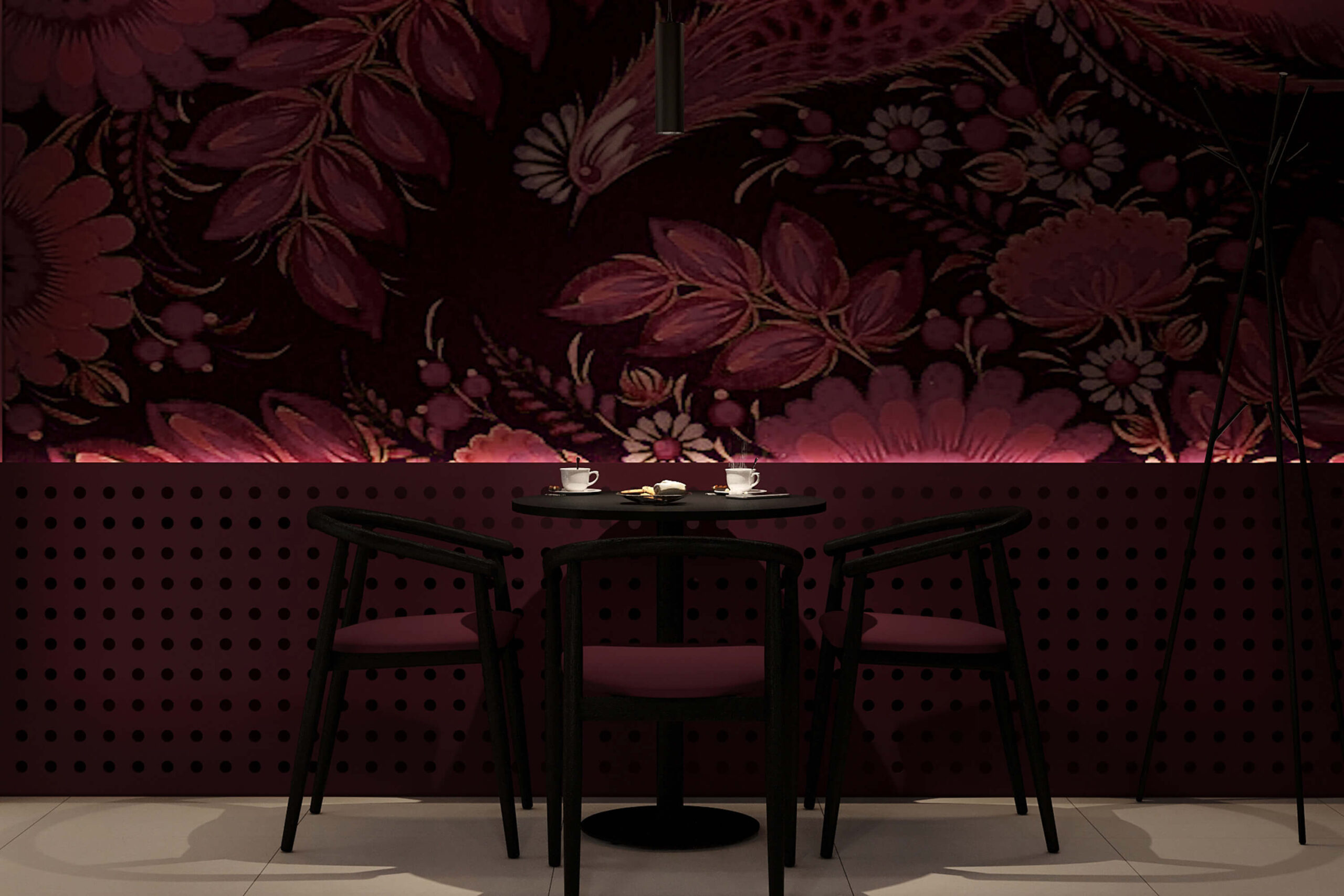
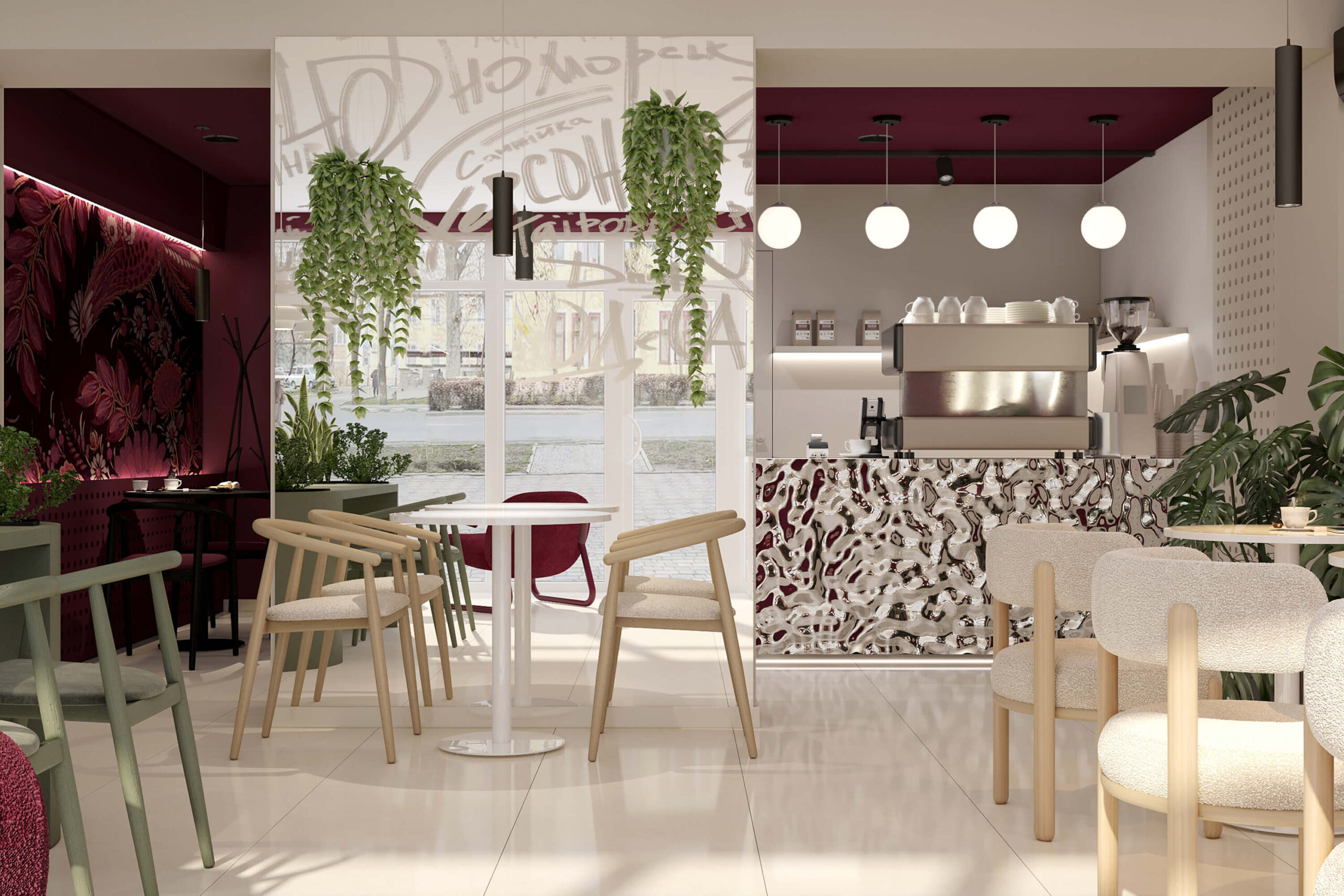
Petrykivka can serve as a starting point for creating an original panel, a graphic composition, a decorative object or even a colour scheme for an interior. It can be interpreted in a minimalist way, retaining only the characteristic fluidity of the lines or the interplay of shades.
As a result, traditional art does not compete with architecture, but complements it.
Graffiti as a reflection of modern Ukraine
Another important cultural layer is graffiti and street art.
Whilst traditional murals draw on our cultural heritage, graffiti often speaks to Ukraine as it is today. It is linked to the urban environment, contemporary culture, personal stories and topical social issues.
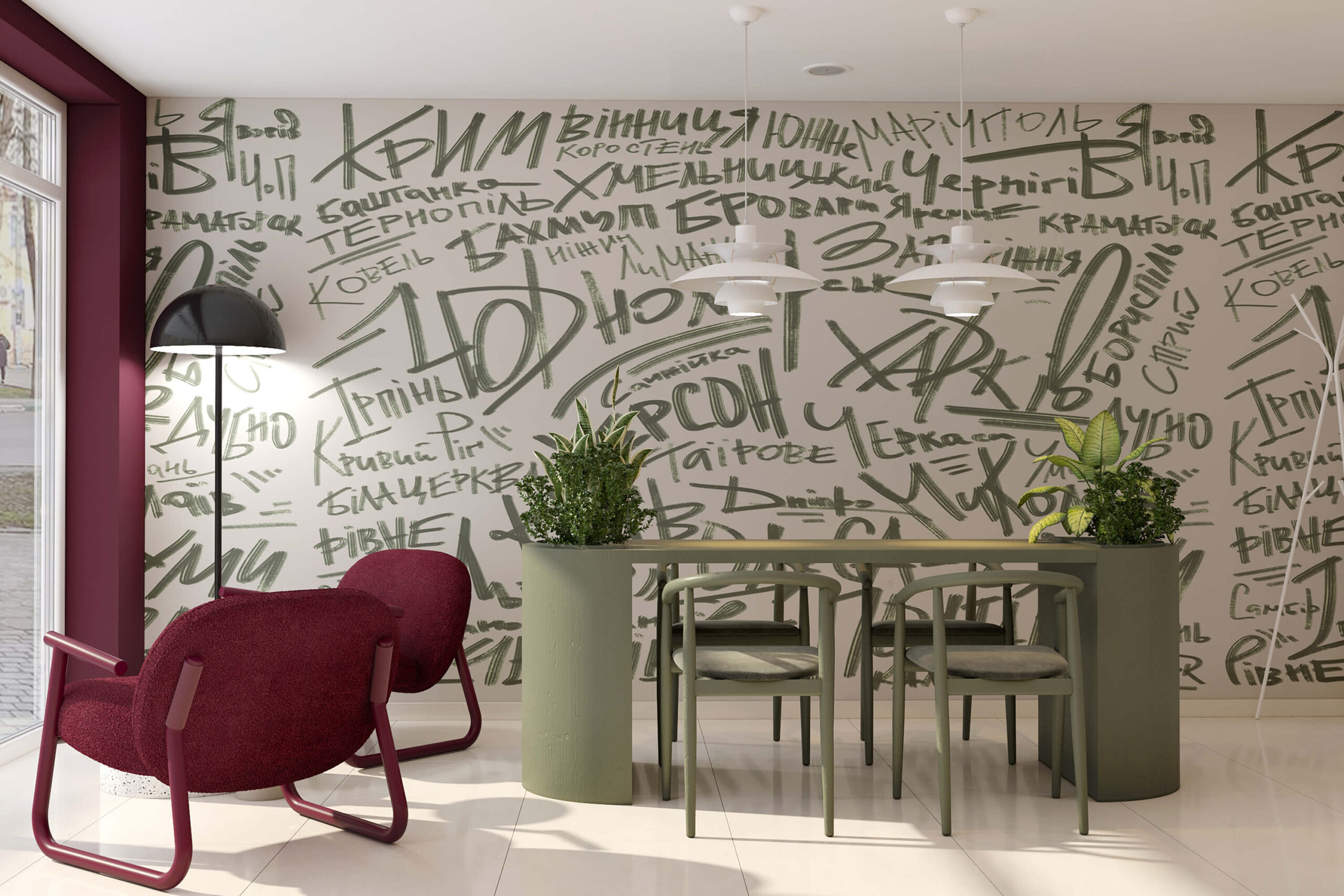
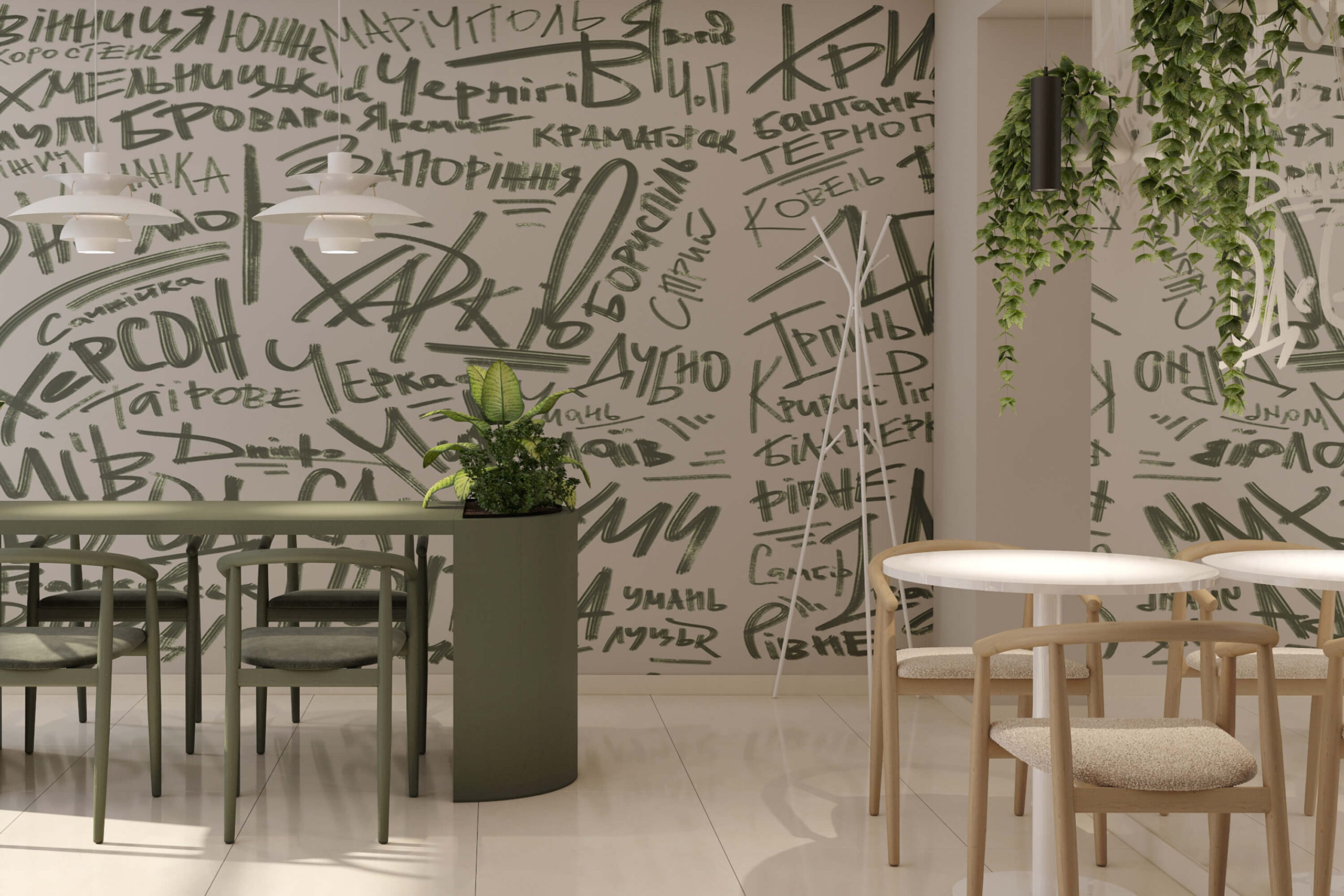
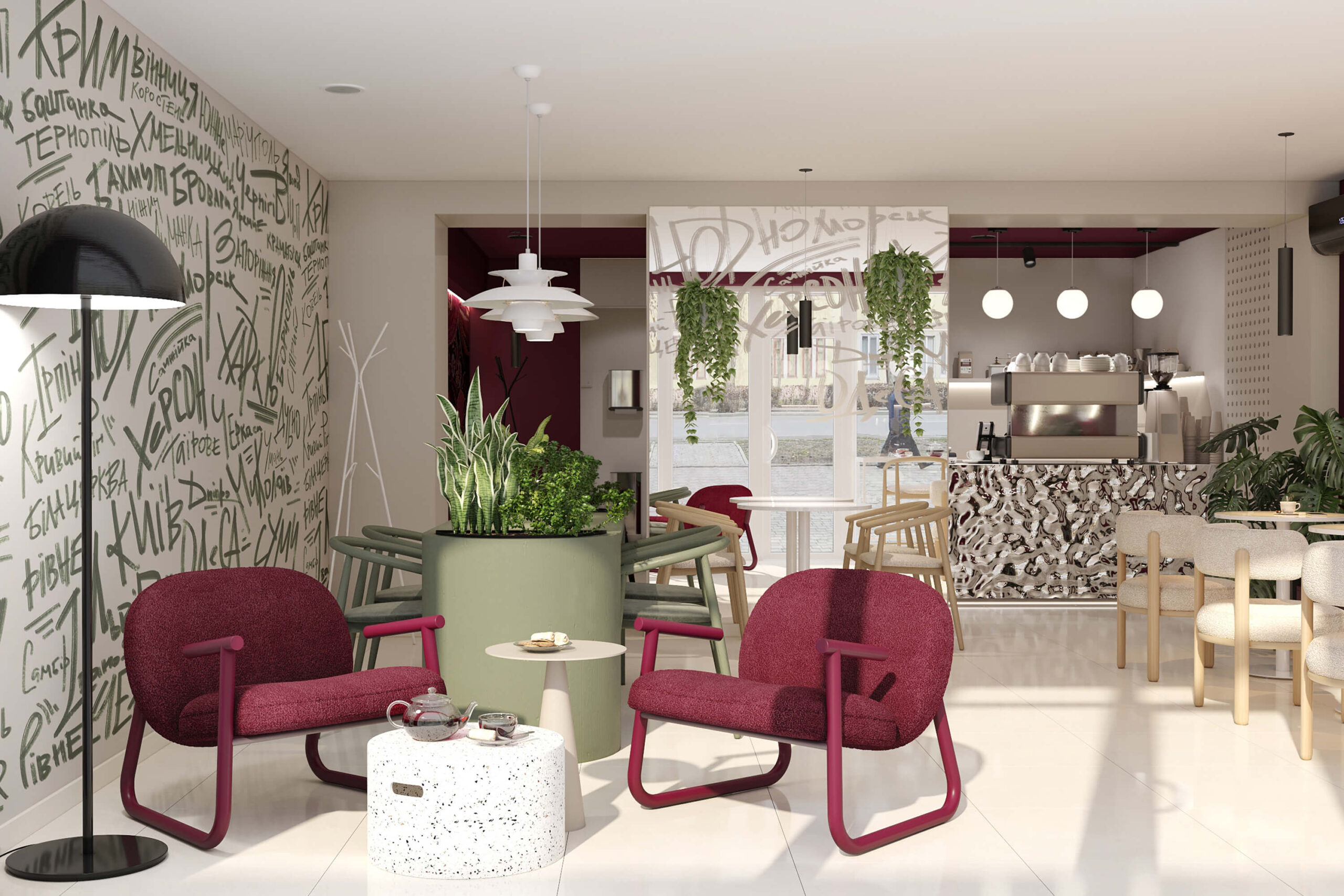
In interior design, graffiti can function as a fully-fledged artistic element: a large-scale mural, a bespoke painting or a graphic composition created specifically for a particular space.
This works particularly well in modern flats, restaurants, creative offices and public spaces, where art can become part of the architecture itself.
Contemporary Ukrainian art as part of the interior
Another trend that is actively shaping Ukrainian interior design is collaboration with contemporary artists and local creators.
A painting, photograph, sculpture, ceramic piece or graphic work can be more than just the finishing touch; it can be one of the first elements around which the entire concept is built.
This approach is particularly important for premium interiors. After all, in a space where the architecture, lighting, furniture and materials have already been carefully considered, it is art that often adds individuality and emotional depth.
Local materials and Ukrainian product design
Ukrainian identity can be expressed not only through art. It can be discerned in the choice of materials and objects.
Natural wood, stone, ceramics, handmade textiles, bespoke furniture and lighting from Ukrainian manufacturers – all of this makes it possible to shape the local character of a space without directly using ethnic symbols.
Today, Ukrainian product design is becoming increasingly distinctive. Consequently, interior design from a Ukrainian studio can be international in terms of standard and aesthetics, whilst remaining deeply local in its essence.
How to integrate Ukrainian motifs without overloading the interior
One of the main mistakes is trying to convey a Ukrainian theme by using too many symbols at once.
Instead, the principle of accent works well in contemporary interior design. A single art piece, an original panel, an unusual ceramic item or a piece of Ukrainian design can say more about a space than dozens of decorative details.
Context also plays an important role. Petrykivka painting in a classic interior and its abstract interpretation in a minimalist flat will create completely different impressions.
Therefore, Ukrainian details should be selected not in isolation from the concept, but in harmony with it.
A Ukrainian interior that speaks a contemporary language
We believe that the future of Ukrainian interior design lies not in a literal recreation of the past, but in its reinterpretation.
Petrykivka painting can become contemporary graphic art. Graffiti can be part of the architecture. Traditional materials can form the basis for new product design. And local art can be a key element of the spatial concept.
The result is an interior that does not require a large number of obvious symbols to be recognisable.
Ukrainian identity in design in 2026 is not about decoration. It is about context, authorship and the ability to create something new, drawing on one’s own culture.
This is precisely how we see contemporary interior design in Ukraine: open to global trends, yet with its own character, history and voice.
More about the project
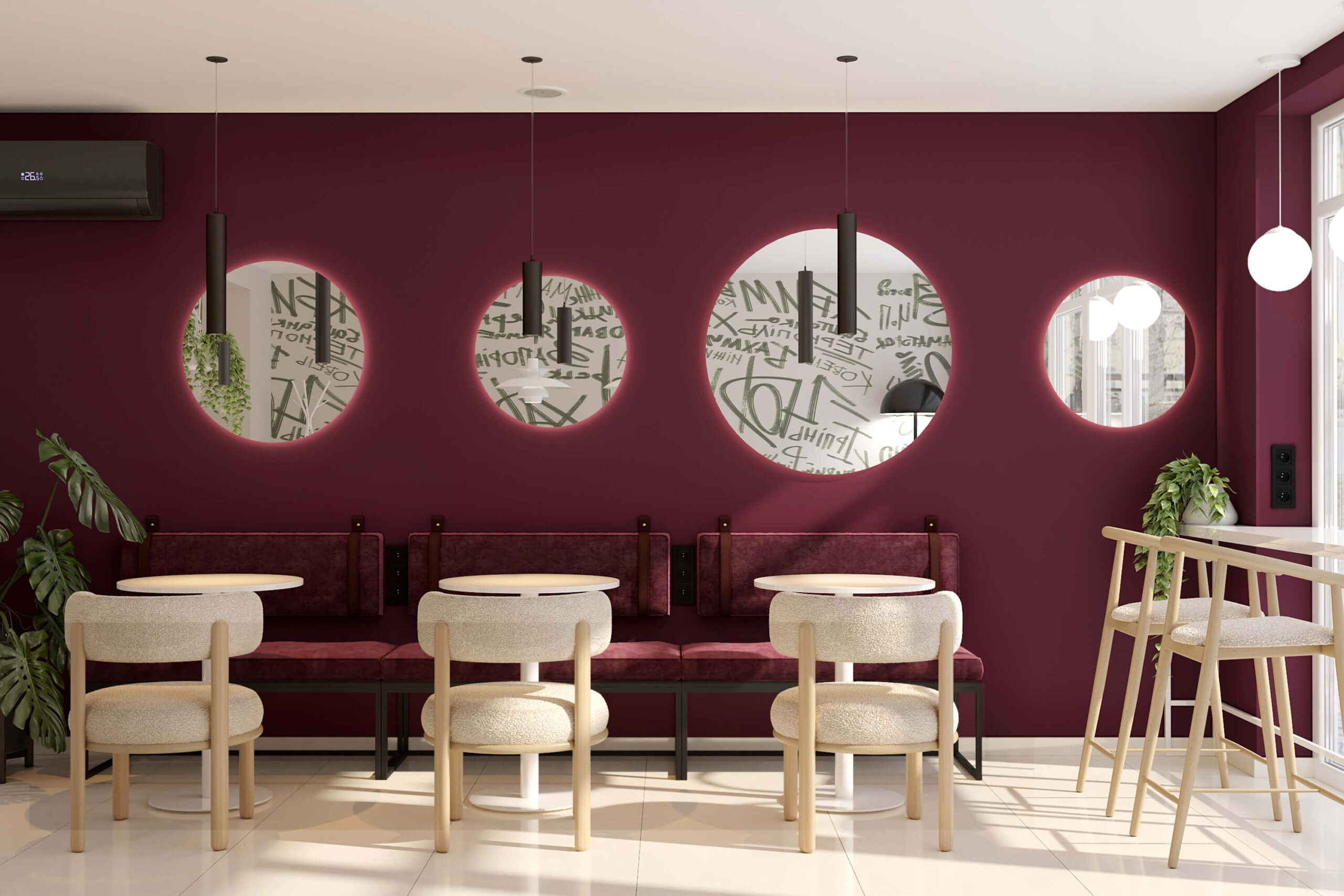
A café in Chornomorsk where Petrykivka painting meets graffiti, burgundy meets green, and mirrors become part of the space’s architecture.
No literal references or decorative ‘sharovarshchyna’.
Instead, an atmosphere you sense straight away.
We incorporated various scenarios for spending time here into the design: spaces for one, two or a group, as well as cosy and more open areas. And also – spots that naturally become part of guests’ Instagram feeds.
The interior wasn’t designed for a single season. We created a space that is meant to remain timeless.
The visualisations formed the basis for the completed café.
Design by @gl.design_studio
Project: Kavai Bar Cafe, Chornomorsk, Odesa region
Area: 57.4 square metres