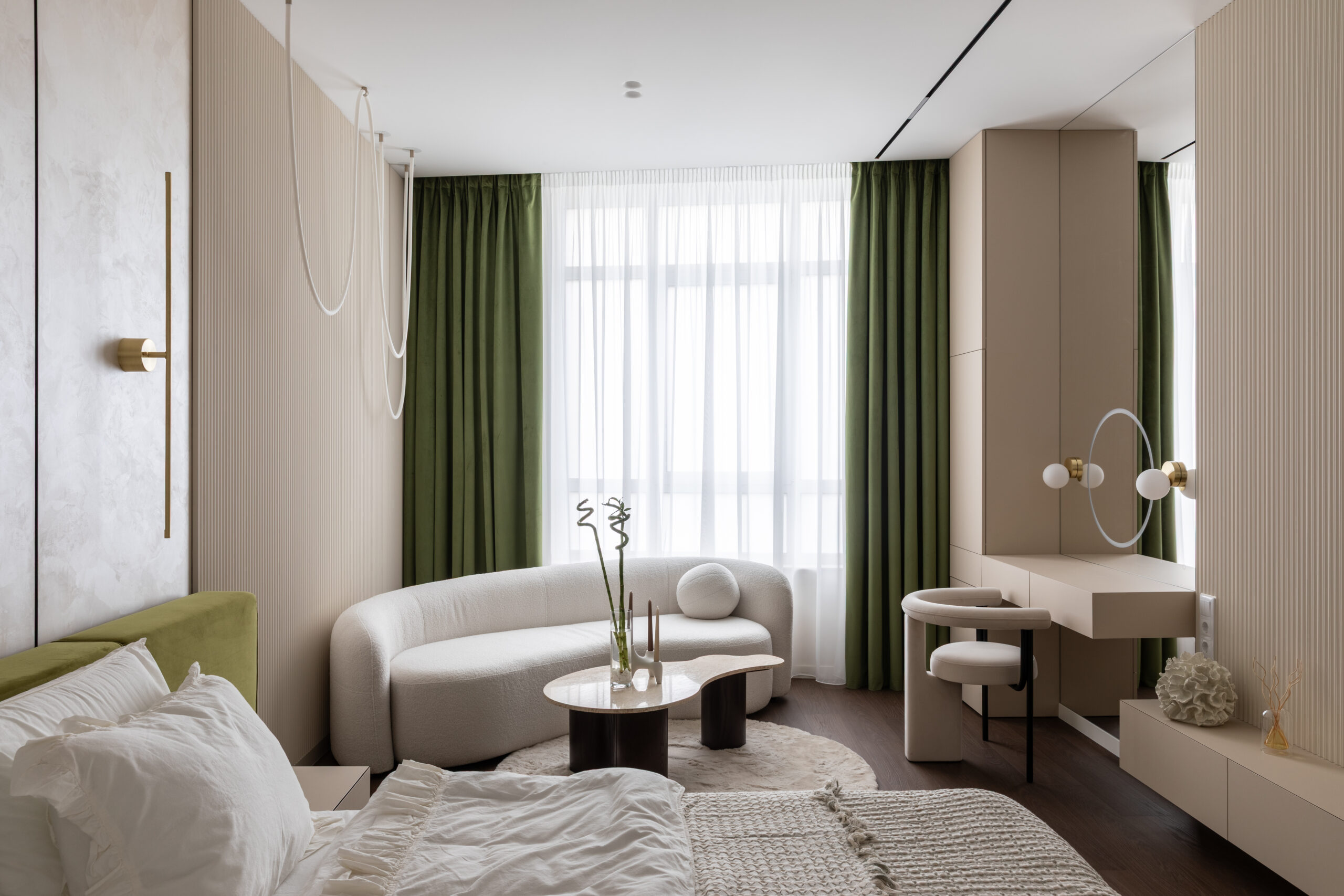
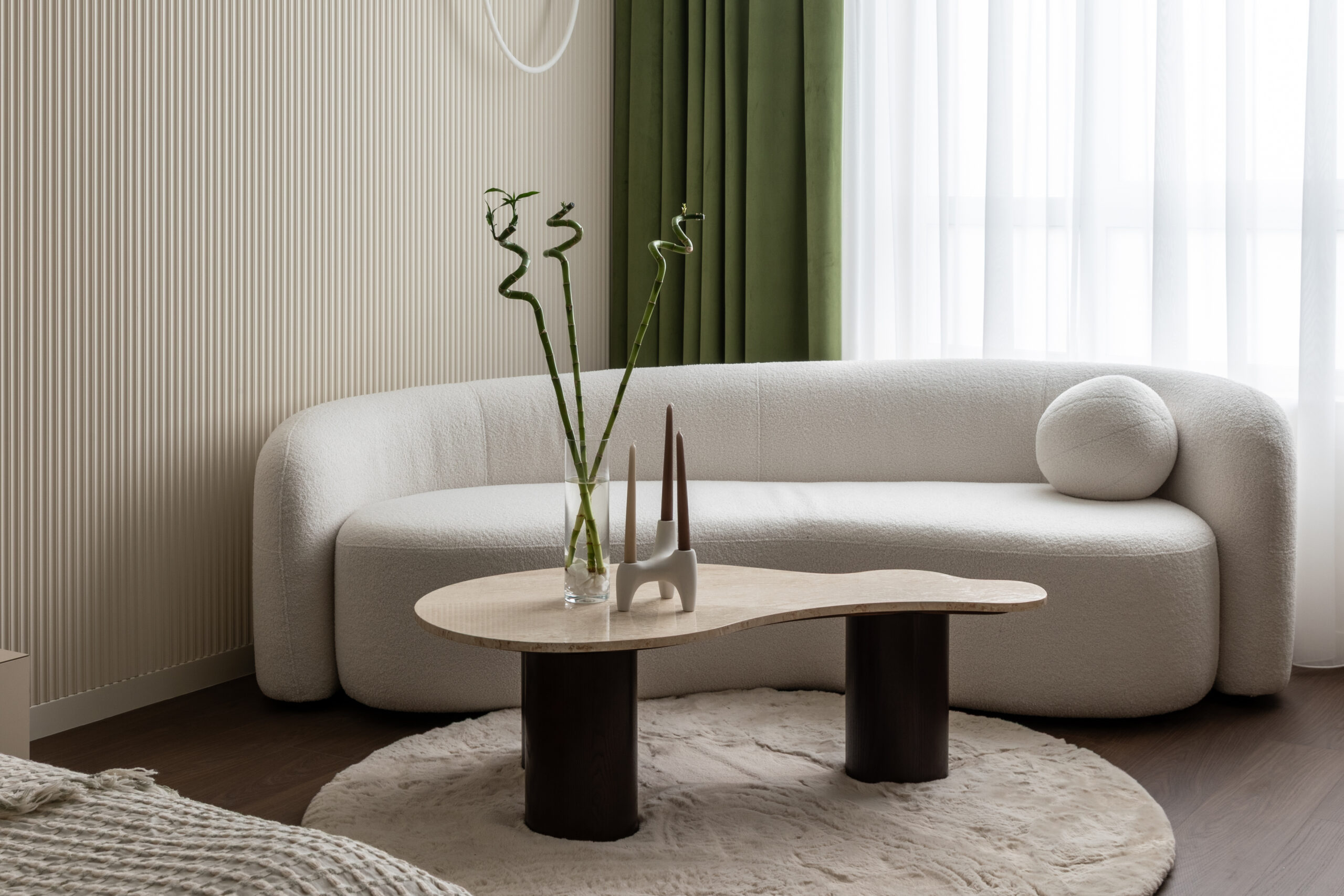
Curves in interior design: why flowing shapes remain a key trend in contemporary design
Contemporary interior design is increasingly moving away from rigid geometry in favour of fluid, organic forms. Curves are not merely a fashionable trend or a decorative element. They are a professional tool that helps architects and designers work with space, scale and the emotional perception of an interior. That is precisely why more and more interior design studios are incorporating flowing lines into residential and commercial projects.
Why do curved lines work?
People naturally perceive flowing forms as more comfortable and harmonious. They do not create a sense of harshness; on the contrary, they establish a gentle rhythm within the space. As a result, the interior appears cohesive, balanced and visually lighter.
Curved lines allow you to alter the flow of movement within a room. The eye naturally glides along rounded surfaces, and the space feels more open and spacious. This is particularly relevant for small flats, open-plan private homes and modern offices.
Where are curved forms used?
Whilst rounded forms were previously associated mainly with furniture, today they have become an integral part of the architecture of the space itself. Designers use curved lines in various elements:
- arches between rooms;
- decorative and functional alcoves;
- walls with intricate sculptural details;
- multi-level ceilings;
- bespoke furniture;
- partitions and decorative structures;
- lighting and unique design features.
All these design choices do not function in isolation, but form a unified interior concept, where every element supports the overall architectural vision.
Curves as part of architecture
Professional design is always based on the logic of space. If a rounded shape is used merely as a decorative accent, it quickly loses its relevance. But when curved lines are integrated into the architecture of a space, they begin to fulfil a practical function: they adjust proportions, help to zone the space, create a natural flow of movement and enhance the visual perception of the interior.
This is precisely why the contemporary design of a flat, house or commercial property is increasingly being planned with the use of flowing lines right from the concept stage.
Why does this approach remain relevant?
Trends change every year, but high-quality architecture is timeless. Curved lines are precisely one such solution. It is not tied to any particular style — it looks equally natural in minimalism, contemporary classic, Japandi, organic modern or eclectic styles.
When a form has a clear functional rationale, it requires no further explanation. It enhances the comfort, ergonomics and aesthetics of a space all at once. This is precisely why flowing lines remain timeless, regardless of fashion trends.
The role of a professional interior design studio
The skilful use of curved forms requires a comprehensive approach. It is important to take into account the geometry of the room, natural lighting, building services, furnishings and the future lifestyle or work scenario within the space.
A professional interior design studio creates not just a beautiful interior, but a well-thought-out system where every line serves a purpose. It is precisely this approach that allows for a space that remains relevant for years to come, meets the owners’ needs and combines aesthetics with functionality.
Curves are not just about décor. They are about architectural thinking, a balance of proportions and the creation of an interior that feels natural. That is precisely why flowing forms have become an integral part of contemporary design and remain one of the most effective tools for creating a comfortable, stylish and long-lasting space.