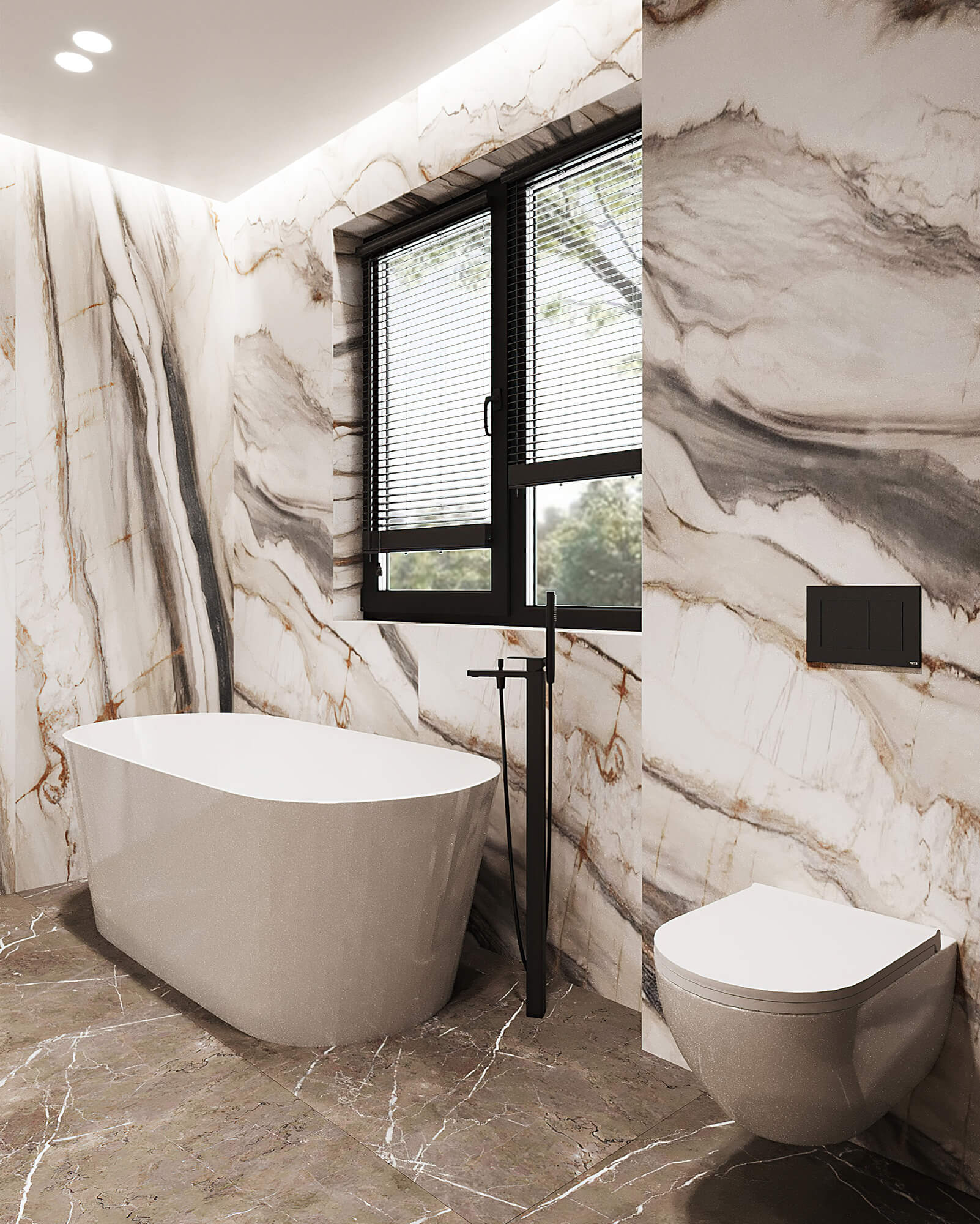
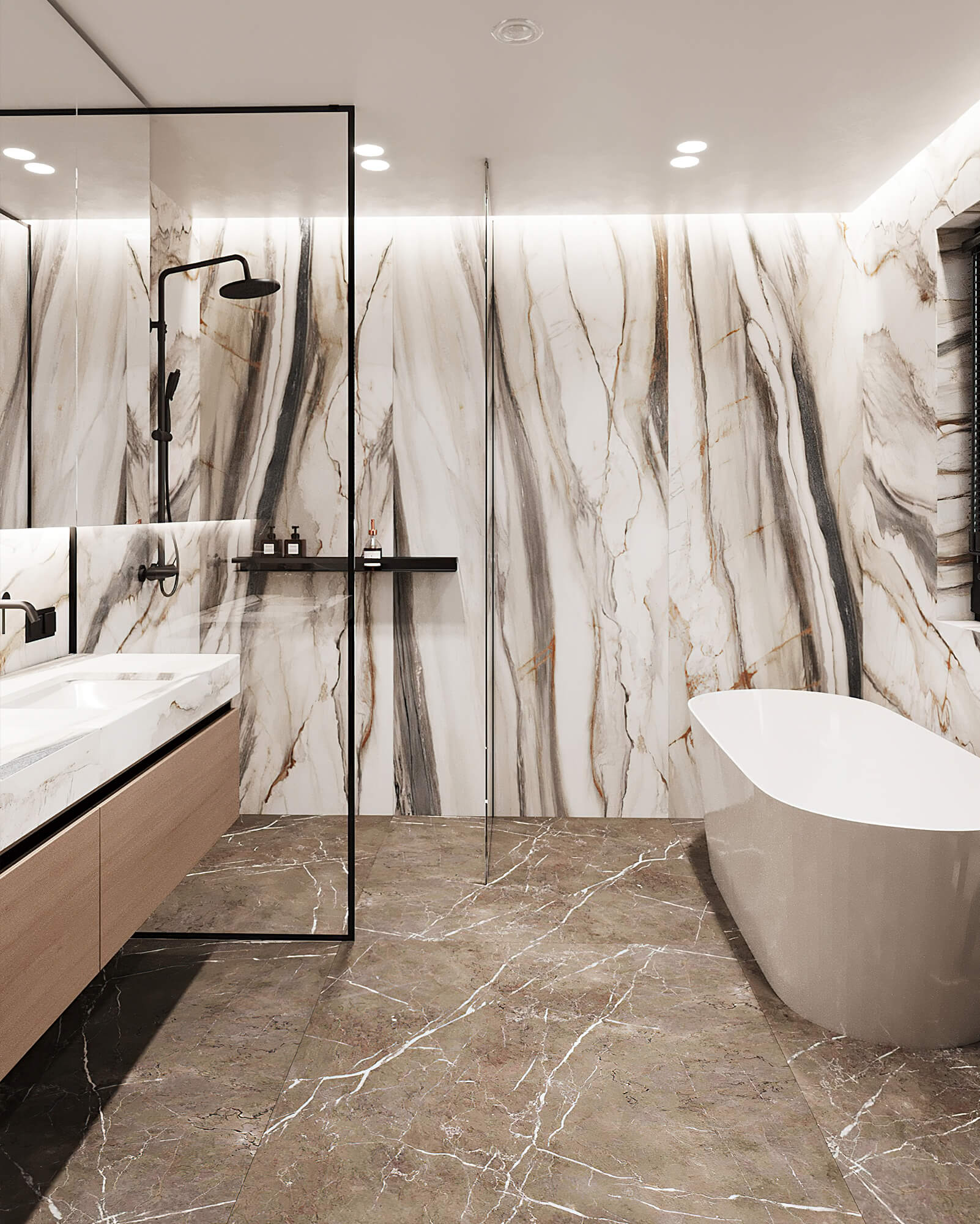
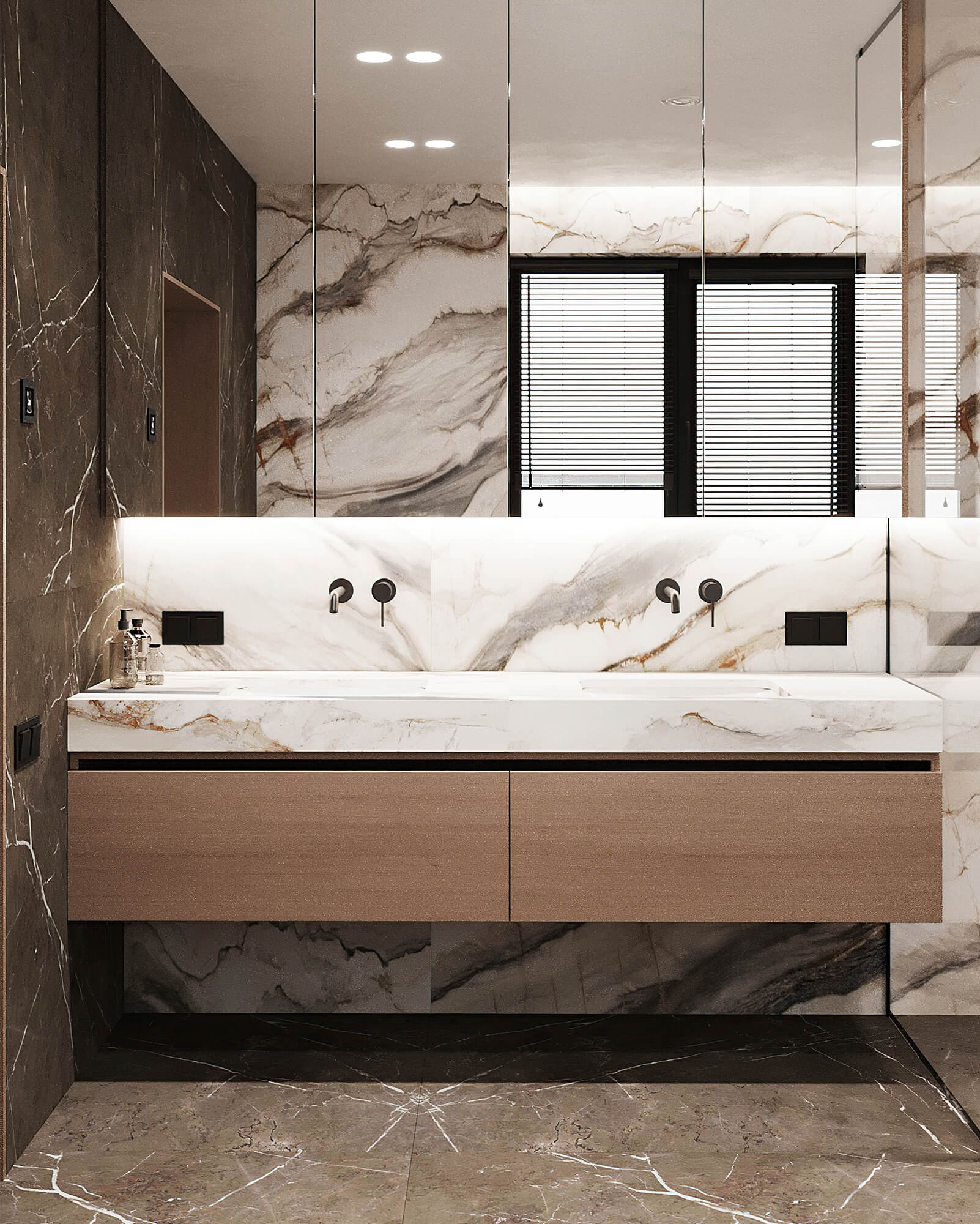
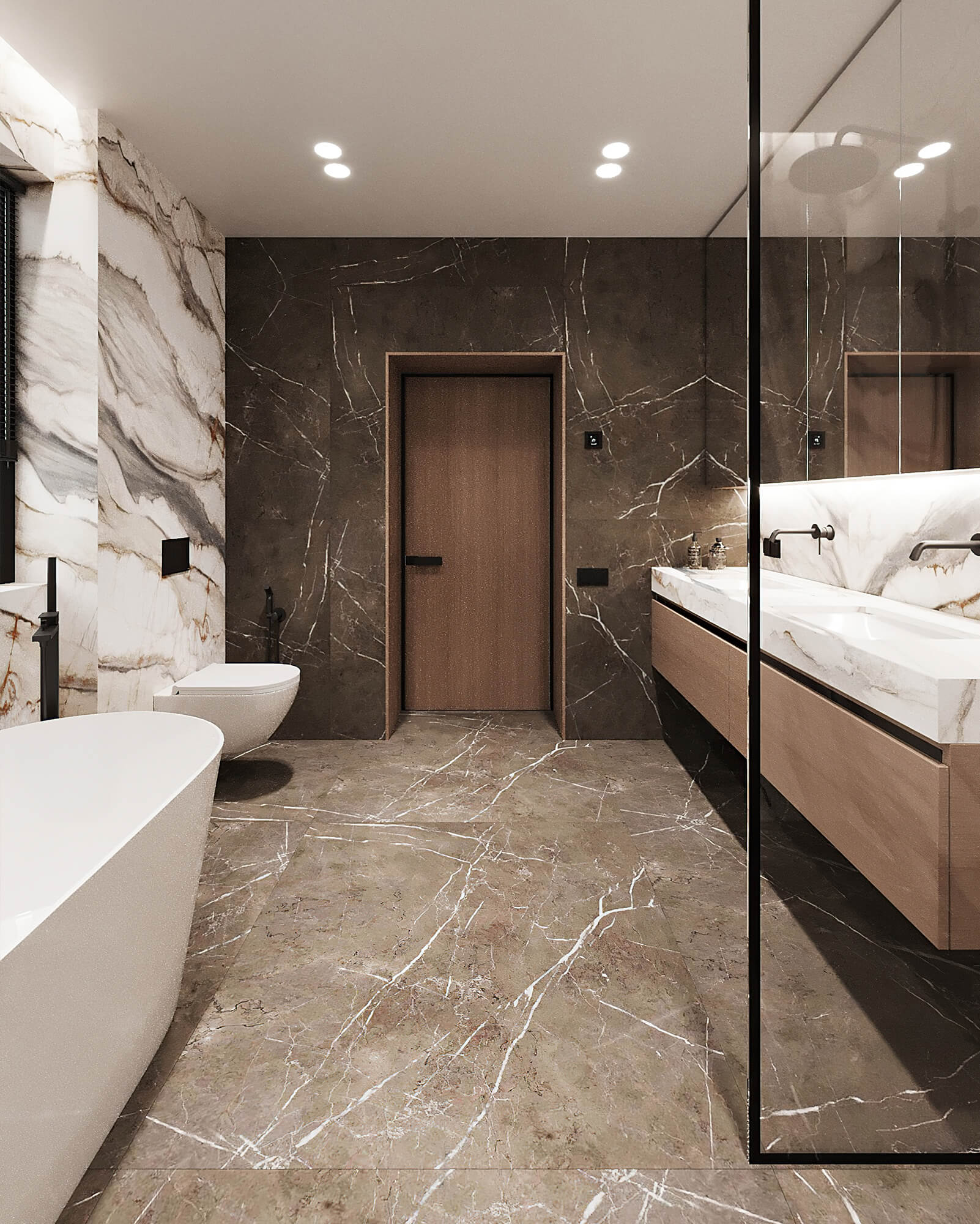
Large-format tiles are one of the key tools of modern interior design. The 120×270 cm and 120×120 cm formats have long gone beyond being a trend and have become a full-fledged architectural material used not only in bathrooms, but also in living spaces, commercial interiors, and even furniture solutions. In this article, we will look at why these formats are so popular, where they are appropriate, and what technical aspects should be considered.
Why large-format tiles are modern
The main visual advantage of large formats is the minimal number of joints. The space looks cohesive, clean, and visually larger. That is why large-format tiles are often chosen for minimalist, modern and premium interiors.
The 120×270 cm formats perfectly imitate natural materials: marble, onyx, concrete, stone. On a large surface, the pattern is much easier to ‘read’ without being broken up into small fragments.
120×270 cm format: when tiles become architecture
120×270 cm slabs are almost porcelain stoneware slabs that function as wall panels.
The most common areas of application:
- bathrooms and shower areas without visual separation;
- accent walls in living rooms and bedrooms;
- seamless kitchen backsplashes;
- cladding of niches, columns, fireplaces;
- furniture fronts and countertops (provided the thickness is correctly selected).
Advantages of the 120×270 format:
- monolithic surface effect;
- minimum grouting – easier maintenance;
- maximum texture aesthetics;
- increased sense of space and ceiling height.
Important: this format requires perfectly prepared surfaces and professional installation. Any unevenness in the wall will be noticeable.
120×120 cm format: a balance of practicality and design
120×120 cm tiles are a versatile solution that is often used for flooring, but is not limited to it.
Where the 120×120 cm format works best:
- floors in living rooms, kitchens, halls;
- bathrooms and spa areas;
- commercial spaces;
- walls in large rooms.
Main advantages:
- visual integrity without a fine ‘grid’ of joints;
- easier installation compared to 120×270;
- ideal for underfloor heating;
- versatility in combination with other materials.
This format is often chosen by customers who want a modern look without excessive technical complexity.
Technical nuances that cannot be ignored
Large-format tiles require a professional approach not only in design but also in implementation.
Key points:
- perfectly flat base (minimal tolerances);
- special adhesives for large formats;
- tile levelling system (TLS);
- experienced tiler who has worked with such formats;
- competent layout planning at the design stage.
Without this, even the most expensive tiles will not give the desired result.
The 120×270 cm and 120×120 cm formats are not just about aesthetics, but about the quality of space. They emphasise the interior architecture, adding a sense of scale, cleanliness and thoughtfulness. That is why large-format tiles should be included at the concept stage, rather than ‘added’ at the end of the project.
Well-chosen large-format tiles and professional installation are an investment in an interior that will remain relevant for years to come.
More about the project
We designed the bathroom as an extension of the private bedroom area. The entrance from the dressing room creates a feeling of hotel-like privacy. Accent large-format tiles with a stone texture shape the character of the space, and the washbasin, made of the same tiles, reinforces the integrity of the image. Mirrored facades conceal the storage system, maintaining the purity of minimalism. Different lighting scenarios and black faucets add depth and an elegant accent.
What do you think of the solution?
Design @gl.design_studio
Project: Ethereal Villa, Tel Aviv
Area: 9.3 m2