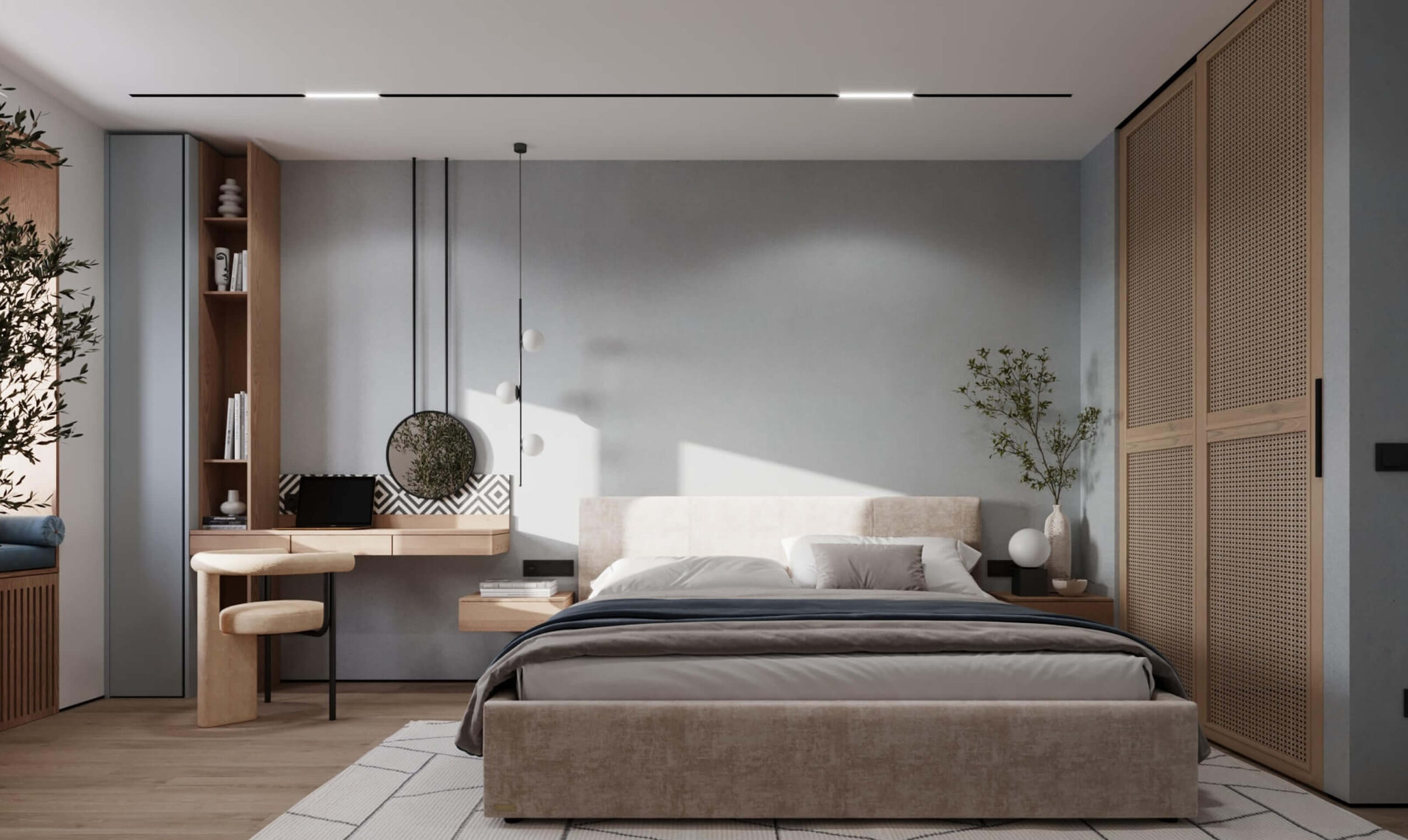
Geometry in interior design is not just about squares, circles or straight lines. It is the foundation of composition, helping the designer to bring together different elements into a single space. It is precisely thanks to the right balance of forms that an interior looks stylish, modern and complete.
Composition – the key principle of design
When working on an interior, a designer thinks not in terms of individual objects, but in terms of how they interact. Each element has its own shape, size and character, but it is only when they come together that they create a harmonious composition.
Composition is built on a balance of verticals and horizontals, straight and curved lines, large surfaces and compact details. It is this that allows the space to feel cohesive, rather than a random collection of furniture and décor.
Geometric tiles as a focal point
One of the most striking ways to add character to an interior is to use geometric tiles. They become not just a wall decoration, but an integral part of the composition.
A minimalist coffee table with a simple shape works beautifully alongside the tiles. The contrast between the bold geometric pattern and the understated furniture creates an interesting interplay of shapes without overwhelming the space.
Mirror and light fitting: a dialogue between verticals and circles
In contemporary interiors, even functional items can become works of art. For example, a mirror suspended from the ceiling on decorative cables or metal hangers adds a sense of lightness to the space and emphasises the room’s height.
The pendant light situated nearby reinforces this idea. Its vertical design echoes the mirror’s hangers, whilst the round shades lend the composition a sense of softness. The repetition of shapes creates a visual rhythm, thanks to which individual items appear to form part of a unified design concept.
Harmony in the details
A true composition is not made up solely of large focal points. The coffee table, sideboard, open shelving unit, sockets and even small architectural elements all play a part in creating the overall picture.
The rectangular shelving units echo the geometry of the furniture, the horizontal planes balance the vertical lines of the lighting, and the neatly integrated sockets do not disrupt the integrity of the composition. The designer considers not only the shape of each item, but also the distances between them, their proportions and their relative positioning.
How geometry influences the perception of an interior
Every shape evokes certain associations. Straight lines create a sense of order, stability and modernity. Curved shapes add softness, cosiness and lightness. The combination of different geometric elements makes the interior dynamic, yet balanced.
That is precisely why professional designers rarely use just one type of shape. They combine different geometric solutions to create a space that you want to look at.
Why composition matters
Professional design is characterised by attention to detail. When geometric tiles, a suspended mirror, a light fitting with spherical shades, a table, a sideboard, a shelving unit and even the sockets all work together as a unified whole, the interior looks complete and well thought-out.
It is composition that transforms individual items into a harmonious space, where every shape has its place, supports the overall concept and creates the interior’s unique character.