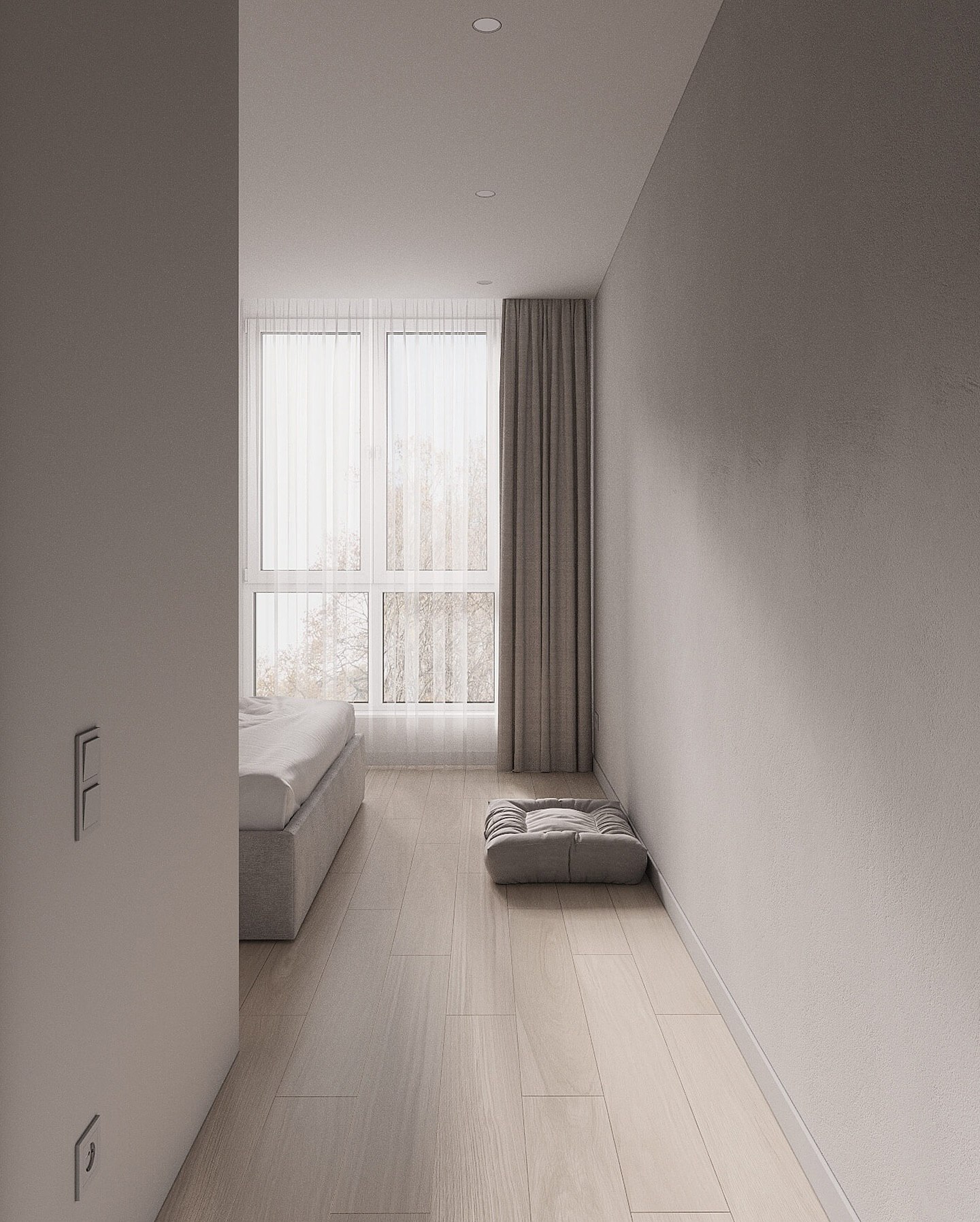
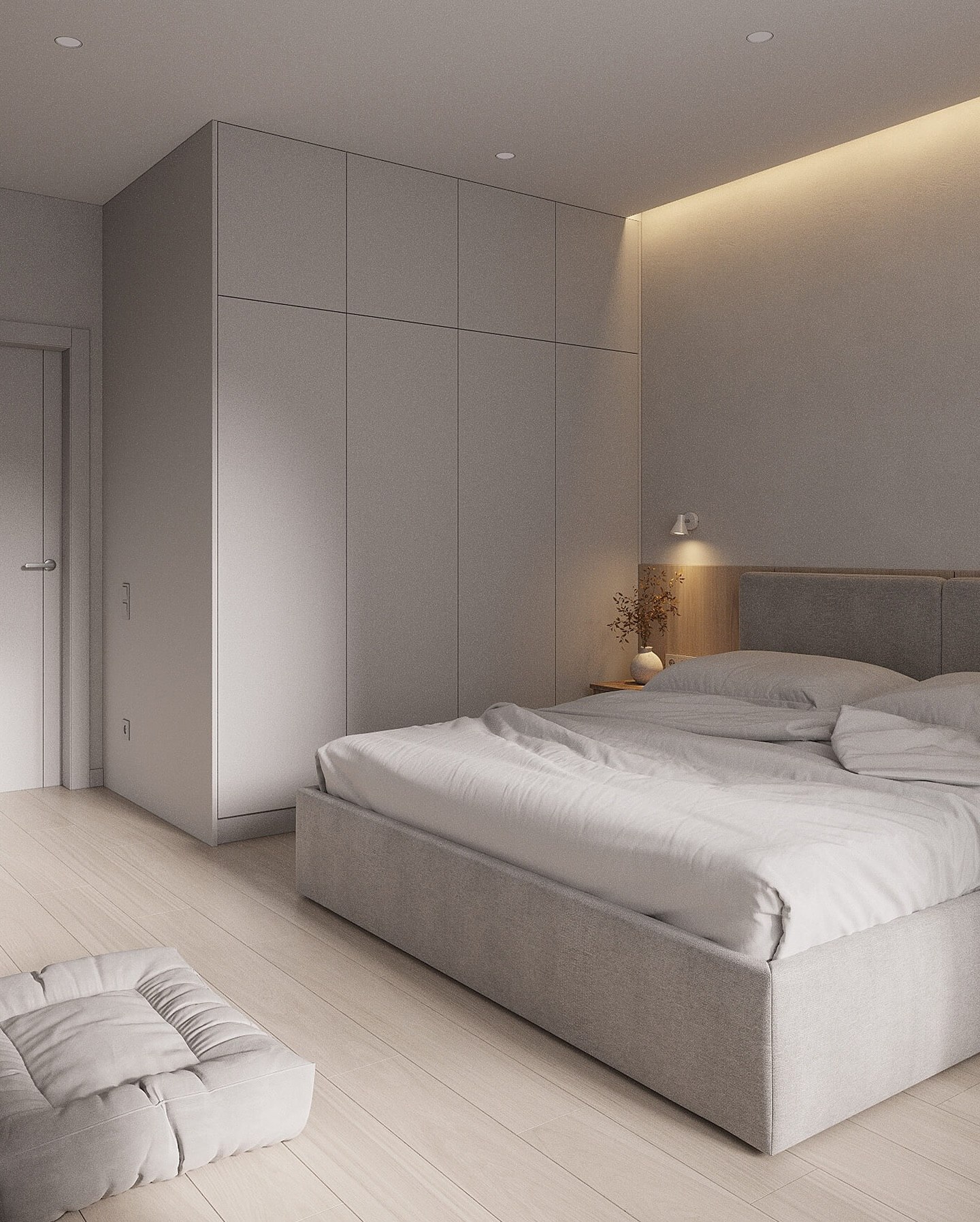
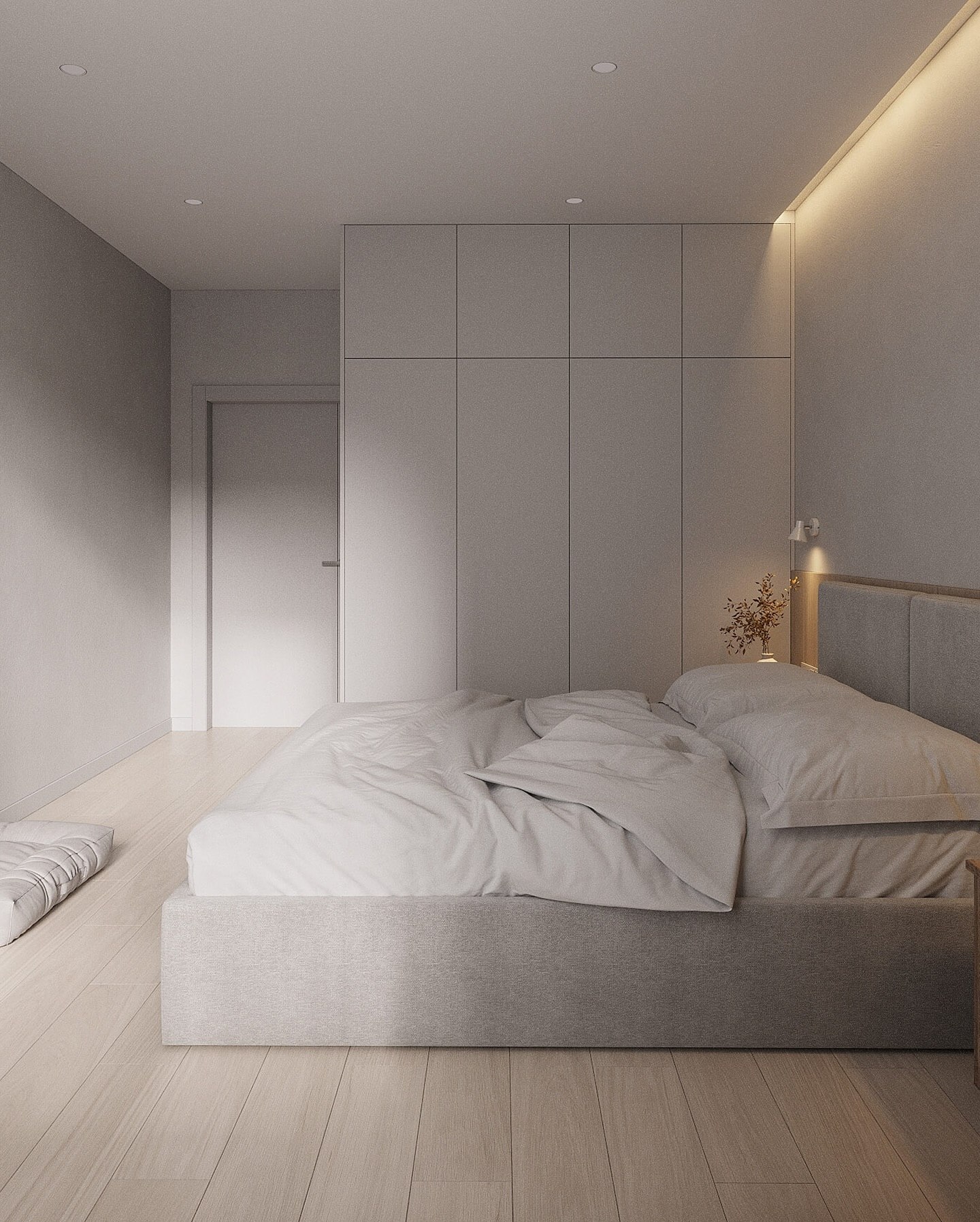
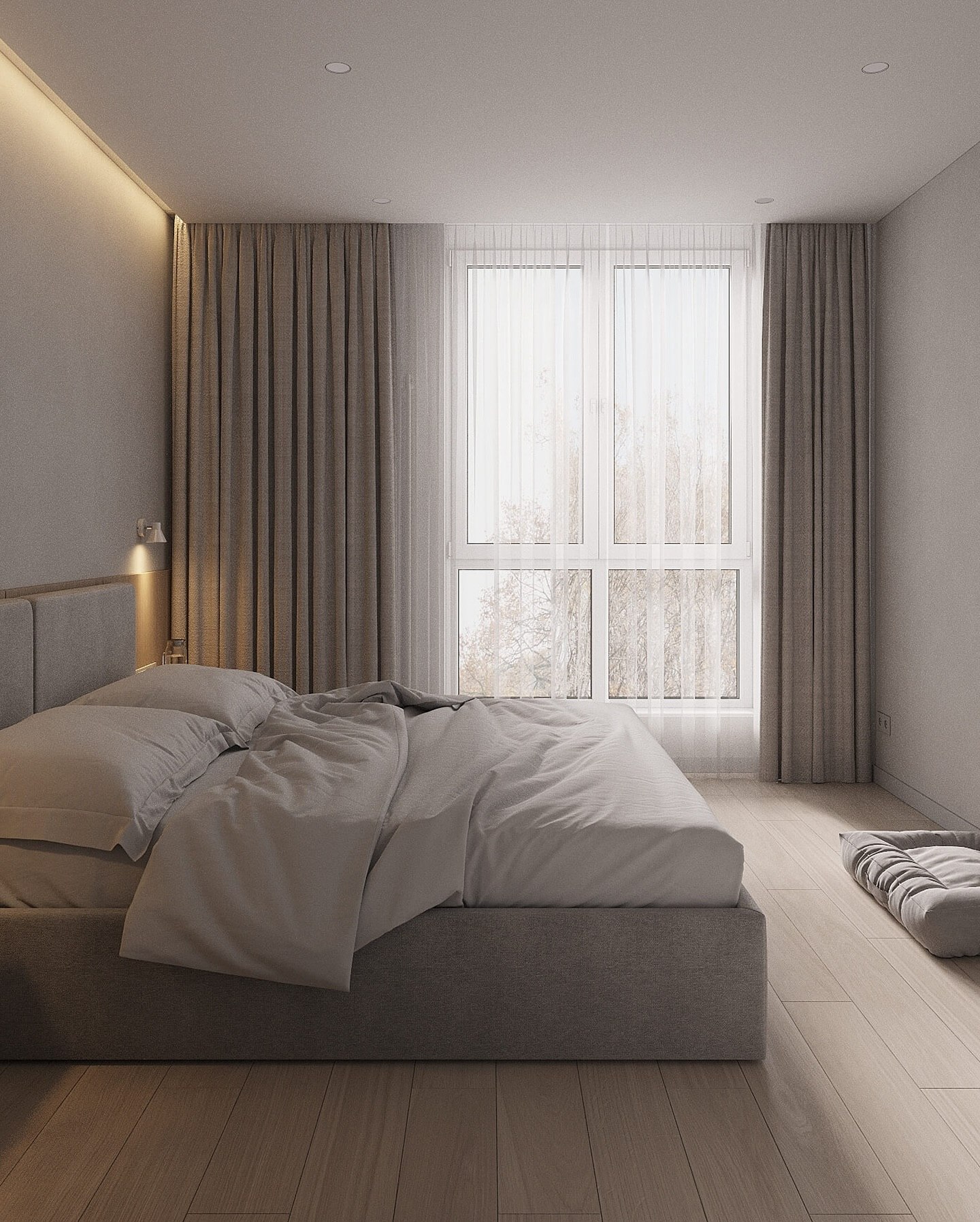
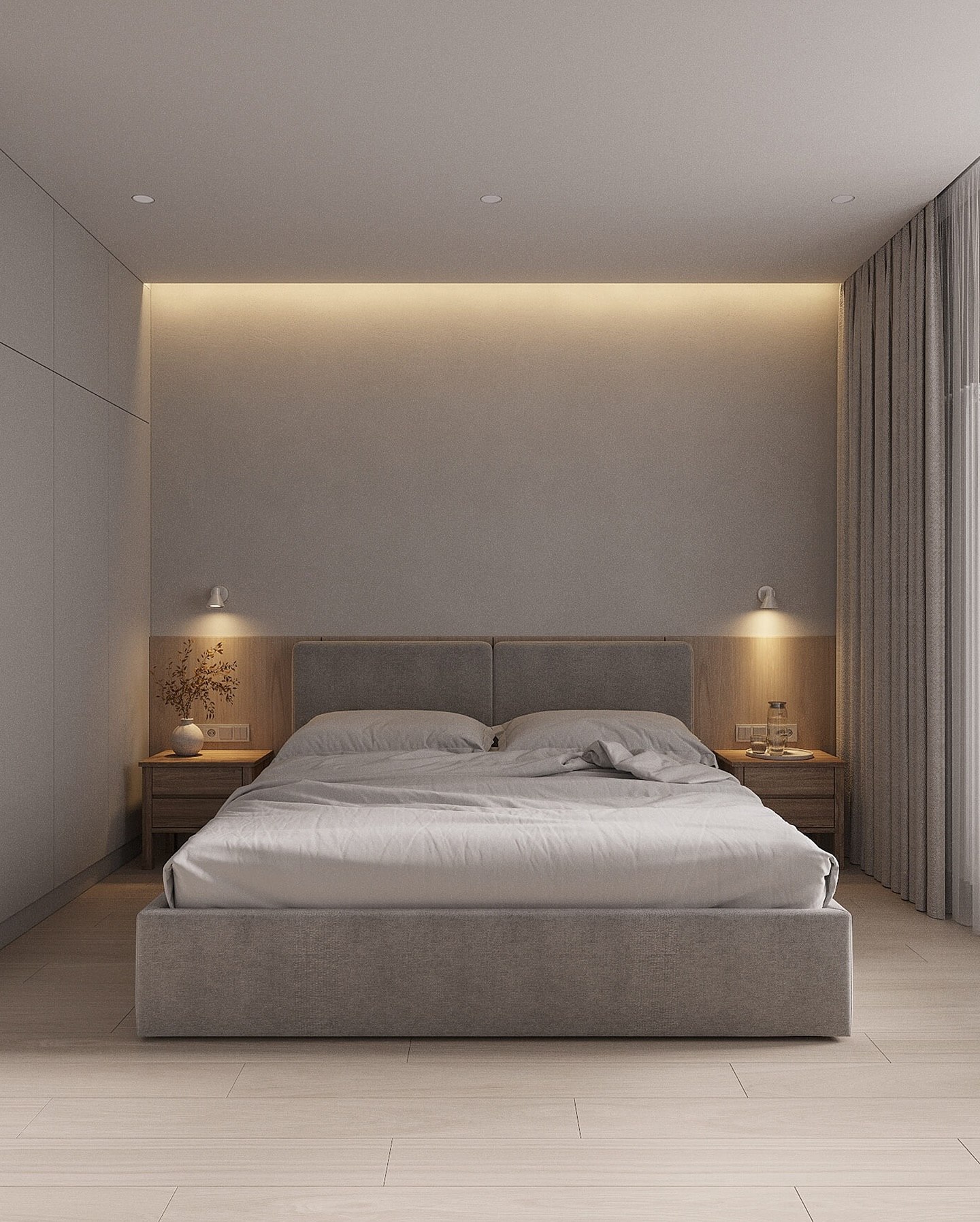
Just a few years ago, an accent wall was one of the most popular ways to add colour to an interior. Today, designers are increasingly moving away from this piecemeal approach in favour of a more holistic solution – colour drenching.
This technique involves using a single colour or similar shades across a significant number of surfaces: walls, ceilings, skirting boards, doors, built-in furniture and other details. As a result, colour ceases to be merely a backdrop and becomes an integral part of the space’s architecture.
In 2026, colour drenching continues to evolve: rather than literally ‘everything in one colour’, designers are working with shades, textures and varying levels of saturation. It is precisely this that makes a monochrome interior complex, profound and contemporary.
What is ‘colour drenching’?
The term ‘colour drenching’ can be literally translated as ‘immersion in colour’. Unlike traditional accent colour schemes, this approach does not create a single contrasting plane. On the contrary, the colour spreads throughout the entire room, uniting different surfaces into a single composition.
For example, walls, doors, skirting boards and the ceiling can all be finished in a single shade of green. Another option is to use several similar shades: from a light olive on the walls to a deeper green on the furniture.
This approach allows you to create a monochrome interior that doesn’t necessarily look monotonous.
Why did ‘colour drenching’ become popular in 2026?
The popularity of this technique is linked to a broader trend in contemporary design — the shift away from sterile, neutral spaces towards interiors with character.
Following a long period of popularity for white, grey and extremely understated interiors, design is becoming more personalised. In 2026, designers are actively working with warm, complex shades, natural colours and deep tones.
‘Colour drenching’ fits well with this approach, as it allows colour to be used on a large scale whilst maintaining the integrity of the space.
Furthermore, a monochrome room can create the feeling of a sort of ‘cocoon’ – an intimate, cosy and sheltered space. This is precisely why the technique works particularly well in bedrooms, studies, living rooms and other spaces where atmosphere is key.
How should you use monochrome in interior design?
The main mistake is to take ‘colour drenching’ literally. To prevent the interior from turning into a flat, coloured box, you need to work with shades, textures and materials.
1. Use one colour in different shades
You don’t necessarily have to paint absolutely everything with the same paint.
For example, for a green interior, you can combine light sage, olive and deep forest shades. For a brown palette – sandy, caramel, nutty and chocolate.
This technique is known as ‘tone-on-tone’ – it allows you to achieve a monochrome effect without visual monotony.
2. Incorporate different textures
It is textures that give a monochrome interior a sense of depth.
Matt paint, wood, natural stone, textiles, metal, glass, decorative plaster or rattan may have different characteristics, but should all remain within the same colour scheme.
For example, a deep terracotta colour on the walls can be complemented by warm-toned wood, textiles in a similar palette and matt ceramics.
3. Don’t forget the ceiling
It is often the ceiling that remains white, even in a well-thought-out interior. However, in ‘colour drenching’, it becomes a fully-fledged part of the composition.
Painting the ceiling the same colour as the walls helps to create a more cohesive and intimate space. In a small room, this can be particularly striking, as the visual boundaries between surfaces become less obvious.
However, the shade and level of saturation should be chosen taking into account the room’s size, ceiling height and natural light.
Which colours are suitable for ‘colour drenching’?
There is no universal list of ‘correct’ colours. It all depends on the room’s function, the lighting and the overall interior design concept.
In 2026, muted greens, warm browns, terracotta, wine-coloured, deep reds, earthy tones and complex neutral shades look particularly striking. At the same time, designers are also working with soft blues, pinks and yellows.
For the bedroom, you could choose a calm sage or powdery shade. In the living room, a deeper olive, chocolate or wine shade would work well. For a study, complex dark tones are appropriate, as they create a more intimate atmosphere.
‘Colour drenching’ is not just about paint
A modern monochrome interior extends far beyond painted walls.
Colour can be extended to furniture fronts, curtains, carpets, upholstered furniture, decorative plasterwork, textiles and even works of art.
This is precisely why colour drenching integrates so well into a holistic interior design approach: the designer works not with a single wall, but with the entire space as a unified whole.
Is ‘colour drenching’ suitable for a small flat?
Yes. And that’s one of the most interesting aspects of this trend.
When all large surfaces are a similar colour, the number of visual breaks is reduced. The space can feel more cohesive and calming. Some designers also use this technique specifically in compact spaces, creating an effect of being immersed in colour.
However, this does not mean that a dark colour will automatically make a small room appear larger. The perception of space is influenced by lighting, proportions, shade, textures and the amount of furniture.
Monochrome as a new form of individuality
‘Colour drenching’ demonstrates just how much the approach to contemporary interiors has changed. Today, it is no longer enough simply to choose a ‘trendy’ colour. It is important to understand how it interacts with the architecture, light, materials and a person’s lifestyle.
That is precisely why monochrome in 2026 is not about monotony. It’s about cohesion, atmosphere and a bold approach to colour.
And whilst colour used to be primarily an accent, today it can form the basis of the entire interior – from walls and ceilings to furniture and decorative details. When executed skilfully, colour drenching creates a space that has character, looks well thought-out and yet remains comfortable to live in.