Modern interior design is increasingly focused not only on the visual component, but also on life scenarios. One striking example of this approach is the hidden beverage area — a well-thought-out solution that combines aesthetics, ergonomics, and functionality.
What is a hidden beverage area?
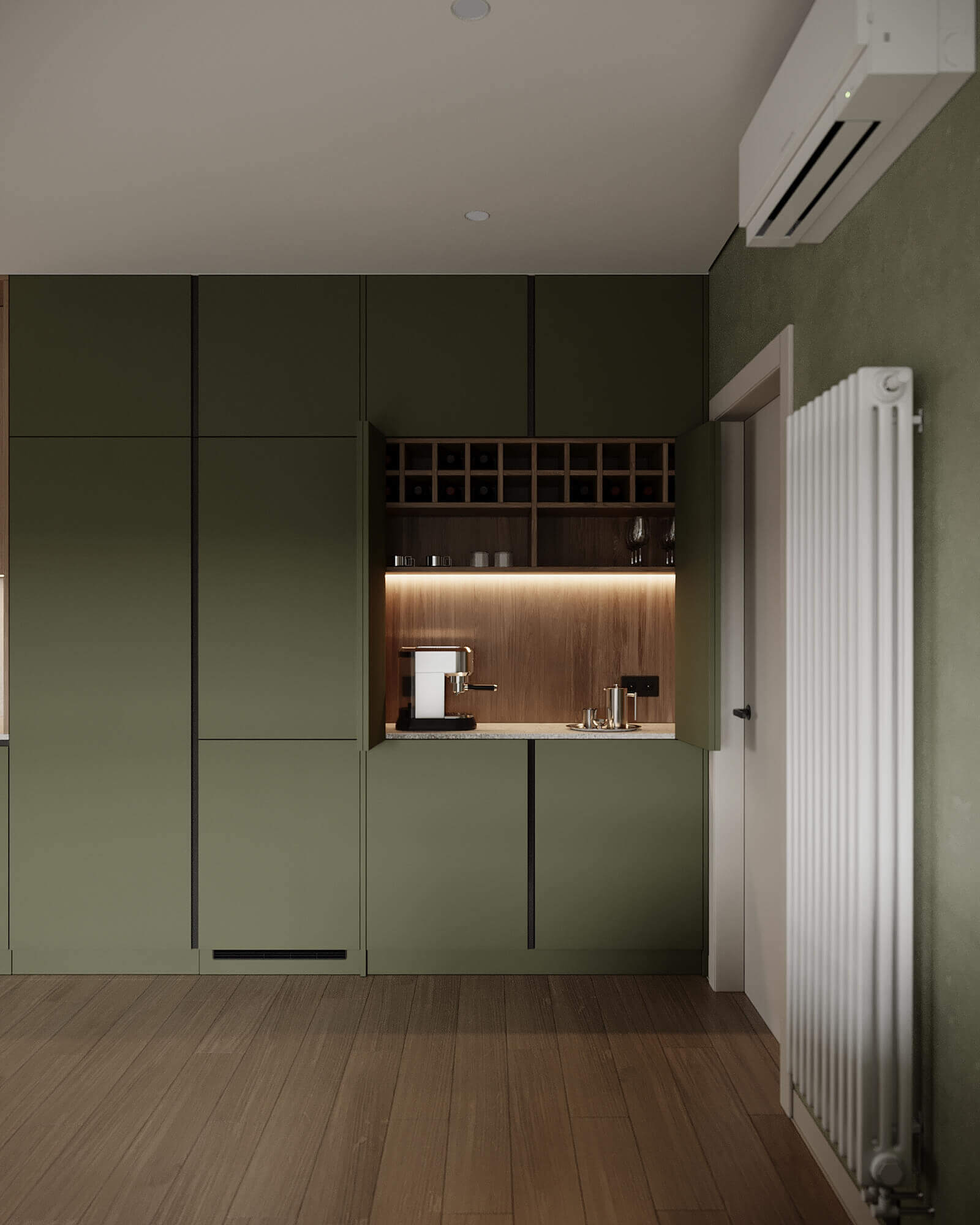
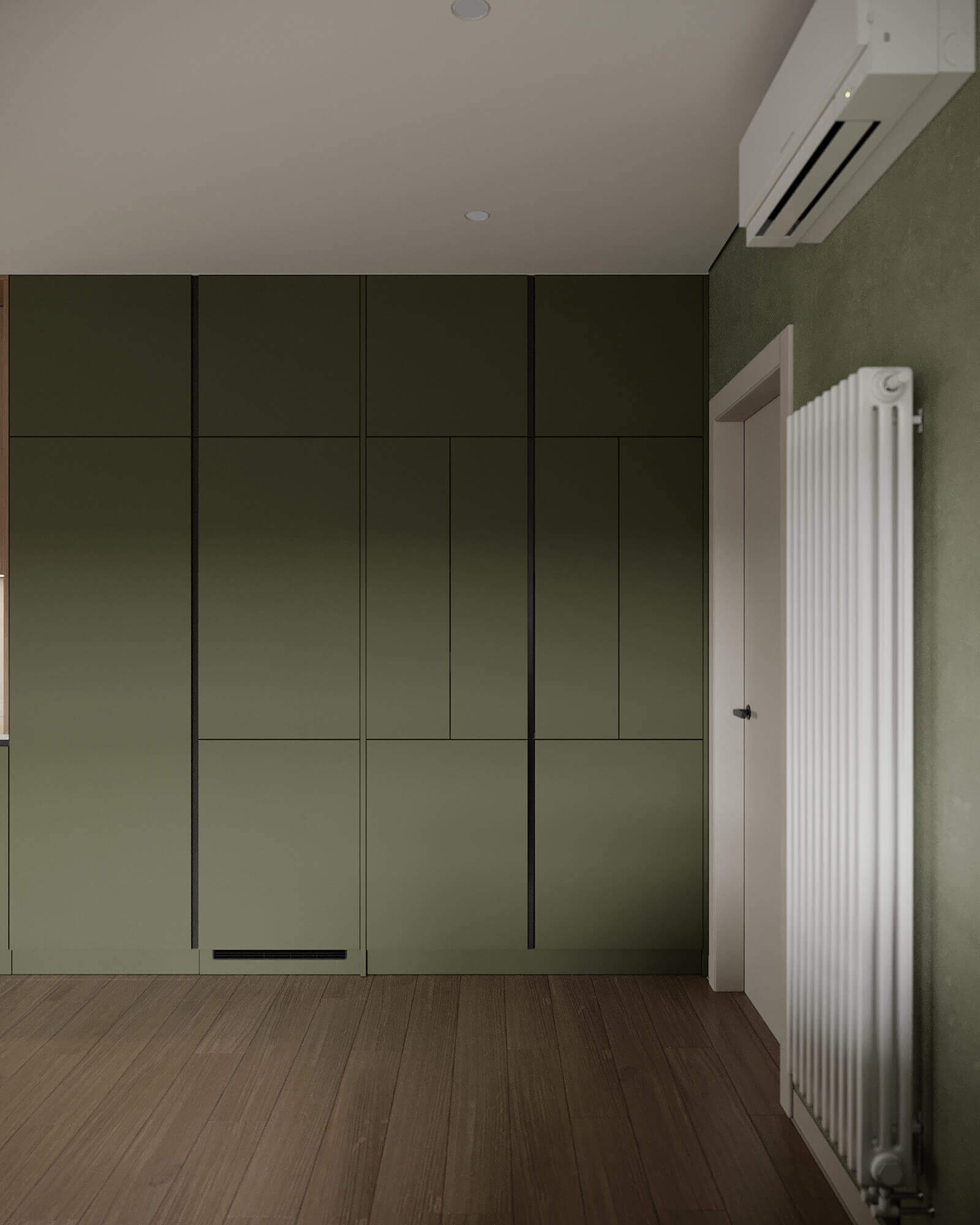
A hidden beverage area (coffee & drink spot) is a separate functional unit located outside the main kitchen line and hidden behind the facades. When closed, it looks like a laconic cabinet or part of a wall panel, maintaining the integrity and minimalism of the interior. When open, it turns into a full-fledged space for making coffee, tea or drinks.
This solution allows you to maintain order and visual calm, which is especially relevant for open-plan layouts and kitchens integrated into the living space.
Why is this not just a trend?
The popularity of hidden beverage areas is due to a change in lifestyle. The kitchen is no longer purely a workspace but has become part of daily rituals, communication and relaxation. That is why it is important to separate active functions from the main food preparation area.
Among the key advantages of this solution are:
Visual cleanliness of the space – household appliances and accessories do not overload the interior.
Functional zoning – a clear division into cooking and drinking areas.
Comfort in everyday use – everything you need is in one place.
Flexibility of scenarios – the area can be used both for morning coffee and for entertaining guests.
Design and technical nuances
When designing a hidden beverage area, it is important to consider not only aesthetics but also technical details. Lighting, ventilation, electrical connections, the choice of fittings and interior fittings play a key role in ease of use.
Facades are usually made in the same style as the kitchen or wall panels, allowing the area to literally ‘disappear’ into the interior. Inside, individual solutions are possible: open shelves, niches for coffee machines, refrigerators for drinks, storage systems.
Who is this solution suitable for?
A hidden area for drinks is ideal for:
- modern apartments with an open plan;
- interiors in minimalist, contemporary, and Japandi styles;
- clients who value order and well-thought-out functionality;
- spaces where the kitchen is part of the living room.
A hidden drinks area is not just a fashionable element, but a logical response to the needs of modern life. It allows you to create a harmonious, calm interior without sacrificing convenience and functionality. It is precisely these solutions that distinguish a well-thought-out design project from a standard layout.
More about the project
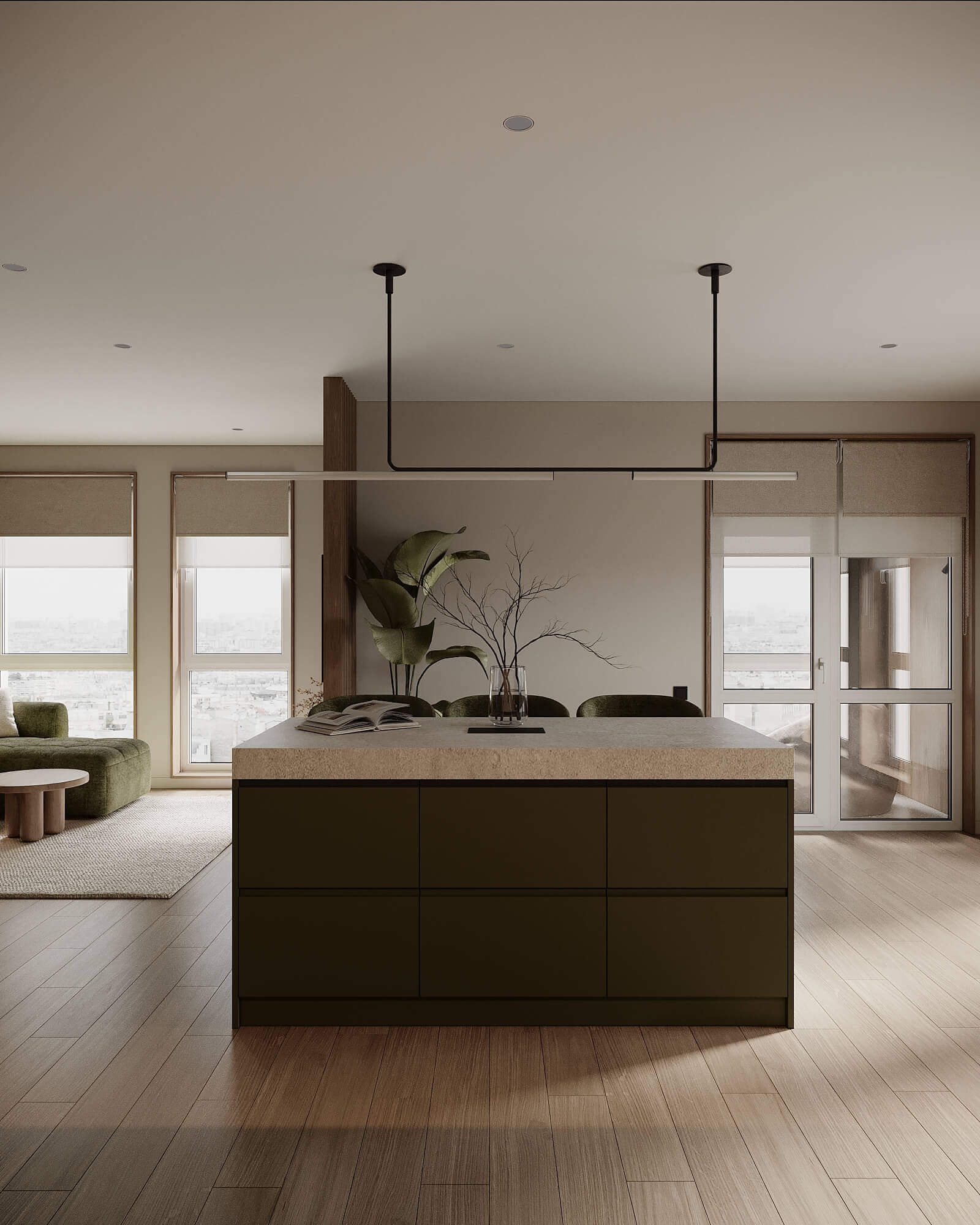
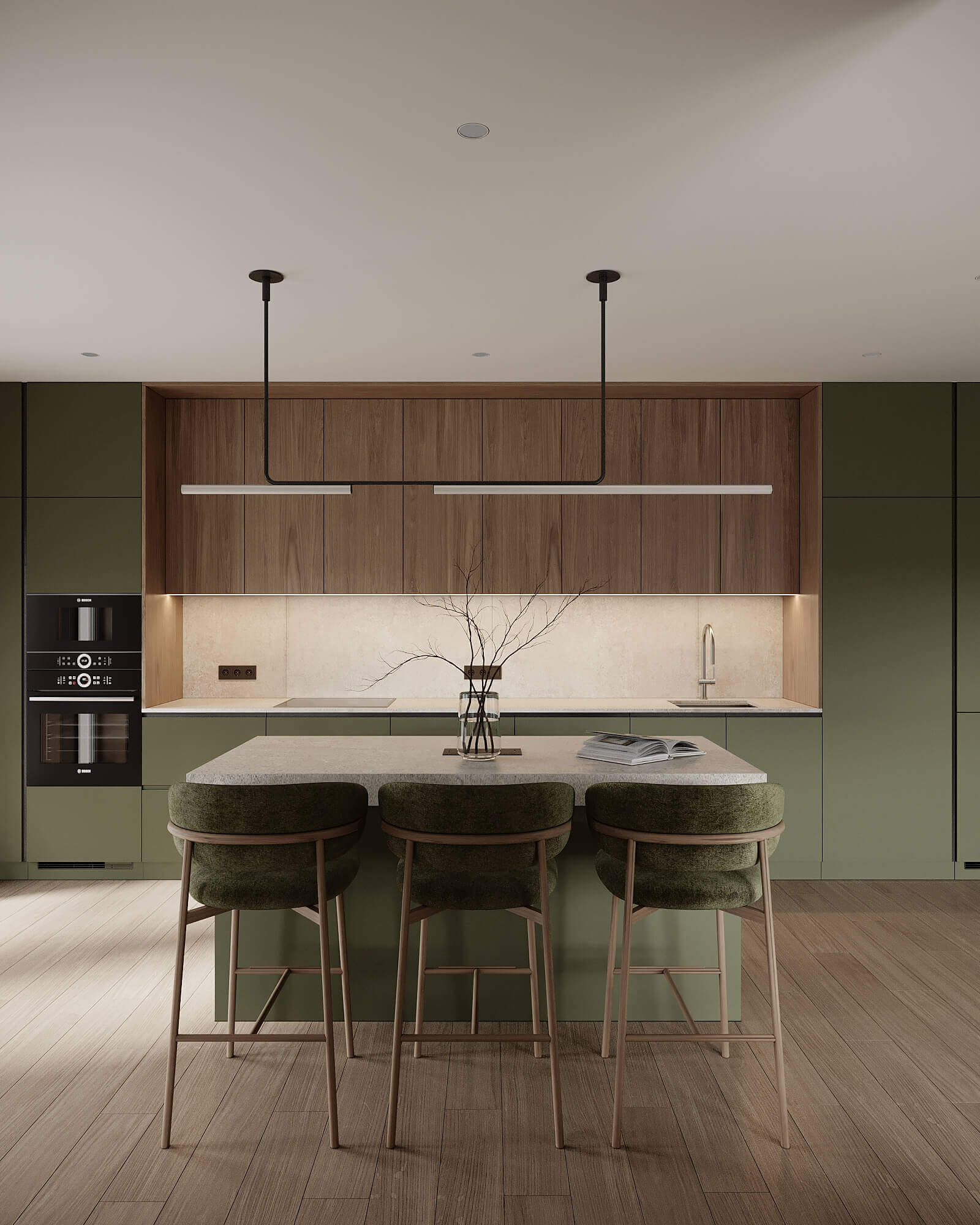
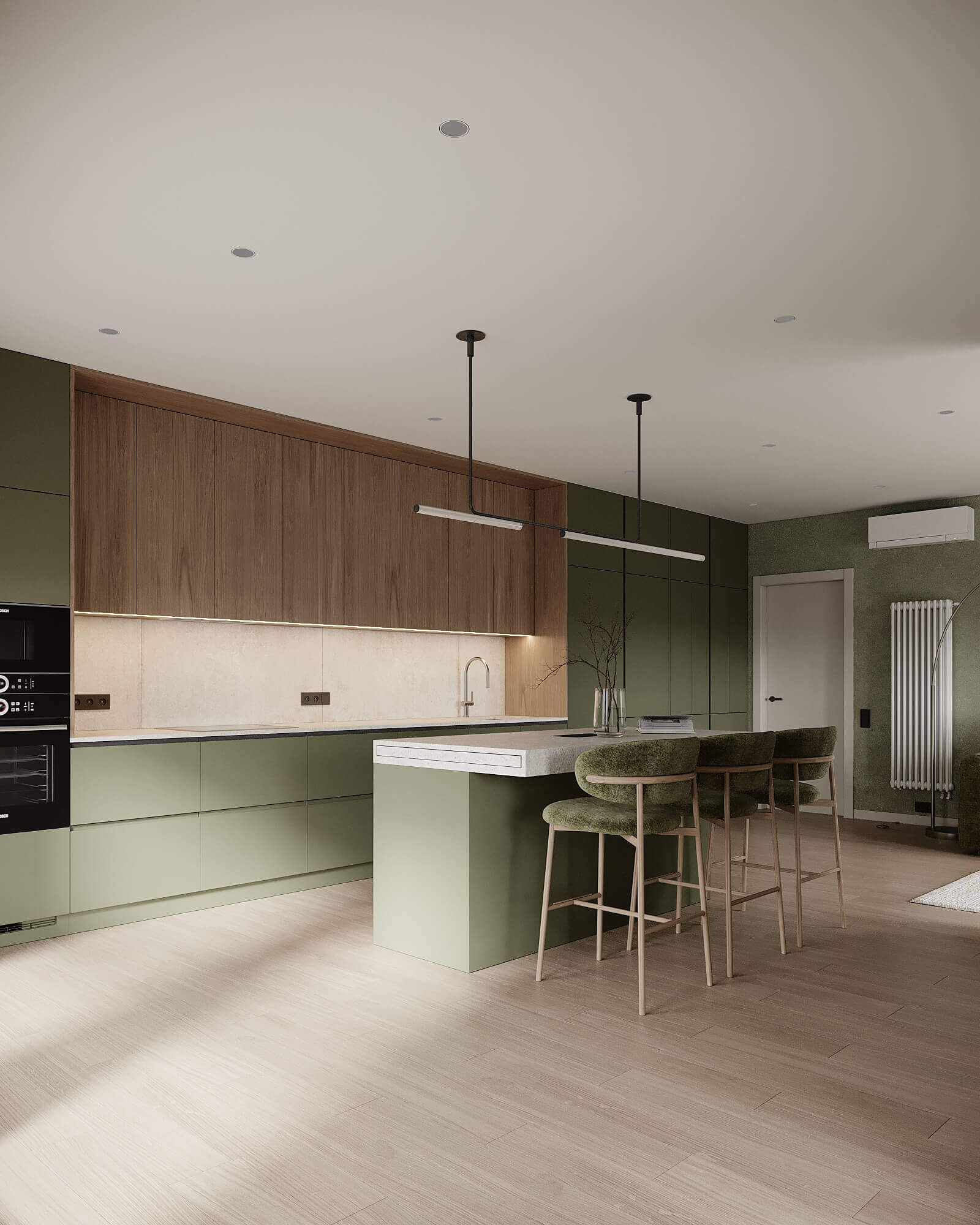
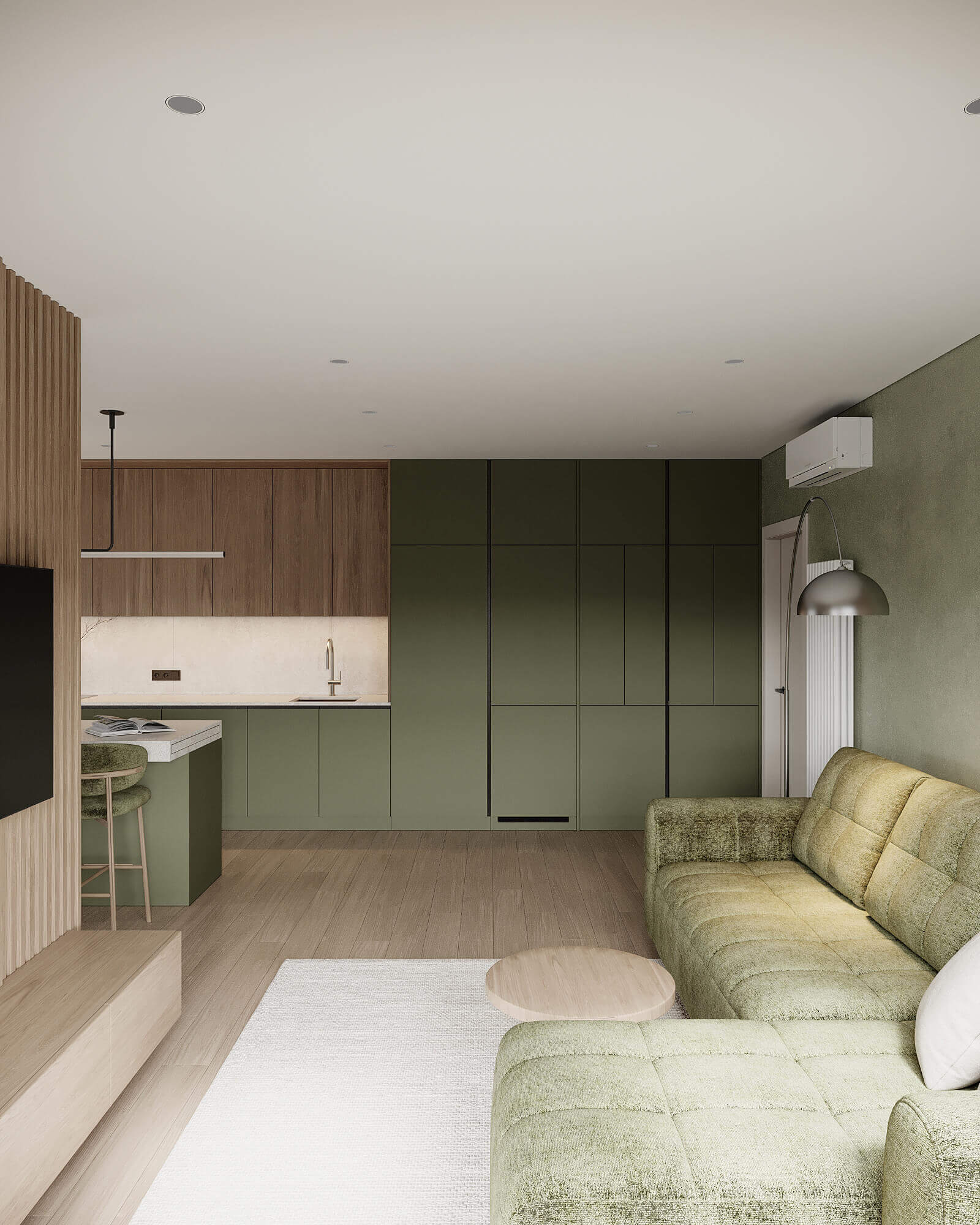
This project is an example of how a kitchen-living room can be restrained, functional and emotionally warm at the same time. We worked with a natural palette: muted green, wood texture, light stone – everything for a balance between aesthetics and everyday comfort. The island became the compositional centre and a place for various scenarios: from quick coffee to evening conversations. There is also a hidden area for drinks. When closed, it is a minimalist cabinet; when open, it is a full-fledged coffee & drink spot.
Minimalist facades, built-in lighting and clear geometry create a sense of order and space. This is an interior that does not overload, but supports the rhythm of the owners’ lives and remains relevant beyond time.
Design @gl.design_studio
Project: Slowgreen, Lviv