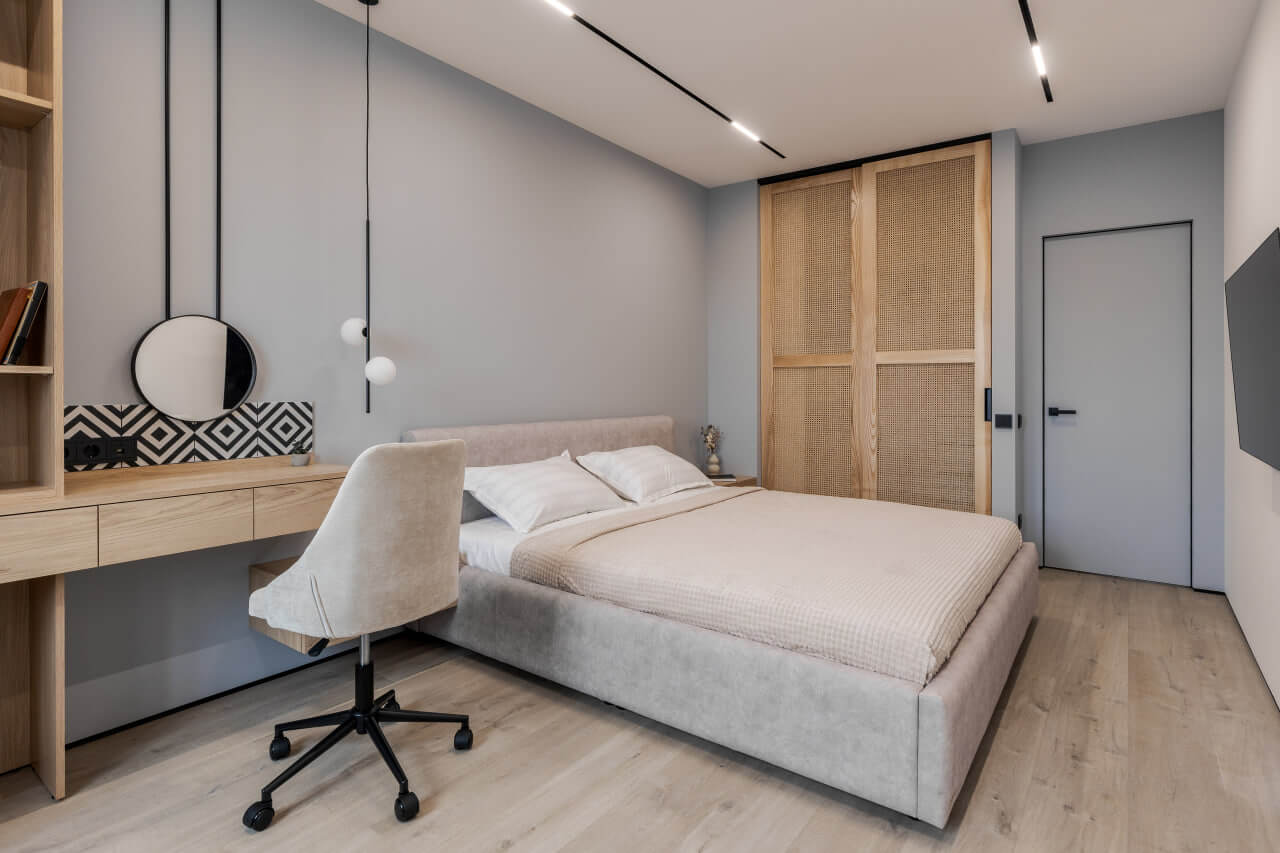
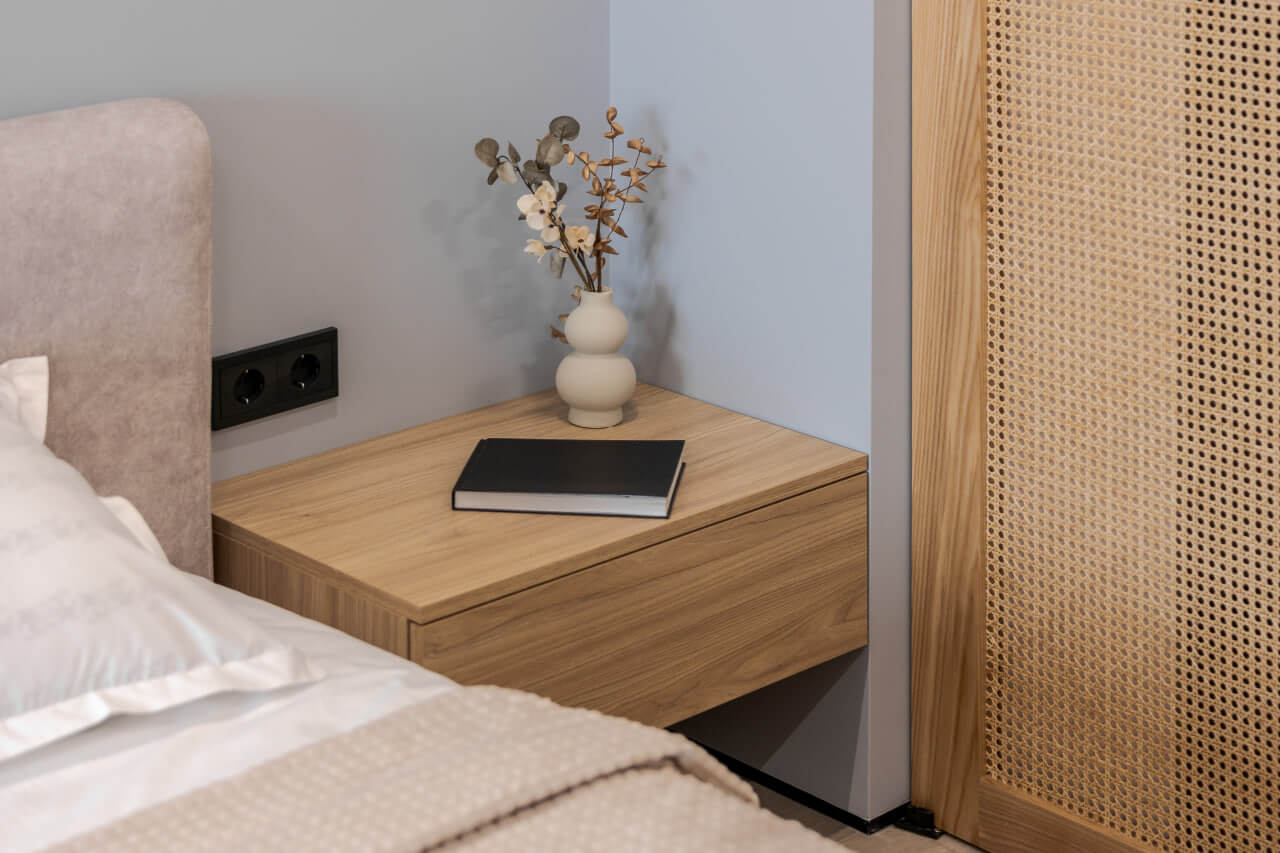
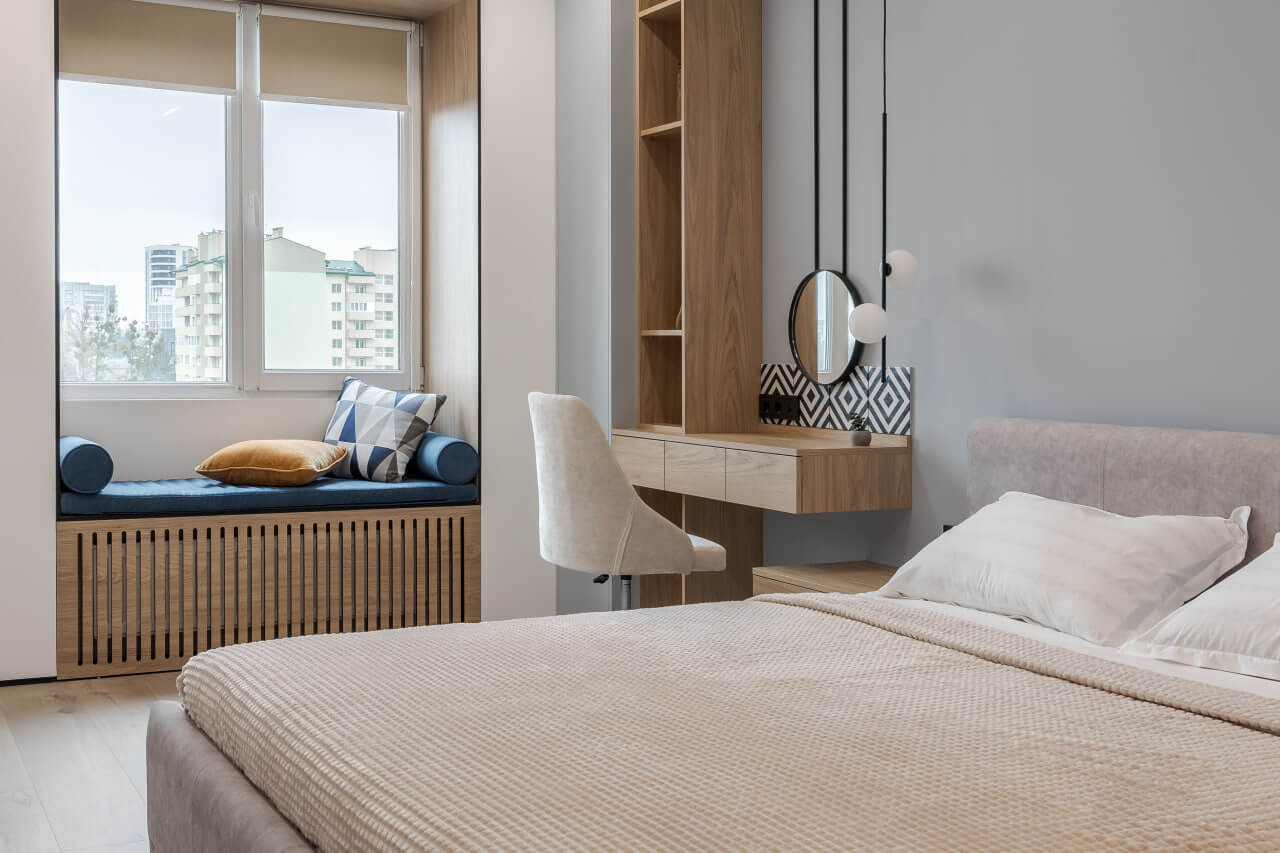
Rattan fronts are one of those elements that help to make an interior feel warmer, lighter and more textured without being overly decorative. Natural wickerwork works well in modern, minimalist, Scandinavian, Japandi and contemporary interiors alike. It adds a tactile quality to furniture and a natural character to the space.
In interior design, rattan is most often used not as the main material, but as an accent feature. The fronts of wardrobes, chests of drawers, sideboards, kitchen units or even decorative panels allow you to incorporate natural texture in a measured and harmonious way.
1. Rattan fronts for wardrobes
One of the most popular ways to use rattan is on the fronts of built-in wardrobes and storage systems.
This solution looks particularly appropriate in a bedroom, walk-in wardrobe or hallway. The woven pattern visually lightens large surfaces, so the wardrobe does not come across as a massive, monolithic object.
Rattan fronts can be combined with wood, painted MDF or neutral, plain surfaces. The key is to maintain a balance: if the weave is already a striking feature, it’s best to keep the other fronts more understated.
2. Kitchen fronts and wall units
Rattan can also be an interesting choice for the kitchen. It is most often used in specific areas – for example, on the fronts of wall units, open shelving or a freestanding cabinet.
This combination works particularly well in kitchens featuring wood, natural stone, ceramics and warm neutral tones. Rattan lends the kitchen interior a more homely and cosy feel, whilst avoiding a cluttered look.
For work areas, it is worth considering the material’s practicality and specific care requirements, so it is best to decide on the optimal place for rattan whilst still at the design stage.
3. Chests of drawers and bedside tables
Small pieces of furniture are a wonderful way to incorporate rattan into your interior without making major changes.
A chest of drawers with rattan fronts can become a focal point in a bedroom, living room or hallway. Meanwhile, rattan fronts on bedside tables help to create a softer and more natural atmosphere.
This texture works particularly well alongside textiles, wood, microcement and matt surfaces.
4. Rattan fronts in the walk-in wardrobe
A walk-in wardrobe is a space where rattan can serve not only a decorative but also a structural purpose. It can be used for individual sections of the storage system, the fronts of pull-out modules or wardrobe doors.
The woven pattern adds visual lightness to the many enclosed surfaces and makes the walk-in wardrobe’s interior less monotonous.
5. Rattan headboards and bedroom furniture
Although a classic headboard is not a front panel in the strict sense, the same principle of working with rattan can be applied to bedroom furniture.
Rattan inlays in the fronts of wardrobes, chests of drawers and bedside tables complement the rattan headboard well. As a result, the natural texture is repeated across several elements without dominating the interior.
This is particularly relevant for bedrooms in the Japandi, contemporary and modern classic styles.
6. Living room furniture
In the living room, rattan can be incorporated into the fronts of TV stands, shelving units, display cabinets or storage systems.
Combining rattan with dark wood, stone or plain matt fronts creates an interesting effect. The natural texture softens the geometry of modern furniture and brings the composition to life.
The key is not to use the same woven pattern on every piece. One or two accents usually have a much greater impact.
7. Accent furniture details
Rattan doesn’t necessarily have to cover a large area. Sometimes a small insert in a front panel, a cupboard door or a separate section of a shelving unit is enough.
It is precisely this approach that allows natural materials to be used even in a understated, contemporary interior. Rattan becomes a feature that draws the eye because of its texture, rather than its bright colour or intricate shape.
How should rattan fronts be used in interior design?
To ensure rattan looks contemporary, it is important to use it sparingly. It works best when combined with simple shapes, natural materials and a calm colour palette.
Designers recommend thinking in advance about exactly where the rattan will be placed, which materials it will be combined with, and how its texture will be repeated throughout the space. This helps to avoid a haphazard decorative effect and ensures the material becomes part of a cohesive design concept.
Rattan fronts are not just a fashionable element. When used correctly, they help to create an interior with greater texture, a natural feel and visual lightness. And most importantly, this material is easy to adapt to a specific space, style and the lifestyle of its occupants.
Rattan in interior design: balance is key
In contemporary interiors, materials that offer both aesthetic and tactile appeal are highly valued. This is precisely why rattan remains a popular choice for furniture fronts.
If you define its role in the space correctly, combine it with suitable textures and consider its functionality, rattan fronts can become the detail that makes the interior feel complete, warm and distinctive.